0%

Choosing a Roll-to-Roll Laser Cutter is not a simple comparison of wattage, speed, or purchase price. The right system must match your material, web width, production volume, and cutting tolerance. A thin polymer film may curl under excess heat. A coated foil may produce smoke, residue, or uneven edges. Small details matter.

Laser-processing researcher Dr. Andreas Ostendorf explains, “Process stability matters more than peak laser power.” This principle deserves attention. A powerful source cannot correct poor web tension, weak extraction, or inaccurate motion control. The following seven tips examine those practical risks before you commit to a machine. They cover laser wavelength, material testing, cutting quality, web handling, software control, safety features, and supplier support.

Look closely at the machine in operation. Does the web remain flat at high speed? Are the edges clean under magnification? Can operators adjust tension without stopping production? Ask for test samples from your actual film, label stock, foil, or laminate. Vendor demonstrations can look impressive, yet they may use ideal settings and fresh materials. That is where judgment becomes difficult.

No cutter is perfect.

A reliable decision also considers maintenance, spare parts, training, and future product changes. A system designed for today’s narrow web may become restrictive after one expansion. My recommendation is deliberately cautious: compare verified test data, not attractive promises. These seven tips will help you assess performance realistically and choose a Roll-to-Roll Laser Cutter that supports consistent production, measurable quality, and fewer costly surprises.
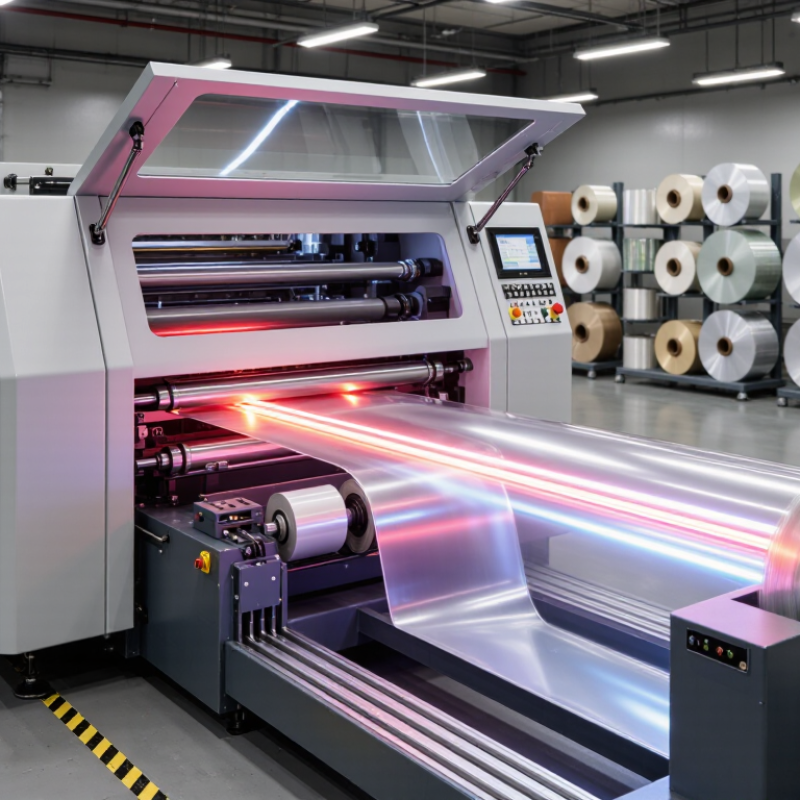
7 Tips for Choosing a Roll-to-Roll Laser Cutter?

Define the Materials and Roll Specifications You Need to Process

Before choosing a roll-to-roll laser cutter, define the materials you will actually process. Film, paper, textile, foam, and coated laminates react differently to heat. A thin polyester film may curl near the cut edge, while adhesive-backed material can leave residue on the lens. Record the material type, thickness, coating, reflectivity, and heat sensitivity. Include samples with real production conditions. Clean laboratory sheets can be misleading.

Roll specifications matter just as much. Measure the maximum web width, roll diameter, core diameter, and total roll weight. Check the winding direction and edge quality. A loose edge can create tracking problems at high speed. Confirm the required tension range, because delicate films may stretch under ordinary settings. Also note splices, gaps, printed marks, and changes between batches. These details affect feeding accuracy and cutting stability.

Ask the equipment supplier for tested speed ranges, cutting tolerances, extraction requirements, and recommended lens maintenance. Request test results using your material, not a similar sample. I once underestimated the effect of a glossy coating, and the reflected energy produced uneven edges. That mistake was avoidable. Allow time for trials at low, medium, and high speeds. Inspect the kerf under magnification, check the underside for residue, and record every setting. A cutter that performs well on one roll may need different tension or focus on the next.

Match Laser Power and Cutting Speed to Your Production Requirements

7 Tips for Choosing a Roll-to-Roll Laser Cutter

Tip 1 Match laser power to your thickest regular material, not its occasional maximum. Excess power can char thin films and waste energy.

Tip 2 Set cutting speed from production targets, then verify the edge quality. A fast pass may leave melted corners or incomplete cuts.

Tip 3 Run a small test grid before full production. Change power and speed in narrow steps, then inspect the kerf under magnification.

Tip 4 Consider material sensitivity. Heat-sensitive films may need lower power, higher speed, or pulsed operation.

Tip 5 Check web tension carefully. Uneven tension can stretch printed marks and shift the cutting path, even when laser settings are correct.

Tip 6 Measure real throughput, including acceleration, rewinding, setup, and inspection time. The fastest cutting speed is not always the fastest production rate.

Tip 7 Keep a material-specific settings log. Record power, speed, focus, lens condition, and observed defects.

Operators often discover that one setting does not fit every roll. I have seen clean edges at moderate speed, while a faster trial caused curling near the film edges. That result was useful, but not perfect. Ambient temperature, coating thickness, and roll diameter can also change performance. Leave room for retesting instead of treating the first successful sample as final. A reliable choice balances cutting quality, stable feeding, maintenance needs, and measurable output.

Evaluate Cutting Accuracy, Edge Quality, and Material Compatibility

7 Tips for Choosing a Roll-to-Roll Laser Cutter

Evaluate Cutting Accuracy, Edge Quality, and Material Compatibility

Cutting accuracy begins with stable web handling. Check the machine’s repeatability, tension control, and registration performance, not only its advertised resolution. A narrow kerf helps, but it cannot correct material drift. In practical testing, measure several shapes across the roll, including small holes and long straight lines. Inspect the results with a calibrated ruler or optical gauge. Tiny shifts often appear near the roll edges. That detail matters.

Edge quality reveals how well the laser suits your process. Examine cut samples under bright, angled light. Look for charring, melted fibers, rough corners, and residue on the underside. Thin films may need lower heat input and faster motion. Dense textiles may require repeated passes, which can reduce clarity. Keep the samples. Compare them after cooling, because some edges change appearance later. I once judged a cut too quickly and missed slight shrinkage.

Material compatibility requires more than a material name. Ask whether the system handles your actual thickness, coating, color, adhesive, and roll width. Test production-grade material, not an ideal sample. Some reflective surfaces behave unpredictably, while layered materials may separate during cutting. Confirm ventilation, fume management, and sensor controls before trials. Request documented test conditions, including speed, power, lens setup, and tolerance. Otherwise, excellent showroom results may not represent daily production. A small pilot run can expose costly weaknesses before installation.

7 Tips for Choosing a Roll-to-Roll Laser Cutter? – Evaluate Cutting Accuracy, Edge Quality, and Material Compatibility

Tip Evaluation Dimension Practical Screening Reference How to Verify Decision Signal
1 Define the material range Confirm material type, thickness, roll width, coating, adhesive, liner, and heat sensitivity before comparing machines. Prepare representative samples covering the thinnest, thickest, narrowest, and widest production materials. The machine should process the complete material range without melting, tearing, delamination, or excessive deformation.
2 Check cutting accuracy and repeatability Use the required dimensional tolerance as the primary benchmark. For many precision converting applications, a preliminary screening target of approximately ±0.10 mm can be used, but the final tolerance must be validated on the actual material. Cut repeated squares, circles, slots, and registration patterns. Measure at multiple positions across the web and compare the first and last parts in the batch. Low variation across the roll, stable registration, and consistent dimensions indicate suitable motion control and web tracking.
3 Evaluate edge quality Look for clean edges with minimal burrs, dross, charring, discoloration, melting, or heat-affected zones. The acceptable level depends on the material and end use. Inspect edges under magnification, check dimensional changes after cutting, and test peel strength or flexibility when adhesive films and laminates are involved. A production-ready process should meet the required visual and functional edge standard without secondary trimming or cleaning.
4 Match the laser wavelength to the material CO₂ lasers are commonly used for many nonmetals such as paper, textiles, films, wood, and acrylic. Fiber lasers are generally suited to many metals. UV lasers may be considered for selected thin or heat-sensitive materials. Request a sample test using the exact substrate, coating, adhesive, liner, and target production speed. Select the laser type based on absorption, required cut depth, thermal response, fumes, and surface finish—not on nominal power alone.
5 Assess web handling and tension control Review unwinding, rewinding, edge guiding, splice detection, web tension, roll diameter, core size, and maximum web width. Run a continuous roll test and monitor wrinkles, lateral drift, telescoping, stretching, slippage, and registration errors. Stable web transport at operating speed is essential; high laser precision cannot compensate for poor material tracking.
6 Compare speed, heat input, and throughput Compare cutting speed at the required quality level, not only the machine's maximum travel speed. Include acceleration, repositioning, nesting efficiency, loading, and rewinding time. Record meters per minute, parts per minute, scrap rate, power use, and edge quality during a representative production trial. The best option delivers the required output while maintaining stable edges, low scrap, and acceptable thermal impact.
7 Confirm testing, safety, and long-term support Check fume extraction, interlocks, fire detection, enclosed-beam protection, software controls, maintenance access, spare parts, and operator training. Request a documented acceptance test using agreed tolerances, edge criteria, production speed, material yield, and uptime requirements. Choose equipment with measurable acceptance criteria, safe ventilation, accessible maintenance points, and support that matches the expected production schedule.

Note: Performance values are general screening references rather than universal machine specifications. Final selection should be based on a production trial with the exact roll material, thickness, coating, adhesive, web width, and required tolerance.

Compare Automation Features, Software Controls, and Operator Safety

Choosing a roll-to-roll laser cutter requires more than checking cutting speed. Automation, software controls, and operator safety often determine daily productivity.

The International Federation of Robotics reported 541,302 industrial robots were installed worldwide in 2023. This reflects a wider shift toward connected production. Look for automatic material alignment, tension control, roll diameter sensing, and consistent job recovery after interruptions. These features reduce manual adjustments and material waste. They also make long production runs less stressful. Small details matter.

Software should support nesting, simulated toolpaths, user permissions, job history, and production data exports. Deloitte’s 2024 Smart Manufacturing Survey found that 86% of manufacturing leaders expect smart technologies to improve competitiveness within three years. That expectation is reasonable, but software quality varies greatly. Test the interface with real artwork and mixed materials. Do not guess. A beautiful dashboard cannot fix poor file handling.

Safety deserves equal attention. Choose a fully enclosed cutting area, reliable door interlocks, emergency stops, extraction monitoring, and clear fault messages. Controls should limit access to trained operators and record maintenance events. The system should also support documented risk assessments aligned with ISO 12100 and functional safety principles from ISO 13849. Ask whether an operator can safely clear a jam without entering a hazardous zone. I once underestimated this question. It should be asked before purchase, not after an incident.

Assess Maintenance, Support, Energy Use, and Total Ownership Cost

Tip 1: Examine maintenance before comparing cutting speed. A roll-to-roll laser cutter works through long production runs, often beside dust, film scraps, and adhesive residue. Ask how often lenses, filters, belts, and extraction parts need replacement. Request maintenance logs from similar installations. I once trusted a low-service estimate that ignored weekly cleaning. That estimate was wrong. Small tasks quietly consumed operator hours.

Tip 2: Test the support process, not just the sales demonstration. Ask who answers technical calls, where spare parts are stored, and how remote diagnostics operate. A clear response-time agreement matters during an overnight production stoppage. Request references from users with similar roll widths and materials. Their experience often reveals delays that brochures never mention. Keep the questions specific.

Tip 3: Measure energy use under real production conditions. A machine may consume different power while accelerating, cutting dense patterns, or running extraction systems. Ask for measured kilowatt-hour data per finished roll, not only rated input power. Then calculate electricity, labor, consumables, repairs, training, and downtime over five years. Include installation and software costs. This is total ownership cost.

Energy savings can look impressive on paper. Yet slower throughput may increase labor expenses. A cheaper cutter may also need more frequent calibration. Leave room for uncertainty. Production conditions change, and maintenance budgets are rarely perfect. Reliable suppliers should explain assumptions clearly and provide written service terms before purchase.

FAQS

Which automation features matter most in a roll-to-roll laser cutter?

Look for automatic alignment, tension control, roll diameter sensing, and reliable job recovery. These features reduce adjustments and material waste. Small details matter.

How can software improve daily production?

Useful software should provide nesting, simulated toolpaths, user permissions, job history, and data exports. Test real artwork and mixed materials before buying. Do not guess.

What should operators check during a software trial?

Check file handling, artwork scaling, nesting accuracy, and recovery after interruptions. A polished dashboard cannot repair poor file processing. Test it first.

Which safety features should the machine include?

Choose an enclosed cutting area, dependable door interlocks, emergency stops, and extraction monitoring. Clear fault messages should guide operators during problems. Safety cannot be decorative.

Can operators clear material jams safely?

Ask whether operators can clear jams without entering hazardous zones. Controls should restrict access to trained users and record maintenance events. I underestimated this question once.

How should maintenance needs be evaluated?

Ask about lenses, filters, belts, and extraction parts. Request maintenance records from similar installations. Weekly cleaning may consume surprising labor.

What support questions should buyers ask suppliers?

Ask who handles technical calls, where spare parts are stored, and how remote diagnostics work. Request references from users with similar roll widths and materials. Ask specific questions.

How should energy use and ownership cost be calculated?

Request measured kilowatt-hours per finished roll, not only rated input power. Include electricity, labor, consumables, repairs, training, downtime, installation, and software costs. Plan for uncertainty.

Why can a cheaper cutter cost more over time?

Slower throughput may increase labor expenses, while frequent calibration can create hidden delays. Compare five-year ownership costs, not just purchase prices. The estimate may be wrong.

Conclusion

Choosing the right Roll-to-Roll Laser Cutter begins with a clear understanding of the materials and roll specifications you need to process, including material type, thickness, width, weight, and roll diameter. These factors help determine the appropriate laser power, cutting speed, feeding system, and machine configuration for your production requirements. A suitable system should balance throughput with stable performance rather than focusing on speed alone.

You should also evaluate cutting accuracy, edge quality, and compatibility with different materials, especially when working with heat-sensitive or layered substrates. Automation features, software controls, real-time monitoring, and operator safety functions can improve efficiency and reduce production errors. Finally, consider maintenance requirements, technical support, energy consumption, spare parts, and long-term operating costs. Comparing the total ownership cost will help you select a reliable solution that delivers consistent quality, supports future production needs, and provides lasting value.


Julian

Julian

Julian is a highly experienced marketing professional who combines strategic insight, industry knowledge, and a deep understanding of customer needs. As a key member of our company, he is dedicated to presenting our products and services with clarity, accuracy, and practical value. His professional......