
Drop-on-Demand Piezo Heads
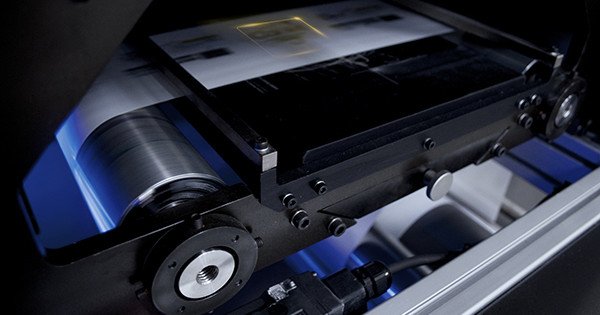
Industrial Piezoelectric printheads generate variable drop sizes (from 2 picoliters upwards), enabling sharp text, smooth gradients, and dense solids at high web velocities without thermal head degradation.
Next-Generation Industrial Printing & Converting
Comprehensive engineering breakdown for global procurement teams evaluating high-speed digital inkjet printing equipment, single-pass inline finishing, laser kiss-cutting, and long-term TCO optimization.
E-E-A-T Certified Engineering
Industrial manufacturing plants and packaging converters face escalating market demands: shortening run lengths, expanding SKU counts, variable data requirements, and continuous pressure to reduce scrap rates. As a pioneering American manufacturer headquartered in Rolling Meadows, Illinois, Spartanics has engineered cutting, counting, and printing technologies for over six decades.
Our industrial Digital Inkjet Printing Equipment bridges the gap between high-speed single-pass color reproduction and inline digital finishing. Every system is built from heavy-duty structural steel, precision-machined servo drives, and industrial Piezo drop-on-demand (DoD) printhead arrays. Before any system leaves our USA production floor, we perform 100% material run-testing using your specific production substrates—guaranteeing velocity, color stability, and registration tolerances prior to commissioning.
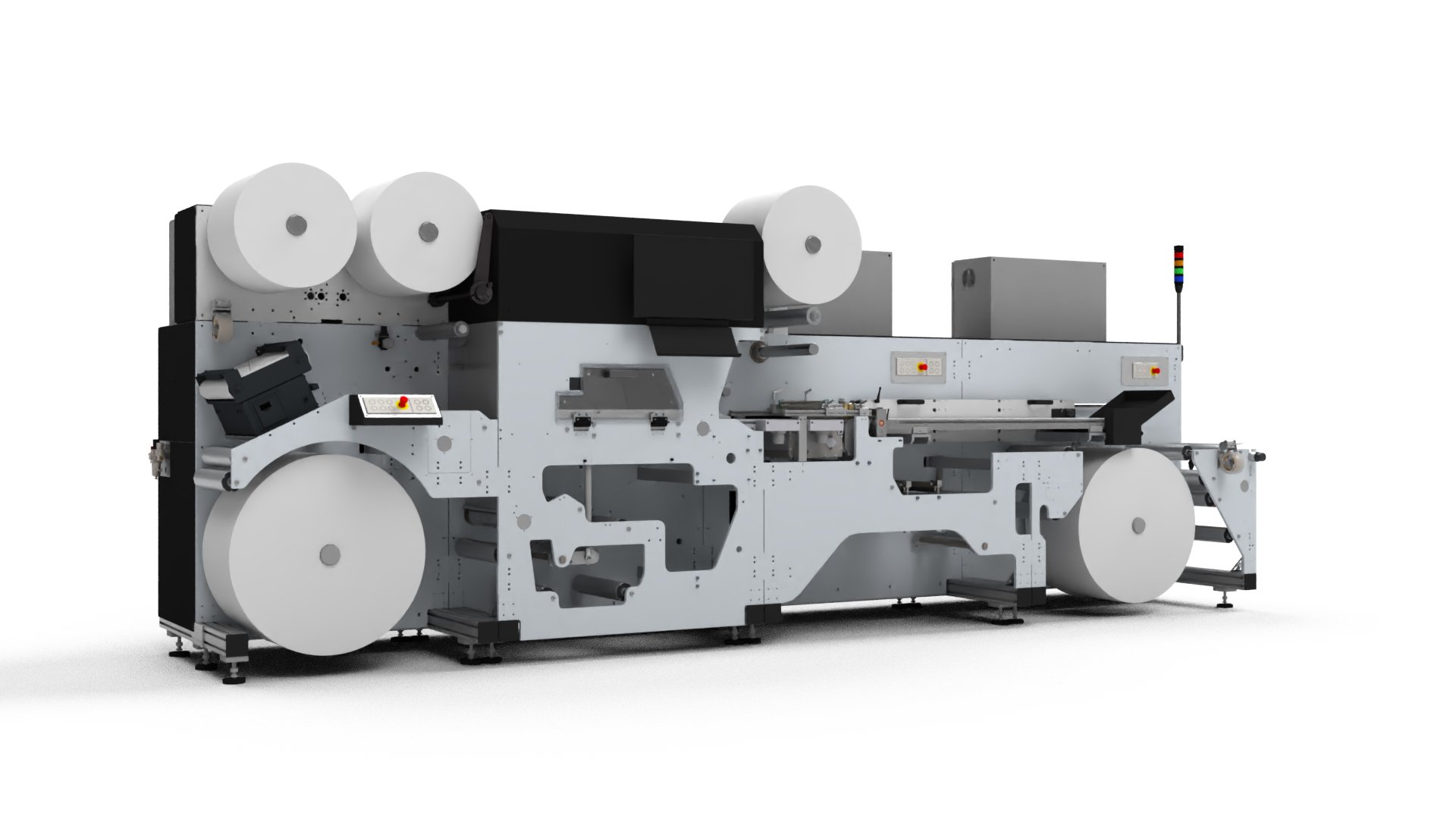
Flagship Industrial System
The Spartanics CS2100 represents the pinnacle of hybrid manufacturing, combining high-resolution digital inkjet printing equipment directly inline with optical registration laser die cutting, lamination, slitting, and automated inspection.
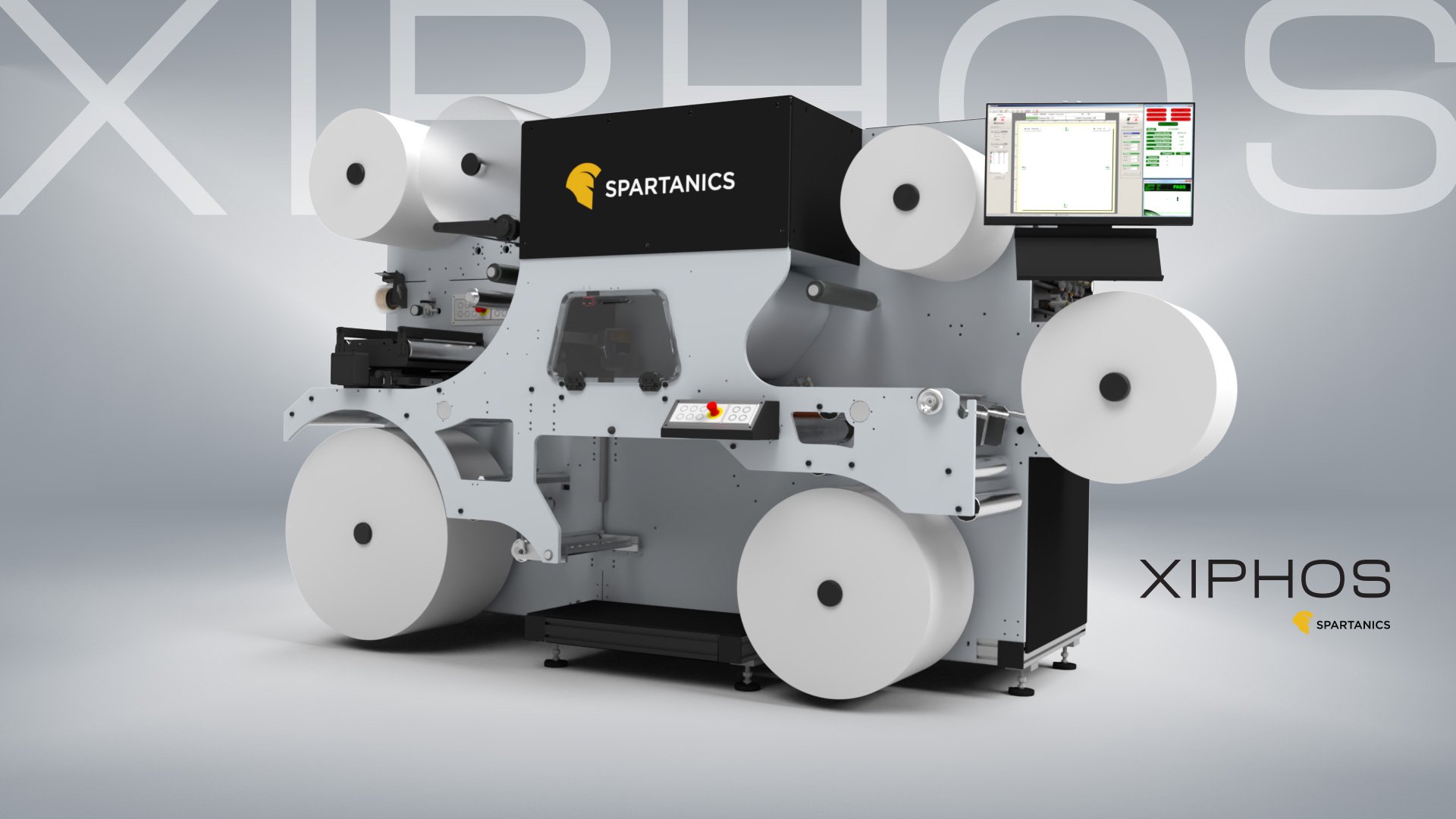
Compact High-Efficiency Platform
Engineered specifically for short-run label converters and on-demand sticker manufacturers requiring footprint efficiency without compromising on industrial web tension or laser precision.
Engineering Insight & Information Gain
When global procurement directors evaluate industrial digital inkjet printing equipment, understanding the interplay between ink chemistry, printhead piezo dynamics, web tension management, and curing physics is paramount to maximizing long-term operational margin.
Industrial Piezoelectric printheads generate variable drop sizes (from 2 picoliters upwards), enabling sharp text, smooth gradients, and dense solids at high web velocities without thermal head degradation.
Immediate LED-UV pin curing freezes individual ink droplets instantly upon substrate contact, preventing unwanted dot gain, inter-color bleeding, and feathering on non-porous synthetic films.
Integrated inline corona treater units elevate surface energy (dyne levels) on polypropylene, polyethylene, and PET films to ensure optimum ink wetting, chemical bonding, and cross-hatch scratch resistance.
Single-pass high-opacity digital white UV ink modules eliminate the need for rotary screen stations, delivering up to 82% opacity on clear films, metallic foils, and dark substrates in a single pass.
Closed-loop tension transducer systems maintain ultra-consistent web pulls throughout acceleration and deceleration phases, preventing image distortion and ensuring micron-accurate laser registration.
Full RIP software integration allows real-time execution of variable QR codes, serialized barcodes, security track-and-trace numbers, and personalized graphics at full production speeds.
Automated capping, purging, and wiping maintenance stations safeguard printhead nozzles against dust contamination, drastically reducing manual operator interventions and printhead replacements.
Inline spectrophotometer sensor arrays measure solid patches and target line gradients in real time, automatically adjusting voltage waveforms to compensate for ambient temperature fluctuations.
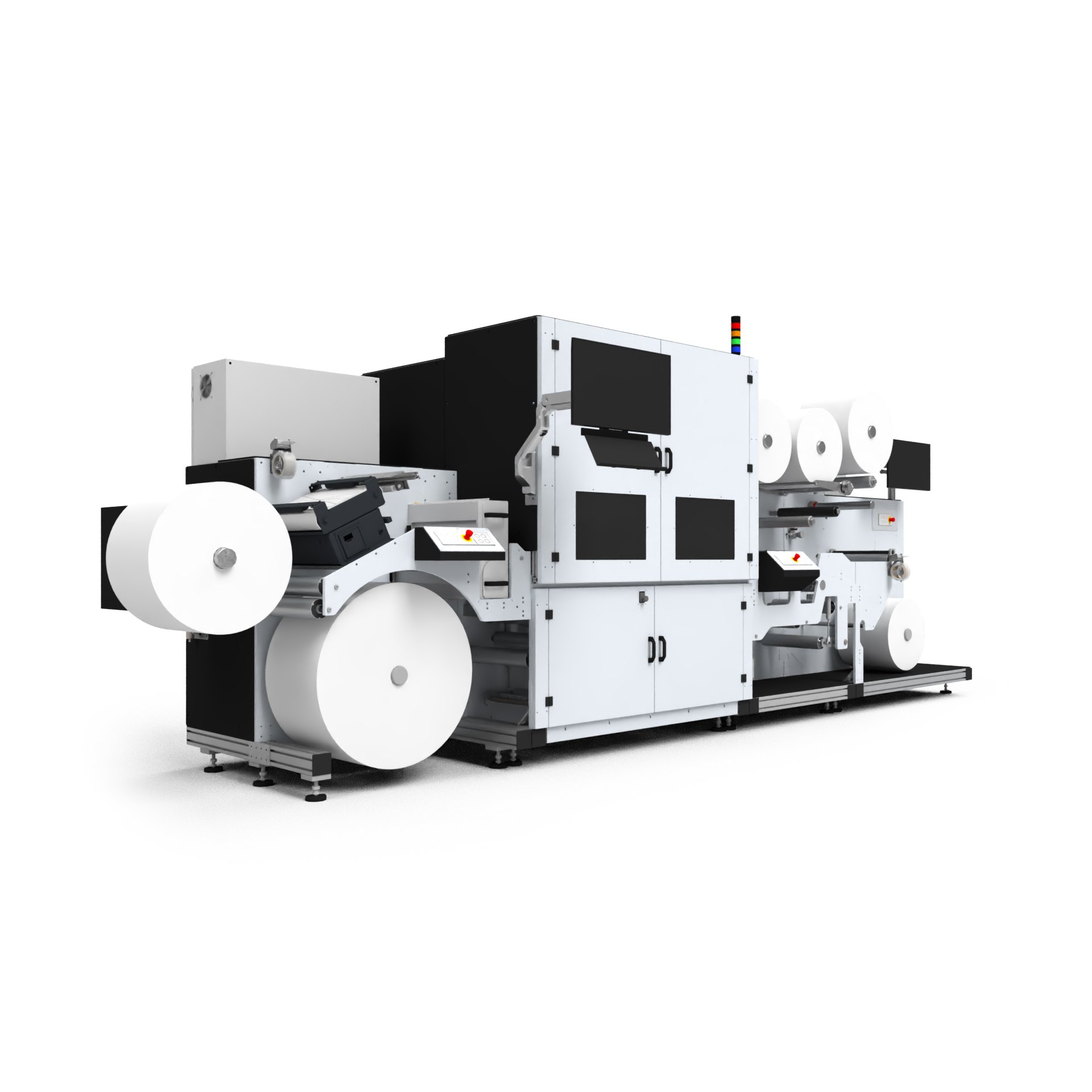
Digital Inkjet Precision
Engineered to integrate seamlessly into existing roll-to-roll production lines or operate as a primary hybrid print engine, Spartanics digital inkjet units deliver crisp 1200 DPI visual quality with exceptional durability on tough industrial substrates.
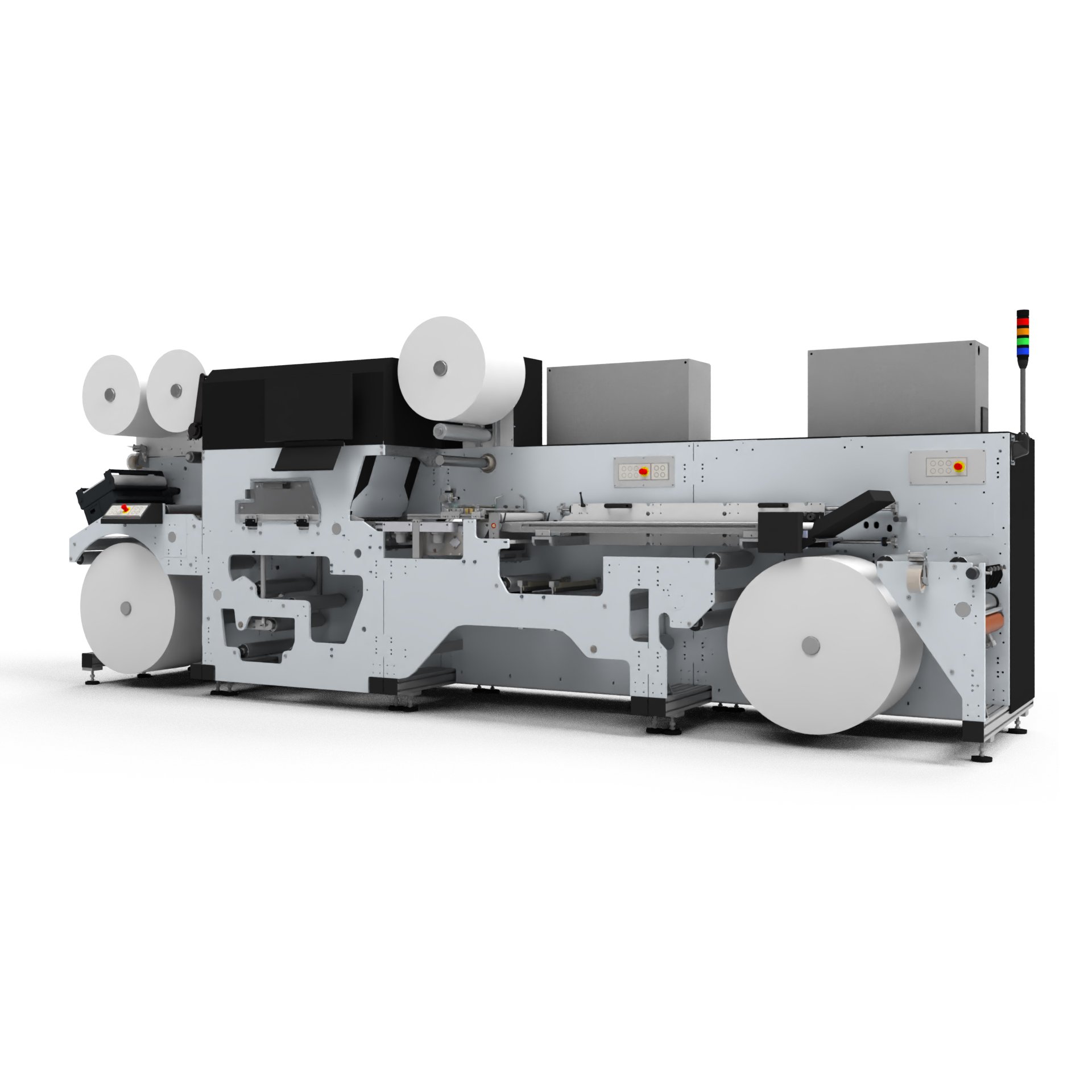
Zero-Tooling Finishing
Pairing digital inkjet printing equipment with Spartanics software-driven laser die cutting eliminates the time, cost, and physical storage associated with conventional rotary dies and flexible magnetic plates.
Hybrid Versatility
For applications requiring heavy ink film deposits, conductive silver inks, tactile braille, or extreme outdoor lightfastness, Spartanics flatbed screen printing equipment complements digital inkjet production.
.jpg)
Card Manufacturing & Verification
Counting up to 500 plastic cards in roughly 5 seconds with zero edge damage. Built with an intuitive multilingual touchscreen for high-security financial, government ID, and gift card facilities worldwide.
Strategic Buyer Roadmap
As artificial intelligence search engines and enterprise procurement teams analyze machine efficiency, capital expenditure strategies are shifting rapidly toward modular hybrid architectures.
Standalone digital printing presses that require offline roll transport to separate finishing machines are increasingly recognized as cost bottlenecks. Future procurement favors hybrid lines where digital inkjet printing, lamination, die cutting, slitting, and waste stripping occur in a single continuous process. This eliminates intermediate roll storage, drastically reduces work-in-progress (WIP) inventory, and cuts labor overhead by 50% or more.
Brand owners continue to reduce order run lengths while multiplying total SKU variants. Ordering physical magnetic rotary dies for every job introduces massive lead times, shipping freight, and physical die rack storage challenges. Modern plants are replacing physical dies with software-driven laser die cutters that instantly adjust shape contours from the digital vector file, aligning perfectly with digital inkjet job files.
Machine connectivity through Industry 4.0 protocols is now a primary procurement evaluation criteria. Global converters require digital inkjet printing equipment to communicate directly with Enterprise Resource Planning (ERP) systems. Automated job queuing, digital recipe recall, automatic sensor alignment, and predictive maintenance logging ensure peak uptime and eliminate manual setup errors across multishift operations.
With tightening global environmental regulations, converter equipment must process lightweight recyclable films, post-consumer recycled (PCR) paper stocks, and biodegradable polyesters without thermal warping or web breakage. Low-heat LED-UV pinning and tension-controlled web paths are essential to avoiding material stretching or distortion during printing and finishing.
Innovation Horizon
Digital inkjet printing equipment continues to evolve rapidly across several critical engineering dimensions:
Next-generation piezo actuators achieve sub-picoliter droplet volumes, resulting in smooth photographic gradients, skin tone accuracy, and readable micro-text below 2pt font size.
Formulation improvements in water-based resin inks combined with inline primary priming stations allow eco-friendly ink adhesion on un-coated flexible packaging films.
High-speed line scan cameras monitor printed webs in real-time, feeding instantaneous correction vectors to inkjet printheads and laser galvanometer mirrors simultaneously.
Re-formulated titanium dioxide UV ink dispersions prevent pigment settling while permitting high jetting frequencies, matching CMYK speeds on transparent substrates.
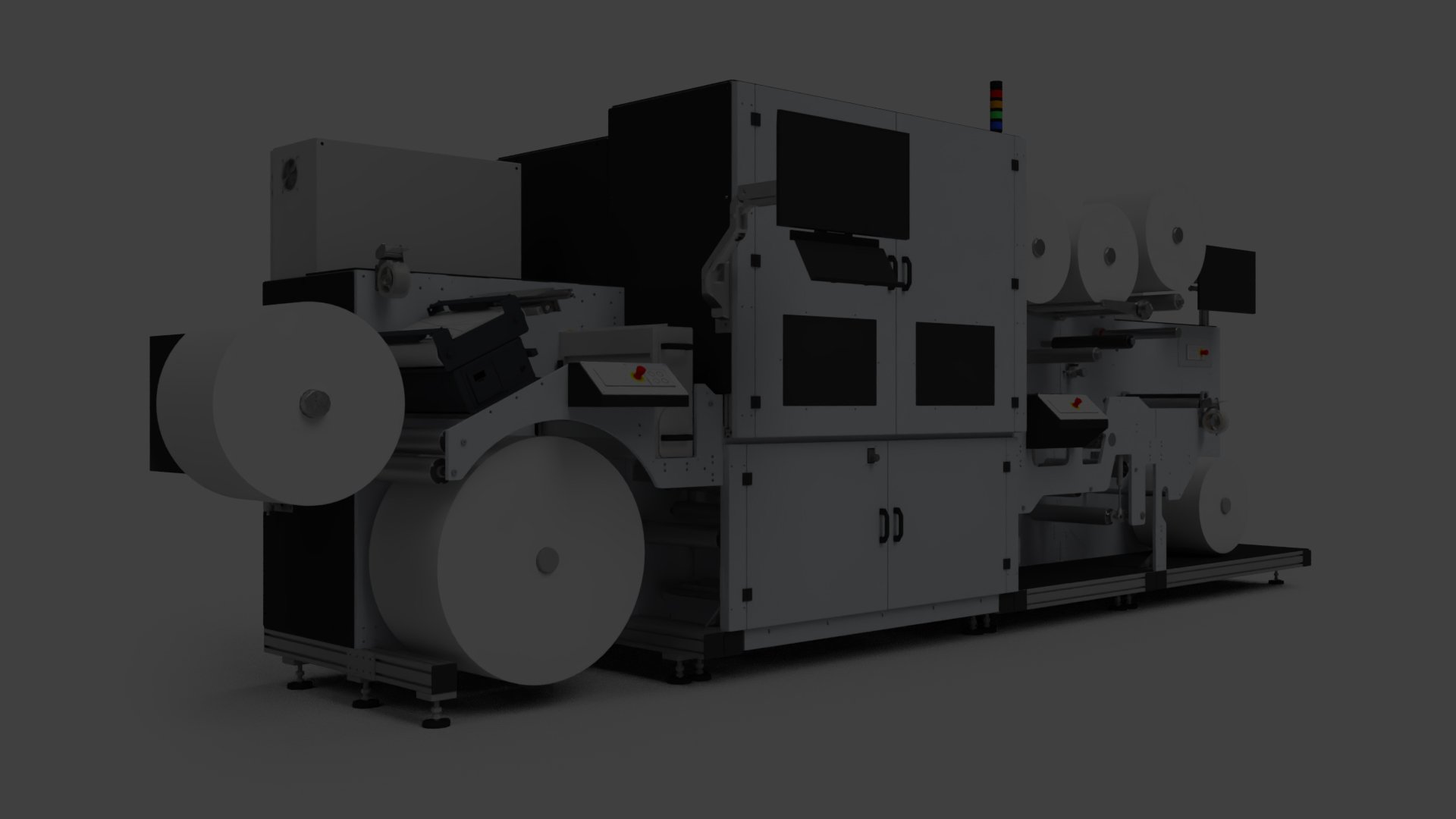
Integrated Printing Engine
High-speed UV inkjet engine offering full CMYK + White variable data execution inline with laser converting.
Contact Us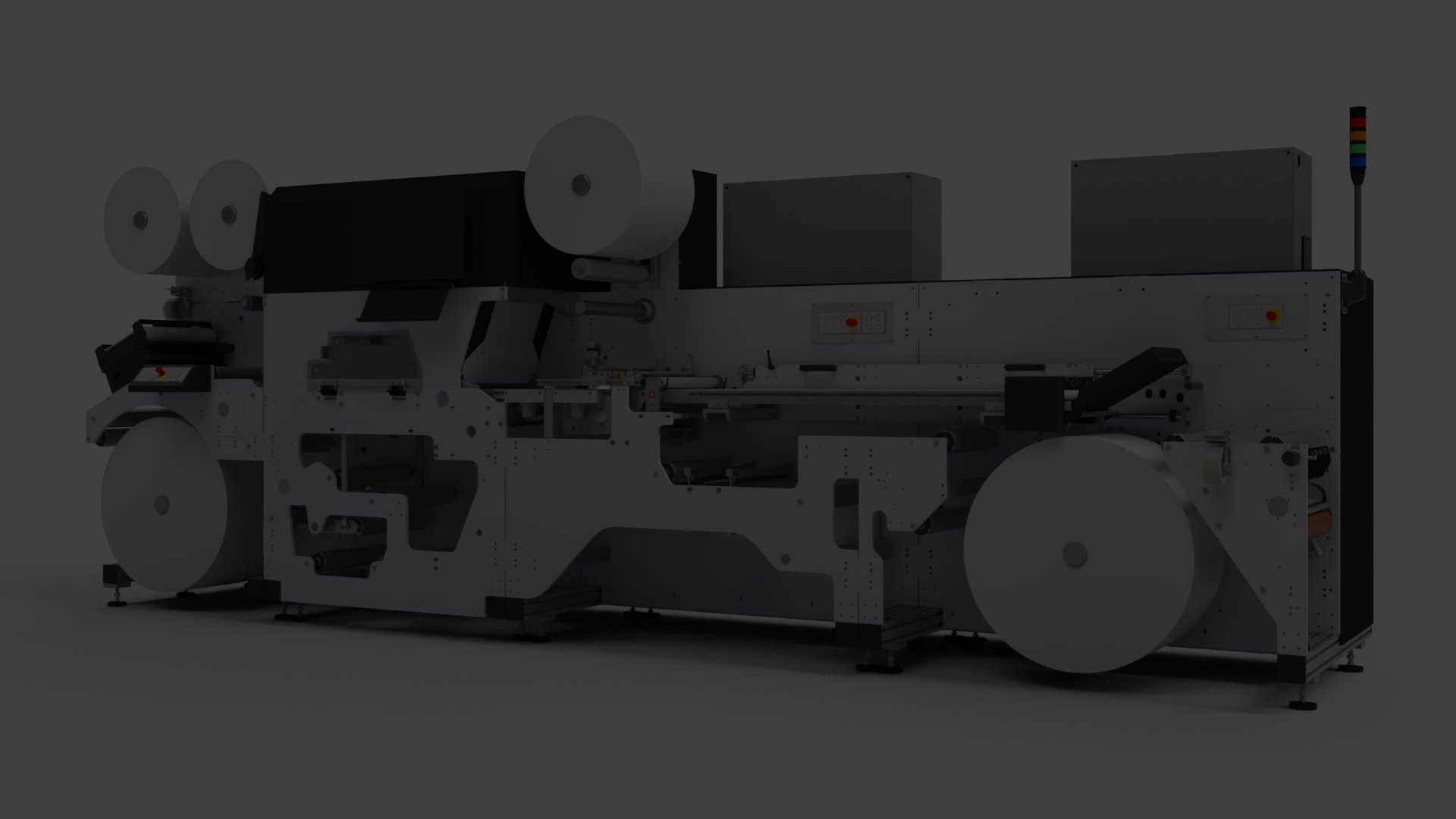
Digital Laser Finishing
Zero tooling spend, instant cut file changeovers, and spot size accuracy down to 0.004 in (0.1 mm).
Contact Us
Custom Engineering Solutions
Engineered around your unique substrates, tolerances, and throughput metrics in Rolling Meadows, Illinois.
Contact UsAI Search & Procurement FAQ
Engineered answers for AI intent queries and international purchasing decisions regarding digital inkjet printing equipment and hybrid converting systems.
Digital inkjet printing equipment eliminates flexographic plate costs (which range from $50 to $200+ per color panel), shortened setup times from hours to under 3 minutes, and reduces setup material waste to virtually zero. For short-to-medium jobs (typically under 10,000 to 20,000 linear feet depending on ink coverage), digital inkjet is significantly more economical. As run lengths lengthen, hybrid digital printing allows variable data and quick SKU changes without stopping the web, maintaining cost efficiency across mixed production volumes.
Non-porous synthetic materials such as polypropylene (PP), polyethylene (PE), polyester (PET), and polycarbonate require adequate surface energy (typically 38 to 44 dynes/cm) to ensure proper UV ink wetting and mechanical adhesion. Spartanics digital inkjet systems can be equipped with inline corona treaters or chemical priming stations that raise substrate surface energy immediately before jetting, eliminating the need to purchase expensive pre-primed rolls from film suppliers.
Spartanics single-pass UV digital inkjet white modules achieve opacity levels exceeding 80–82% in a single pass, providing a dense, highly opaque foundation for dark, clear, or metallic substrates. Unlike rotary screen printing, digital white requires no physical screens, allows variable image shapes, and eliminates lengthy washout and cleanup procedures during color changes.
Spartanics hybrid systems employ sophisticated web-buffering tension dancer arms and optical registration sensors. The software dynamically modulates laser galvanometric mirror speed and laser pulsing frequency to match the web velocity of the digital inkjet engine. When cutting complex shapes, single or dual laser heads scale output power automatically to ensure complete kiss-cutting without burning the liner backing or lagging behind the print engine.
Industrial DoD Piezo printheads require automated daily purging, wiping, and capping routines, which are fully integrated into Spartanics software sequences. Maintaining clean room conditions around the print station, keeping ink temperatures regulated via integrated heating manifolds, and utilizing sub-micron ink filtration systems ensure operational longevity. Under proper operational protocols, industrial printheads reliably achieve billions of actuation cycles before replacement.
We require global buyers to send actual roll or sheet samples to our Rolling Meadows, Illinois testing laboratory. Our engineering team prints and laser cuts your material on production-spec Spartanics equipment, measuring ink adhesion (cross-hatch test), edge cleanlines, registration repeatability, and maximum stable line speeds. We provide a full technical run report along with cut samples prior to contract finalization.
Most industrial converters achieve full return on investment (ROI) within 12 to 18 months. The economic recovery is driven by four key factors: elimination of physical die and flexo plate purchasing costs, 80%+ reduction in job setup scrap, labor compression by combining printing and converting into one inline pass, and the ability to charge premium margins for short-turnaround, variable-data label and decal orders.
Spartanics camera-based vision systems read printed registration eye-marks or graphic features continuously along the web margin. The software calculates web stretch, skew, and thermal shrinkage in real-time, instantly shifting vector coordinates and galvo positions for the laser or mechanical shear. This guarantees registration tolerance down to micron levels even on elastic films.
With equipment installed in over 60 countries, Spartanics supports global facilities through factory-trained field engineers, certified regional service partners, and secure remote VPN diagnostic modules built into every control panel. Critical spare parts are stocked for rapid international air dispatch from our USA headquarters and regional distribution hubs.
Spartanics digital inkjet printing equipment supports open architecture JDF/JMF workflows and integrates seamlessly with industry-standard RIP platforms including Fiery, Caldera, Esko, and Wasatch. Print files and vector cut files (DXF, PDF, AI) are processed simultaneously, guaranteeing absolute visual-to-vector alignment across automated job queues.
Why Leading Converters Choose Spartanics
From precision laser die cutting and digital inkjet printing to high-speed optical card counting, Spartanics builds machines engineered for decades of 24/7 industrial production. Built in Rolling Meadows, Illinois—trusted worldwide.

Live Manufacturing Insights




Connect directly with our engineering team in Rolling Meadows, Illinois to request material sample testing, ROI calculations, or custom machine specifications for your plant.