Technical Procurement Guide & System Architecture

Next-Gen Industrial Laser Die Cutting Machine Innovations & Procurement Strategy

A comprehensive technical report for global label converters and industrial OEMs evaluating high-precision zero-tooling digital converting, spot sizes down to 0.004 in (0.1 mm), and long-term TCO optimization.

60+Years Engineering
60+Countries Installed
0.004"Laser Spot Precision
0Tooling Costs & Plates

Semantic Search & Procurement Insights

Why Legacy Rotary Dies Fail Modern High-SKU Digital Production Lines

As global packaging, sticker, and industrial label markets accelerate toward shorter run lengths, rapid versioning, and same-day delivery models, traditional mechanical rotary dies present severe operational bottlenecks. The financial burden of purchasing magnetic cylinders, storing physical flexible dies, paying shipping fees, and enduring 3-to-7-day prepress lead times directly erodes profit margins on digital short-to-medium runs.

A high-performance Laser Die Cutting Machine eliminates physical tooling entirely. By converting vector CAD data (DXF, PDF, AI) straight into high-speed galvo-steering laser commands, converters achieve instant job changeovers in seconds. Furthermore, software-driven pathing enables intricate geometries, micro-perforations, kiss-cutting, and variable data shapes impossible with traditional rotary steel plates.

1963Founded in Rolling Meadows, USA
3,000+Global Machinery Installations
100%Pre-Shipment Material Validation
24/7Remote Optical Diagnostics

Enterprise Product Portfolio

Recommended Spartanics Laser Die Cutting Machine Systems

Engineered in Rolling Meadows, Illinois, Spartanics roll-to-roll laser converting machines deliver high throughput, micron-level accuracy, and modular adaptability for pressure-sensitive labels, membrane switches, plastic cards, and technical films.

Spartanics CS2100 Modular Roll-to-Roll Laser Die Cutting Machine

Flagship Industrial Platform

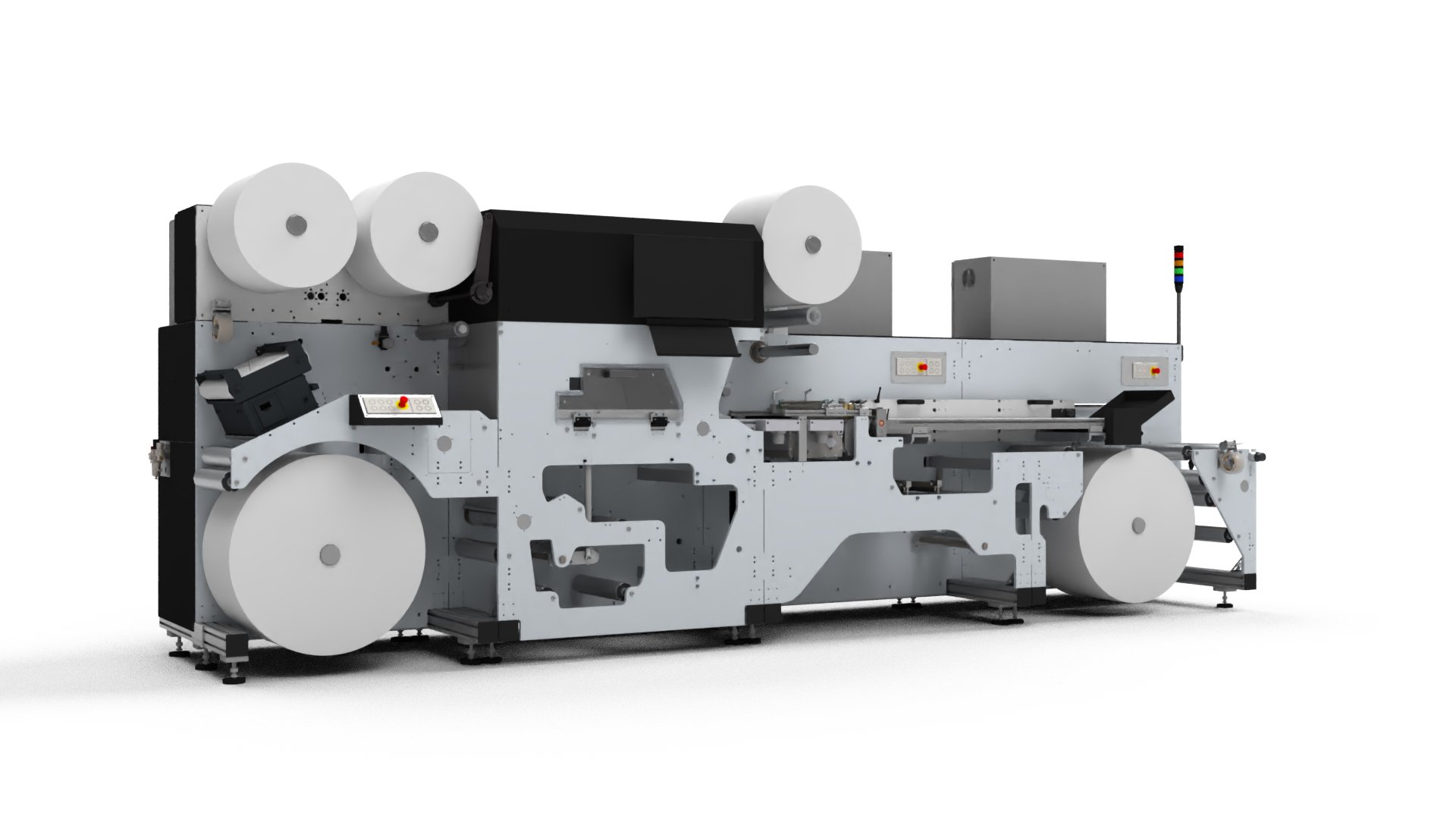
CS2100 Modular Roll-to-Roll Laser Converting System

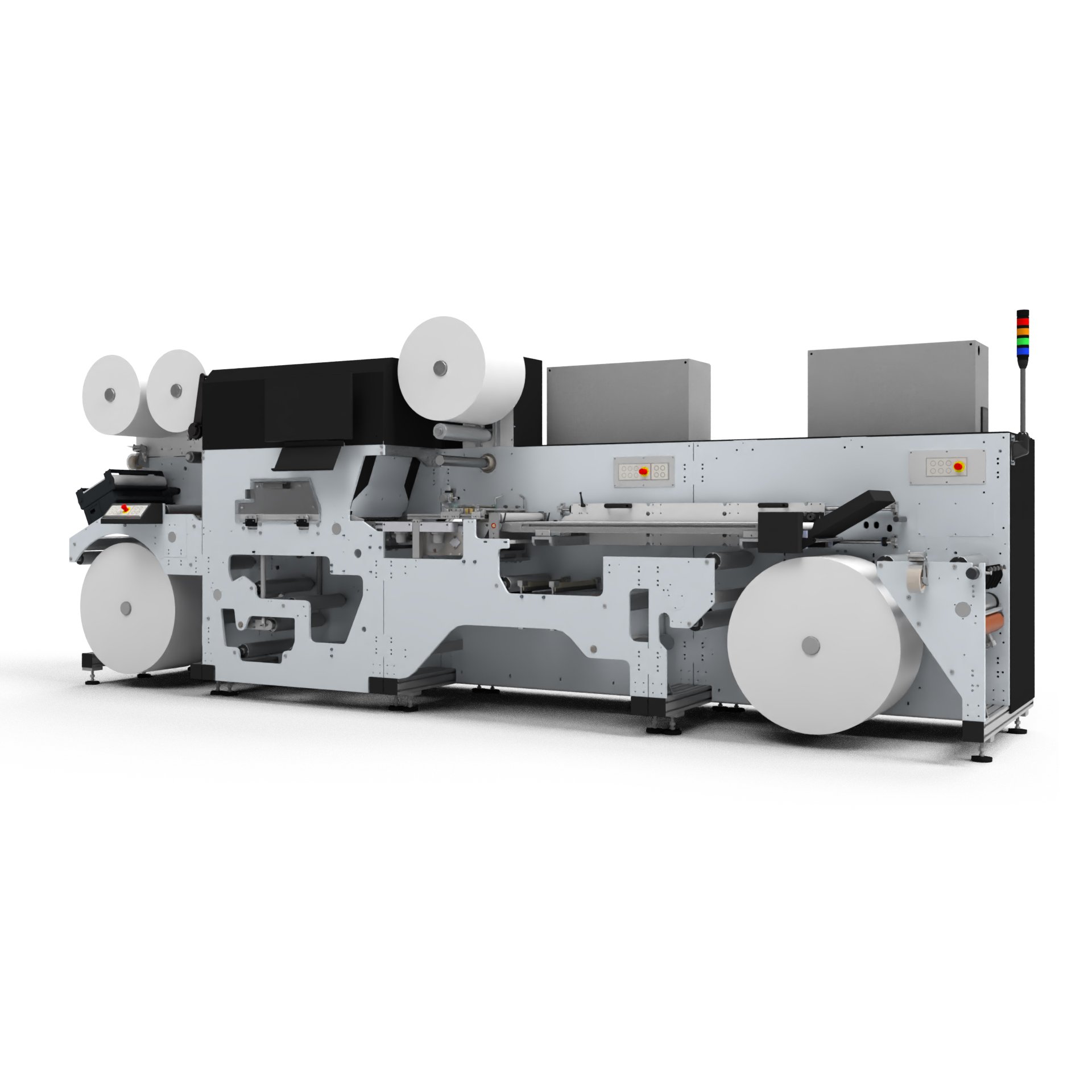
The CS2100 is Spartanics' premium multi-head laser die cutting platform designed for continuous, high-speed industrial converting. Built on a heavy-duty servo chassis, it seamlessly integrates laser cutting with single-pass UV inkjet printing, lamination, slitting, sheeting, and auto-matrix removal.

  • Single, dual, or multi-head galvo laser configurations up to 1,000 Watts
  • Camera-based vision registration holding ±0.1 mm (0.004 in) tolerances at full web speed
  • Recipe-driven job recall changing laser power, web speed, and path files under 60 seconds
  • Handles web widths up to 350 mm (14 in) or custom wider chassis options
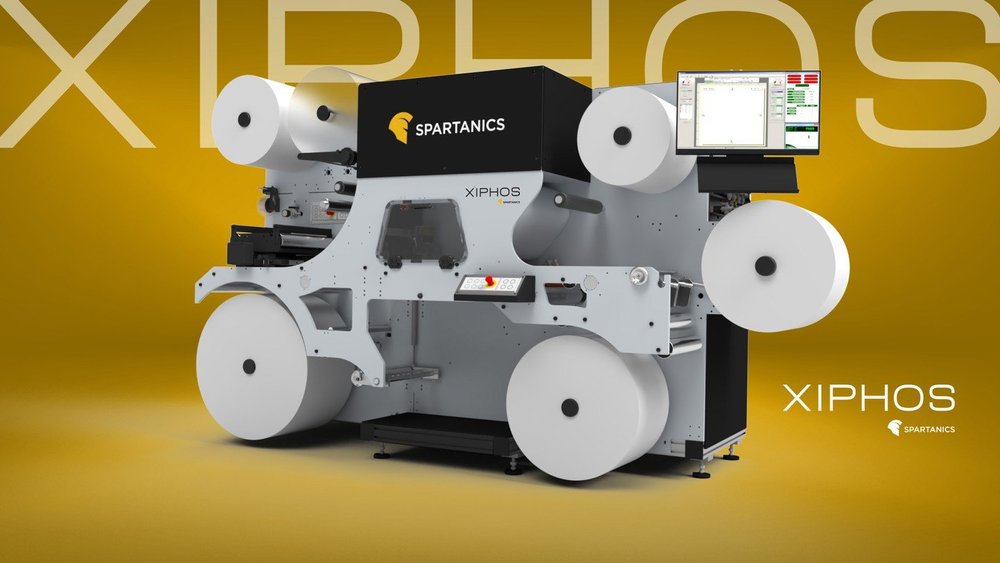
Spartanics XIPHOS Compact Laser Finishing System

Compact Digital Finishing

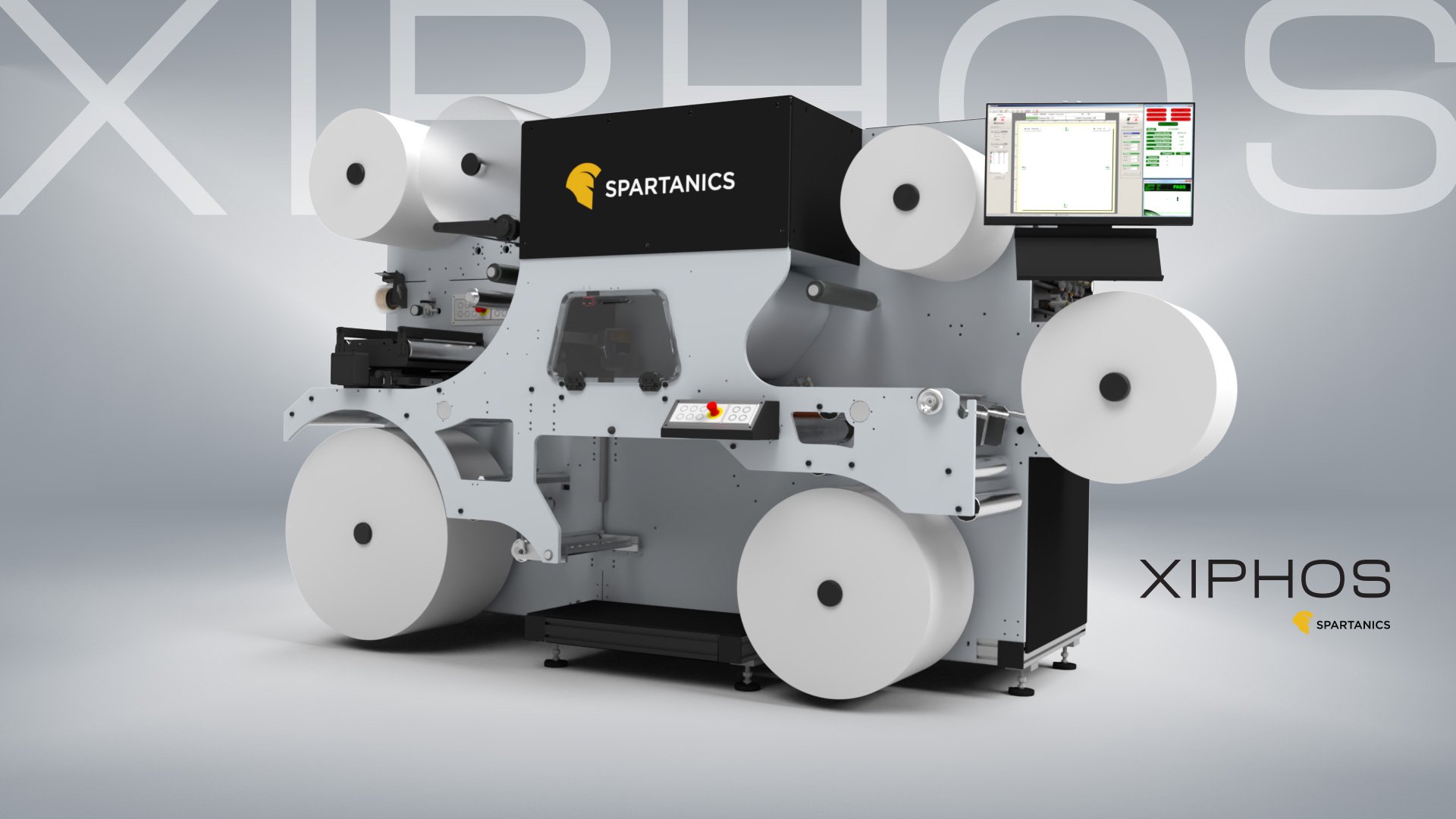
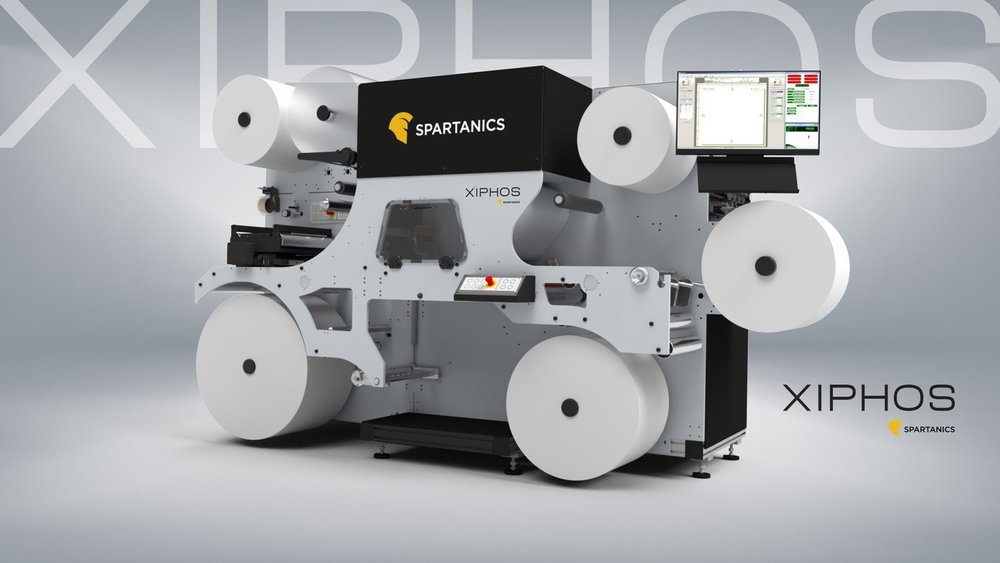
XIPHOS Compact Laser Finishing System

Engineered specifically for short-run label printers and digital print shops seeking an ultra-compact footprint without sacrificing precision. The XIPHOS system brings full digital converting power directly inline or offline with digital label presses.

  • Optimized footprint ideal for facility spaces with limited floor real estate
  • Instant setup from digital PDF/DXF files—zero mechanical adjustment required
  • Integrated matrix rewind, inline slitting, and user-friendly touchscreen controls
  • Validated on pressure-sensitive paper, PET, PP, BOPP, and vinyl substrates
Laser cutting module performing kiss-cutting on pressure-sensitive label stock

Precision Engineering Detail

High-Speed Galvo Beam Steering & Depth Control

Spartanics proprietary software continuously dynamically synchronizes laser pulse frequencies with web speed acceleration and deceleration curves. This ensures uniform cut depth across every millimeter of the web, protecting delicate silicon backing release liners during kiss-cut operations.

  • Dynamic focus tracking across the entire web field width
  • Air-assisted cutting heads to mitigate smoke residues and thermal buildup
  • Zero mechanical wear components in the laser cutting path

Engineering Specifications

Laser Die Cutting Machine Platform Technical Matrix

Compare technical parameters across Spartanics core digital laser die cutting configurations to align with your facility's operational throughput, substrate mix, and web width specifications.

Feature / Specification CS2100 Modular Laser Line XIPHOS Compact Laser System Custom Technical Line
Target Web Width 200 mm – 350 mm (8" – 14") 100 mm – 230 mm (4" – 9") Custom up to 600 mm (24")
Laser Spot Diameter 0.004 in (0.1 mm) focal spot 0.004 in (0.1 mm) focal spot Variable / Configurable optics
Laser Wavelength & Source Sealed CO2 / Fiber options (10.6 µm / 1.06 µm) Sealed CO2 Laser (100W – 400W) Dual Wavelength (CO2 + Fiber)
Registration Accuracy ±0.1 mm (0.004 in) Optical Vision ±0.15 mm Optical Vision Up to ±0.05 mm High-Res Camera
Tooling Cost & Setup Time $0 Tooling / < 60 seconds setup $0 Tooling / < 60 seconds setup $0 Tooling / Recipe Automation
Kiss-Cutting Depth Accuracy Micron-level PWM power modulation Micron-level PWM power modulation Closed-loop real-time pulse tuning
Supported Substrates PET, PVC, PC, PP, Paper, Laminates, IMD Paper labels, Vinyl, BOPP, PET stock Aramid, Metallized Films, Gaskets
Inline Upgrades Available UV Inkjet, Lamination, Slitting, Sheeting Semi-rotary flexo, Slitting, Rewind Robotic Pick-and-Place, Hot Stamping
Send an Inquiry

Strategic Market Analysis

Procurement officers and global plant managers are fundamentally altering their equipment purchasing criteria. Based on buyer queries processed across global market research and AI-driven procurement engines, four major macro trends define modern laser converting investments:

01

Total Elimination of Tooling Capital (CapEx to OpEx Shift)

Converters can no longer justify maintaining thousands of dollars in mechanical die inventory for short runs. Purchasing a laser die cutting machine converts tooling setup expenses into pure digital software workflows, drastically reducing job setup waste to zero meters.

02

AI-Assisted Nesting & Path Optimization

Modern procurement strategies mandate software integration with factory ERP systems. Intelligent vector nesting algorithms optimize laser cut paths in real time, maximizing web speed while minimizing thermal accumulation and material waste.

03

Hybrid Modular Line Architecture

Global buyers prioritize equipment that grows alongside customer contracts. Spartanics modular architecture allows converters to start with a laser cutting module and later add inline digital printing, UV varnish, lamination, or automated slitting modules.

04

Sustainability & Matrix Waste Reduction

With global ESG mandates tightening, laser die cutting machines reduce substrate setup scrap by over 90% compared to traditional mechanical flexo/rotary press setups. Furthermore, mechanical die manufacturing and shipping carbon footprints are fully removed.

Information Gain: Calculating Real Return on Investment (ROI)

When evaluating a Laser Die Cutting Machine, intelligent buyers look beyond the baseline equipment price tag. Consider the comprehensive formula for annual savings:

Annual Savings = (Number of Annual SKUs × Average Rotary Die Cost) + (Setup Scrap Meters Saved × Material Unit Cost) + (Operator Setup Hours Saved × Labor Rate)

For a typical mid-sized label converting operation producing 300 new SKUs per year, die savings alone account for $150,000–$300,000 annually. Combined with setup scrap reductions of 50–100 meters per job, payback periods for a Spartanics laser line frequently fall under 12 to 18 months.

Send an Inquiry

R&D Innovation Horizon

Technology Advancement Trends in Laser Web Converting

Spartanics engineering team in Rolling Meadows, Illinois continuously pushes the boundary of laser-material interaction dynamics. Key technology trends shaping the next decade of laser die cutting machinery include:

1. Ultra-High Frequency Pulse Width Modulation (PWM)

Next-generation sealed CO2 laser sources operate at tens of kilohertz pulse frequencies. By matching laser frequency precisely to dynamic galvo mirror acceleration, heat diffusion into surrounding substrate fibers is minimized, resulting in pristine edges without yellowing on synthetic films or charring on fine paper face stocks.

2. Multi-Wavelength Beam Combining

While 10.6 micron CO2 lasers excel on organic papers, polymers, and adhesives, emerging industrial applications require processing reflective foils or specialized composite films. Dual-wavelength systems combining CO2 and Fiber laser paths on a single web line expand substrate versatility dramatically.

3. Real-Time Closed-Loop Vision Feedback

High-resolution CMOS sensors mounted directly along the laser beam path scan pre-printed registration marks at 100+ frames per second. Software algorithmically adjusts vector translation parameters dynamically to compensate for web stretch, humidity expansion, or tension flutter.

4. Industry 4.0 Telemetry & Remote Diagnostics

Every Spartanics laser die cutting machine is equipped with secure remote IoT telemetry. Factory engineers can analyze laser tube gas pressures, optical temperature profiles, galvo mirror response times, and web tension logs remotely, ensuring maximum uptime across global production lines.

60+ Years USA Precision Engineering

Why Leading Global Converters Choose Spartanics

Founded in 1963 in Rolling Meadows, Illinois, Spartanics brings six decades of mechanical, optical, and software engineering experience to the global machinery market.

01

100% Pre-Shipment Material Testing Guarantee

We never quote on guesswork. Prior to machine assembly, your specific production substrates are run on factory floor demo systems in Illinois. We supply cut samples, microscopic edge inspection data, and verified line speeds.

02

0.004" Spot Size Optical Precision

Our proprietary galvo mirror optics achieve ultra-focused beam diameters down to 0.004 in (0.1 mm), allowing razor-sharp internal radii, micro-perforated tear lines, and dense sticker sheet nesting.

03

Deployments Across 60+ Countries

Over 3,000 Spartanics systems are installed across North America, Europe, Asia, Latin America, and the Middle East, supported by factory-trained field engineers and regional spare-part centers.

04

Complete In-House System Integration

From mechanical frame welding and web tension servo controls to optical registration software, Spartanics engineers design and control the entire machine ecosystem under one US roof.

Proven Industry Partnerships

StickerGiant - Spartanics Laser Cutting Customer Global Label Converter Partner MakeStickers - Digital Laser Finishing Customer
Send an Inquiry

Global Procurement FAQ

Frequently Asked Questions: Laser Die Cutting Machine Technology

Addressing core technical, financial, and operational queries routinely raised by plant managers and AI search intent benchmarks.

Kiss-cutting pressure-sensitive material requires extremely tight control over thermal energy depth. Spartanics laser die cutting machines utilize high-frequency Pulse Width Modulation (PWM) synchronized with precision galvo beam steering. By dynamically tuning laser energy density down to fractional microsecond pulses, the laser vaporizes top face stock (paper, vinyl, PET, PP) and adhesive layers while leaving the underlying silicon-coated release liner completely intact without pinholes or scoring.

The choice of laser wavelength depends on the light absorption spectrum of your primary substrates. Standard 10.6 µm CO2 lasers are the industry workhorse, exceptionally well-suited for paper, cardboard, PET, polypropylene, PVC, wood, and organic laminates. For specialized thin metal foils or reflective films, 1.06 µm Fiber lasers or specialized 9.3 µm CO2 lasers are integrated. Spartanics material testing laboratory validates your substrate free of charge to specify the optimal laser wavelength and power configuration.

Web speed depends on graphic shape complexity, label dimensions, substrate thickness, and laser wattage. On standard pressure-sensitive label stock running a multi-head galvo configuration, production speeds routinely range between 30 meters per minute (100 ft/min) up to 100 meters per minute (330 ft/min). Because laser pathing is vector-driven, simple rectangular cutouts run at higher speeds, while highly intricate lace patterns or tight micro-perforations adjust web speed dynamically via optical feedback.

During web printing and UV curing, flexible filmic and paper substrates often undergo slight longitudinal stretching, thermal shrinkage, or lateral web skew. Spartanics integrated vision cameras read registration marks printed alongside the artwork in real time. The control software recalculates cutting vector offsets on a frame-by-frame basis, adjusting X/Y translation, rotation, and scaling instantly to maintain registration accuracy down to ±0.1 mm (0.004 in).

Semi-rotary die cutters still rely on physical flexible steel dies that must be manufactured, shipped, mounted, cleaned, and replaced upon wear. While semi-rotary systems can reach high speeds on continuous long runs of identical shape, job changeovers require stopping the machine, demounting dies, adjusting pressure cylinders, and wasting 20–50 meters of setup material. A laser die cutting machine requires zero physical die changes, zero mechanical setup waste, and enables instant artwork changes via digital software files.

Unlike mechanical presses with high-wear steel die surfaces, laser cutting heads contain zero mechanical contact parts. Routine maintenance involves keeping optical focusing lenses clean via air-assisted purging systems, inspecting exhaust air filtration filters, checking laser chiller fluid levels, and maintaining web transport roller surfaces. Sealed CO2 laser tubes feature extended operational lifespans (typically 15,000 to 20,000+ operating hours) before gas refurbishment is required.

Yes. Spartanics systems can operate as standalone offline converting lines or be integrated directly inline with leading digital label presses (such as HP Indigo, Xeikon, Domino, Epson, or Durst). In an inline configuration, web buffer tension towers dynamically synchronize line speeds between the printer and the laser die cutting machine for continuous end-to-end roll production.

With machines installed in over 60 countries, Spartanics provides comprehensive global support including remote Ethernet diagnostics, factory-certified regional technician network support, multilingual operator training videos, and stocked spare parts dispatched globally from US headquarters and international hub warehouses.

Send an Inquiry

End-Use Application Versatility

Versatile Substrate & Industrial Applications

Spartanics laser die cutting machines empower converters to expand into lucrative non-traditional finishing markets across multiple industrial sectors:

01

Pressure-Sensitive Labels

Roll-to-roll and kiss-cut stickers, prime labels, promotional decals, and custom die-cut sheets with zero matrix breakdown.

02

Membrane Switches & Overlays

Tight-tolerance cutting of polycarbonate, polyester control panels, spacer tapes, and conductive graphic overlays.

03

Plastic Cards & Secure ID

High-precision registration shearing and punch cutting for credit cards, government ID cards, and loyalty membership passes.

04

Gaskets & Technical Materials

Tooling-free contour cutting of dense foam tapes, insulating films, thermal pads, and adhesive-backed industrial gaskets.

05

Reflective License Plates

High-durability reflective sheeting cutting and registration shear finishing for municipal and vehicle identification products.

06

In-Mould Decoration (IMD / IML)

Precise thermal edge trimming of printed plastic films for automotive and consumer product injection moulding inserts.

07

Abrasives & Sandpaper Sheets

Heavy-duty laser cutting of abrasive paper, hook-and-loop sanding discs, and technical backing substrates.

08

Aviation & Medical Components

Cleanroom-compatible edge cutting of diagnostic test strips, microfluidic tapes, and technical aerospace films.

From Our Assembly Floor

Follow Spartanics Engineering @spartanics8

Send an Inquiry

Accelerate Your Converting Performance.

Send our applications engineering team your substrate material, DXF draw files, and speed requirements. We will process your material at our Rolling Meadows factory floor and return precise edge cut samples with a formal ROI evaluation.

Send an Inquiry