0%

Sourcing reliable Optical Registration Shear suppliers in China requires more than comparing online prices. Global buyers need consistent cutting accuracy, stable machine construction, and responsive technical support. A capable supplier should explain registration control, blade adjustment, material compatibility, and expected production limits in clear terms.

Look for manufacturers with verifiable factory experience and documented quality procedures. Product samples can reveal details that brochures often hide. Check edge cleanliness, registration stability, noise levels, and operator access during real production tests. Ask for inspection records, component brands, warranty terms, spare-part availability, and installation support. Independent audits and recognized certifications can add confidence, but they should not replace practical testing.

Details matter.

This guide examines leading Chinese Optical Registration Shear suppliers from a buyer’s perspective. It considers engineering capability, customization, export experience, communication, and after-sales reliability. Supplier rankings should remain flexible because performance can change with staff, materials, and production volume. No supplier list is perfect. Some published specifications may also require closer verification. Buyers should request current drawings, tolerance data, factory videos, and reference projects before making a decision. A careful comparison can reduce costly delays and help match the machine to actual converting requirements. Reliability is built through evidence, not attractive claims.
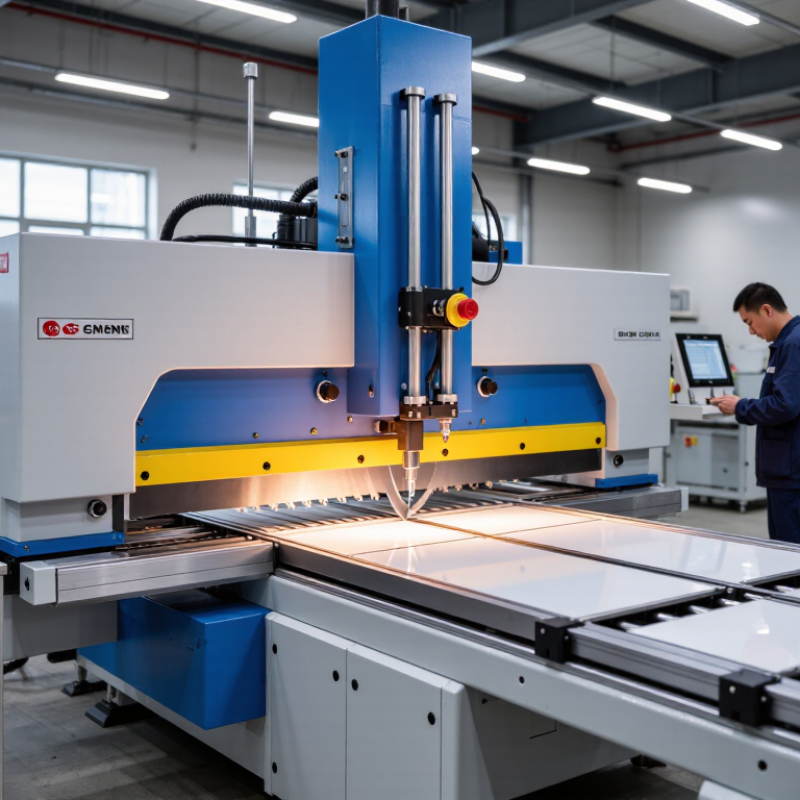
China Top Optical Registration Shear Suppliers for Global Buyers?

Defining Optical Registration Shears: Sensors, Cutting Systems, and Core Functions

Optical registration shears combine sensors, control software, and cutting hardware. A camera or photoelectric sensor detects printed registration marks on film, paper, or laminated web material. That mark becomes the machine’s reference point. An encoder tracks web movement, while the controller compares actual and target positions. The cutting system then adjusts blade timing or web alignment. This process supports accurate bags, labels, pouches, and narrow-format packaging. Fortune Business Insights valued the global digital printing market at USD 36.06 billion in 2023. It projects USD 54.69 billion by 2030, increasing pressure on converters to control short runs and variable designs.

The core function is simple: detect, calculate, and cut. The engineering is not simple. Glossy film can reflect light unevenly. Weak contrast can confuse sensors. Stretching during unwinding can also shift the registration mark. Faster lines need stable illumination, low-latency processing, and responsive servo control. Smithers’ packaging analysis highlights continued growth in digitally produced and customized packaging, where registration accuracy directly affects material waste. Still, no sensor solves every production problem. Operator experience remains important.

Tips: Test marks under real production lighting. Check sensor readings after changing substrate thickness. Leave enough control range for web stretch. Record reject rates, not only cutting speed. A lower speed may deliver better total yield. That trade-off deserves honest review.

Key Performance Metrics: Registration Error, Line Speed, Sheet Width, and Gauge

China Top Optical Registration Shear Suppliers for Global Buyers?

Registration error deserves close attention when comparing optical registration shears. Ask suppliers how they measure it, and under what conditions. A figure from a slow, clean test may not reflect production. Check repeatability across several sheets, not just one successful cut. Even a small shift can leave printed edges visibly uneven.

Line speed matters, but only alongside accuracy. A machine may run quickly while struggling to track marks on glossy or lightly printed stock. Confirm rated speed with the material and print pattern you actually use. Sheet width and gauge also shape performance. Bring sample sheets with the widest format and thickest stock in your expected range. Ask whether feed alignment or cutting quality changes near those limits. A tidy specification table can be reassuring, but it cannot replace a practical trial.

Tips: Request a sample run at your target speed. Measure registration error at multiple points across the sheet. Record width, gauge, and material type, then compare results with the supplier’s stated range. Leave room for follow-up questions; I have seen a single test conceal inconsistent feeding.

Supplier Qualification: ISO 9001 Quality Systems and ISO 12100 Machinery Risk Assessment

Global buyers evaluating optical registration shear suppliers should examine more than cutting accuracy and delivery promises. ISO 9001 shows whether a supplier controls its quality system consistently. Ask for valid certification, documented procedures, inspection records, and corrective action reports. These records reveal how the factory handles misalignment, blade wear, and repeated production errors. Experienced suppliers usually connect incoming material checks with final machine testing. They can also explain measurement tools, calibration intervals, and operator training without vague answers.

ISO 12100 focuses on machinery risk assessment and safer machine design. Request the risk assessment for rotating parts, cutting zones, electrical controls, unexpected restart, and maintenance access. A credible supplier should identify hazards, reduce risks through design, and provide clear safeguards and instructions. Observe whether guards are practical, sensors are tested, and emergency stops are easy to reach. Paper compliance alone is not enough. A clean production floor does not prove every risk is controlled.

Tips: Check the paperwork. Compare certificates with the actual machine configuration and production site. Ask for a sample inspection report and a recorded safety test. Speak with the technical team, not only sales staff. No system is perfect. A small gap in document control may expose larger weaknesses, although that conclusion needs evidence. Keep a written qualification checklist, and record unanswered questions before approving a supplier.

China Top Optical Registration Shear Suppliers for Global Buyers? - Supplier Qualification: ISO 9001 Quality Systems and ISO 12100 Machinery Risk Assessment

Evidence-based qualification framework for evaluating optical registration shear manufacturers without publishing company or brand names.

Qualification Area Objective Requirement Required Supplier Evidence Buyer Verification Method Qualification Signal
Quality Management System A documented quality management system aligned with ISO 9001 requirements for controlled production and continual improvement. Valid ISO 9001 certificate, certification scope, issuing certification body, audit status, and documented control of nonconforming products. Check the certificate number with the issuing certification body and confirm that machinery manufacturing is included in the scope. Certificate is current, traceable, and within scope.
Machinery Risk Assessment Risk assessment performed according to ISO 12100, covering intended use, reasonably foreseeable misuse, hazards, and risk reduction measures. Machine-specific risk assessment, hazard list, protective measures, residual-risk information, and operating limitations. Review a redacted risk assessment and confirm that safeguards correspond to the actual shear configuration. Risks are identified, reduced, and communicated to users.
Optical Registration Control The machine should detect printed registration marks and maintain repeatable cutting alignment under defined material, speed, and environmental conditions. Sensor specification, control-system description, alignment test results, sample material conditions, and stated tolerance limits. Run a witnessed acceptance test using the buyer’s material, registration-mark design, web width, and operating speed. Performance is supported by repeatable test records rather than general claims.
Cutting Accuracy Published accuracy and repeatability values must be defined for a specific machine model and test condition. Factory inspection records, calibration procedure, measurement equipment details, and sample dimensional reports. Compare measured results with the contractual specification using calibrated inspection equipment. Tolerance is contractually defined and independently measurable.
Safety Functions Guards, emergency stops, interlocks, safe access, and control measures should match the identified mechanical, electrical, and operational hazards. Safety-circuit description, electrical drawings, guard and interlock test records, emergency-stop verification, and user instructions. Perform functional checks during factory acceptance testing and review the technical file or equivalent safety documentation. Safety functions work independently of normal production control.
Electrical and Control Documentation Electrical schematics, component identification, software or parameter backups, and maintenance instructions should be complete and controlled. As-built drawings, terminal schedules, spare-parts list, control-system backup, and revision-controlled manuals. Confirm document completeness against the delivered machine and verify that revisions are recorded. Documentation supports safe operation, troubleshooting, and future maintenance.
Traceability and Incoming Inspection Critical purchased components and production stages should be identifiable and subject to documented inspection. Supplier approval records, incoming inspection forms, serial-number tracking, inspection plans, and corrective-action records. Sample selected records for critical sensors, drives, blades, control components, and fabricated assemblies. Defects can be traced to a component, batch, process, or corrective action.
Factory Acceptance Testing A documented FAT should verify safety, optical registration, cutting performance, operating speed, alarms, and continuous running stability. FAT protocol, signed results, defect list, corrective-action closure, and agreed acceptance criteria. Witness the test remotely or in person and retain the signed acceptance record with the purchase file. Acceptance is based on recorded results against agreed criteria.
Installation and Commissioning The supplier should define installation conditions, utilities, alignment requirements, commissioning steps, and operator training responsibilities. Installation manual, utility schedule, commissioning checklist, training agenda, and site-acceptance procedure. Review the site-readiness checklist and confirm successful commissioning using production-representative material. Responsibilities and acceptance conditions are clear before shipment.
After-Sales Support Support arrangements should cover spare parts, response times, remote diagnostics, maintenance, software backup, and warranty handling. Service-level terms, spare-parts recommendations, escalation contacts, warranty policy, and preventive-maintenance schedule. Include measurable response times and parts availability commitments in the purchase contract. Support obligations are contractual rather than informal.
Buyer qualification note: ISO 9001 certification demonstrates a quality-management framework, while ISO 12100 addresses machinery risk assessment and risk reduction. Neither standard alone proves a specific optical registration shear’s cutting accuracy, safety performance, or regulatory conformity; model-specific evidence and witnessed testing should be required.

Comparing Chinese Suppliers: Customization, Controls, Service Coverage, and Lead Times

Chinese optical registration shear suppliers differ sharply in customization, control design, and production discipline. A capable supplier should study your film width, material tension, registration marks, cutting tolerance, and operating speed before quoting. Ask for a layout drawing, sample-cut report, and a written tolerance range. Details matter. A low price can hide expensive adjustments later.

Controls deserve close attention. Check whether the system uses stable servo drives, accessible sensors, recipe storage, and a clear human-machine interface. Registration errors should trigger visible alarms, not silent drift. Request a live demonstration with material similar to yours. Ask how operators recover after a mark is missed. I have found that impressive screens do not always mean reliable control. This is where buyers must remain cautious.

Service coverage also affects real productivity. Confirm remote diagnostics, spare-part availability, response hours, and technician travel arrangements in writing. A supplier with regional support can reduce downtime, but coverage claims need evidence. Lead times should separate engineering, component sourcing, assembly, testing, and shipment. Standard equipment may leave the factory in several weeks; customized systems often require longer validation. Include factory acceptance testing and installation guidance in the schedule. Build a small buffer. Delays happen, even with careful planning.

China Optical Registration Shear Suppliers: Global Buyer Comparison Framework

Recommended evaluation weights for comparing Chinese suppliers across customization, control systems, service coverage, and lead-time performance.

Customization and automation controls usually receive the highest weighting because they directly affect material compatibility, registration accuracy, and integration with existing production lines. Service coverage and lead-time reliability remain essential for overseas installation, spare parts, and production continuity.

Global Buyer Checklist: IEC 60204-1 Electrical Safety, Testing, and Acceptance Criteria

For an optical registration shear, electrical safety should be checked before production trials. Ask the supplier for the electrical drawings, component list, risk documentation, and test records. Confirm that the machine’s electrical equipment has been assessed against the applicable edition of IEC 60204-1. Requirements may vary with the machine configuration and destination market. Small details matter.

During inspection, check protective bonding, the main disconnect, overcurrent protection, enclosure condition, and clearly marked wiring. Request documented test results, not just a statement of compliance. Qualified personnel should perform electrical tests using methods suitable for the equipment. Sensitive electronic components may need protection during insulation testing. Verify emergency-stop operation and restart behavior, including whether power restoration can cause unexpected motion. Record each result and any corrective action.

Acceptance should also cover the optical system under realistic conditions. Feed the intended material at operating speed, vary registration-mark position, and confirm consistent cut alignment. Agree on measurable tolerances before shipment; “works well” is not a useful threshold. A neat report can still miss a loose terminal or a sensor that drifts after warm-up. Ask for witnessed testing, clear pass/fail criteria, and signed records. Leave room for retesting after installation, because transport and site wiring can change the picture.

FAQS

What quality records should buyers request from a supplier?

Request valid certification, documented procedures, inspection records, and corrective action reports. These records show how defects are handled. Check misalignment, blade wear, and repeated errors.

How can buyers evaluate measurement and operator controls?

Ask which measuring tools are used and when they are calibrated. Confirm operator training records. Vague answers suggest possible control gaps.

What machinery risks should the supplier assess?

Request documented assessments for rotating parts, cutting zones, electrical controls, and unexpected restart. Maintenance access also needs review. Paperwork alone is not proof.

Which physical safety features should buyers inspect?

Check practical guards, tested sensors, reachable emergency stops, and protected cutting areas. Observe the machine during operation. A clean floor proves little.

What electrical documents should be reviewed before testing?

Request electrical drawings, component lists, risk documents, and recorded test results. Check protective bonding, disconnects, overcurrent protection, and marked wiring.

How should emergency-stop and restart behavior be tested?

Test the emergency stop during suitable machine conditions. Confirm that power restoration cannot create unexpected movement. Record every result and corrective action.

How should the optical cutting system be accepted?

Use the intended material at operating speed. Change the registration-mark position and check alignment repeatedly. Agree on measurable tolerances before shipment.

Why should buyers witness testing and plan retesting?

A signed report may miss loose terminals or sensors drifting after warm-up. Witnessed testing provides stronger evidence. Transport and site wiring can change results, so retesting may be necessary.

How should unanswered supplier questions be managed?

Keep a written qualification checklist. Record unanswered questions before approval. A small document gap may matter, but evidence is still needed.

Conclusion

Optical Registration Shear systems combine sensors, control software, and precision cutting mechanisms to align and cut printed or patterned materials accurately. For global buyers, key evaluation points include registration error, maximum line speed, workable sheet width, and material gauge range. These specifications determine whether a machine can maintain stable performance across different production conditions and product formats.

Supplier qualification should also cover documented ISO 9001 quality processes and structured ISO 12100 machinery risk assessments. When comparing Chinese suppliers, buyers should examine customization capability, control-system flexibility, technical support, service coverage, spare-parts availability, and realistic lead times. Before purchase, the buyer should request clear testing procedures and acceptance criteria, including electrical safety practices aligned with IEC 60204-1. A well-defined factory test, installation test, and final performance review can reduce commissioning risks and help confirm that the Optical Registration Shear meets both operational and safety expectations.


Nathan

Nathan

Nathan is a professional marketing specialist dedicated to helping customers understand the value, quality, and practical benefits of our company’s products. With a strong understanding of product features, application scenarios, market trends, and customer expectations, he combines marketing......