0%

Choosing a Compact Laser Finishing System is not only about reducing equipment size. It is about fitting a finishing process into the space, workflow, and quality requirements of a real production area. A compact unit may help preserve floor space, shorten material movement, and bring processing closer to existing equipment. Small footprint. But size alone does not guarantee a good fit.

Before comparing systems, consider the parts being processed, their materials, and the finish they require. A thin metal component may need different settings from a heavier workpiece. Ask suppliers how the laser handles your sample parts, and request clear details about cycle time, repeatability, operator training, and maintenance. Depending on the configuration, systems may support tasks such as surface cleaning, texturing, or other finishing steps. Capabilities vary, so confirm them rather than relying on a broad product label.

Also examine the practical details around the machine: access for loading parts, enclosure needs, extraction arrangements, and room for routine service. These can shape daily use as much as the laser itself. A demonstration with representative parts can reveal uneven results or awkward handling before installation. Still, one sample run cannot answer every production question. Check performance across different batches and operating conditions. The right Compact Laser Finishing System should match documented process needs, not simply appear efficient in a brochure. A careful comparison makes that decision more reliable, even when the best choice is less compact than expected.
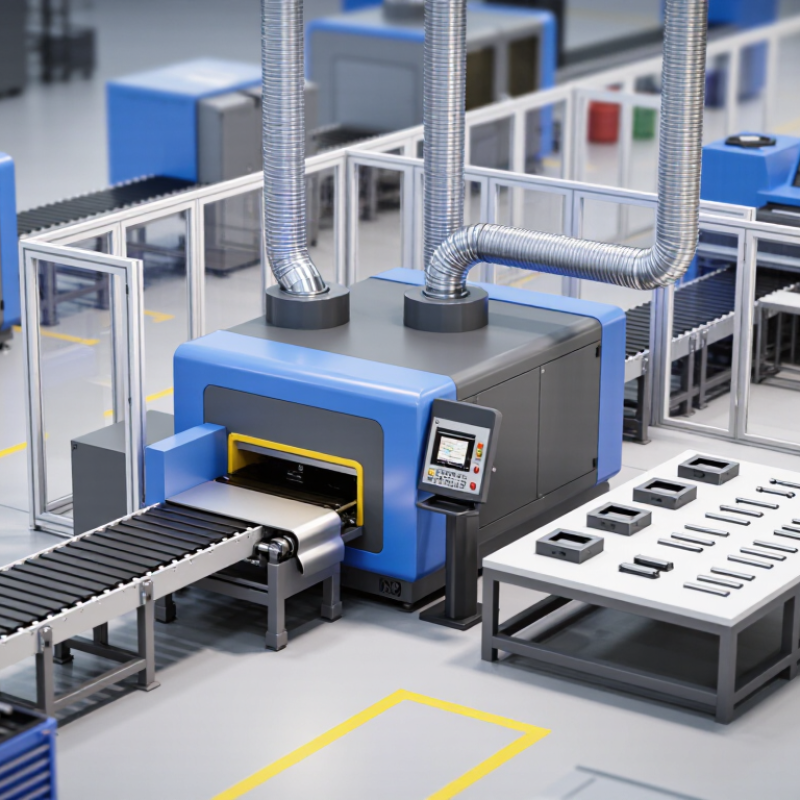
Why Choose a Compact Laser Finishing System?

What a Compact Laser Finishing System Is

A compact laser finishing system is a workstation that uses a focused beam to modify a part’s surface. Depending on its configuration, it can remove oxide or a thin surface layer, clean localized areas, or create controlled textures. A typical unit combines a laser source, scanning optics, motion controls, software, and fume extraction in a small enclosure or nearby cabinet. The part may sit on a fixed table or move beneath the beam.

Compact means the essential equipment occupies less floor space than a full production line; it does not mean every process fits every part. An operator might place a small metal component in the enclosure, select a recipe, and inspect the treated edge under task lighting. Material, coating, geometry, and finish requirements all affect results. The fit is not automatic. Small footprint. Careful testing still matters.

MarketsandMarkets’ 2023 Laser Processing Market report estimated the market at USD 20.2 billion in 2023 and projected USD 35.4 billion by 2028. That growth reflects wider industrial use of laser processing, not proof that every shop needs a compact system. For a buyer, practical checks include extraction capacity, repeatability across a batch, access for maintenance, and whether the treated surface meets the required inspection criteria. A neat demo can look convincing; real parts sometimes disagree.

How Laser Finishing Processes Materials

Why Choose a Compact Laser Finishing System?

How Laser Finishing Processes Materials

Laser finishing begins with a controlled beam directed across a material’s surface. The beam’s energy can remove thin coatings, clean residue, smooth small irregularities, or gently remelt a surface layer. The result depends on the material, the finish required, and the settings used. Heat still matters. Too much energy may discolor a part or alter its texture, while too little may leave residue behind.

Operators typically test a small area and adjust power, pulse duration, and scan speed before treating the full component. A camera or sensor can help locate edges and keep the beam on a consistent path. During processing, removed particles may collect near the work area, so extraction and routine inspection are important.

Not every surface behaves alike. A reflective metal, a painted panel, and a molded polymer can respond very differently, even when they look similar. That difference is easy to underestimate. A compact system can fit into a limited workspace, but it still needs stable fixturing, suitable ventilation, and careful checks of the finished surface.

Core Components and Operating Principles

A compact laser finishing system combines a laser source, beam-delivery optics, a motion platform, process controls, and a guarded work area. The source produces a concentrated beam. Mirrors or fiber optics guide it to a scanning head, which directs energy across the surface in a controlled pattern. A fixture holds the part steady, while sensors and control software help manage position, speed, and power.

During finishing, the beam interacts with a thin surface layer. Depending on the material and settings, it may remove small amounts of material, smooth texture, or create a defined surface pattern. Heat input, focus, pulse duration, and scan overlap all affect the result. Operators typically test sample parts and inspect them under suitable lighting or magnification. Results can vary with coatings, geometry, and surface contamination, so a successful recipe may not transfer perfectly to every part. The setup is not magic; process validation takes patience.

Tips: Keep lenses clean, secure the workpiece, and use the specified enclosure and protective measures. Change one setting at a time, then record the result. Small adjustments matter.

Why Choose a Compact Laser Finishing System? - Core Components and Operating Principles

Component Purpose Operating Principle Practical Consideration
Laser source Generates the light used for a process such as marking, texturing, or surface cleaning. Produces a beam at a selected wavelength and output level. The material absorbs some of the beam energy, creating a controlled surface change. Choose the source and settings to suit the material and intended finish; results vary with both.
Beam delivery Transmits laser energy from the source to the processing head. Depending on the system design, the beam travels through a protected optical path or a fiber-optic cable. Keep optical paths clean and follow the equipment maker’s alignment and maintenance procedures.
Scanning head Positions the beam across the target area without moving the laser source. Galvanometer-driven mirrors steer the beam according to a programmed path and scan pattern. Scan area, speed, and pattern affect processing time and the consistency of the result.
Focusing lens Focuses the beam onto the work surface and defines the usable processing field. The lens concentrates the beam into a small spot; the focal position influences energy density at the surface. Maintain the specified working distance and keep the lens free of process residue.
Workholding and positioning Holds the part in a stable, repeatable position beneath the processing head. A fixture or stage establishes the part’s location and orientation relative to the focused beam. Secure, repeatable positioning helps maintain consistent coverage across repeated parts.
Motion and control system Coordinates laser output, scan paths, and any part or stage movement. Control software converts a job file and process settings into synchronized commands for the laser and motion components. Use validated recipes and check focus, alignment, and settings when changing materials or part geometry.
Extraction and filtration Captures airborne particles, fumes, or vapors produced by material processing. Local extraction draws process emissions away from the work zone and routes them through suitable filtration. Filter selection and replacement depend on the material and emissions; follow applicable safety guidance.
Enclosure and interlocks Help contain laser radiation and restrict access during operation. A properly designed enclosure blocks or attenuates hazardous radiation; interlocks can prevent operation when access panels are open. Enclosure requirements depend on the laser and installation. Never bypass safety interlocks.
Why compact? Integrating the source, scanning optics, controls, and safety features into a smaller system can reduce floor-space requirements and simplify placement near a production or inspection area. Actual capability, cycle time, and footprint depend on the system configuration and application.

Benefits of a Compact System in Production

A compact laser finishing system can bring edge cleanup closer to cutting, bending, or inspection. That shortens the walk between operations and may reduce queues of unfinished parts. In a small cell, operators can see the work surface, extraction duct, and part flow without crossing a busy aisle. Space savings matter, but only when service access and safe material handling remain clear.

Labor pressure adds another reason to consider automation. Deloitte and The Manufacturing Institute estimated that 1.9 million U.S. manufacturing jobs could go unfilled by 2033. A laser cell can take on repeatable deburring or edge-rounding tasks, leaving staff to inspect parts and manage exceptions. It is not a cure for every staffing gap. The 2024 report concerns the wider manufacturing workforce, not laser finishing specifically.

Before installation, measure actual part mix, cycle time, extraction needs, and changeover effort. A smaller enclosure may still need room for long sheets, filters, and maintenance access. Track first-pass quality and handling time during a pilot; a compact footprint means little if parts pile up at the cell entrance. I have seen layout plans look tidy on paper, then fail around a real pallet. Worth checking twice.

Why Choose a Compact Laser Finishing System?

Illustrative production-floor footprint comparison

In this example, a compact system with a 2.4 × 1.2 m footprint uses 2.9 m² of floor space, compared with 8.0 m² for a 4.0 × 2.0 m production cell—about 64% less space. Actual equipment dimensions vary by configuration; figures are calculated from the example dimensions shown.

Applications and Factors for Choosing a System

A compact laser finishing system can serve small-part work where abrasive contact is awkward. Typical applications include removing light oxide, smoothing selected edges, or preparing a defined surface area before coating. On a stainless-steel bracket, for example, a narrow scan can target weld discoloration without touching nearby features. Results depend on the alloy, initial surface, and desired finish. Small parts vary.

Match the system to the actual job, not a brochure sample. Check wavelength and adjustable power against the material and any coating; excess energy may discolor metal or alter thin edges. The working area should fit the largest part while allowing access to recessed features. Also consider fixtures, cycle time, fume extraction, and how operators load parts between batches. Convenience matters.

Request trials using your own parts, then inspect them under consistent lighting. Measure edge condition, color, and repeatability across several runs, not just one polished sample. If finishes differ across a tray, the scanning strategy or fixturing may need adjustment. That can take time. Compact equipment still requires guarded operation, trained staff, and a clear maintenance plan; a small footprint does not guarantee a simple setup.

FAQS

What is a compact laser finishing system?

It is a workstation with a laser source, scanning optics, motion controls, software, and fume extraction. Small footprint.

What can laser finishing do to a surface?

It can remove thin coatings, clean residue, smooth small irregularities, or create controlled textures.

How does the material affect the result?

Reflective metal, painted panels, and molded polymers can respond differently. Similar-looking surfaces may need different settings.

What settings might an operator adjust?

Operators may change power, pulse duration, and scan speed after testing a small area.

Can too much laser energy damage a part?

Yes. Excess heat may discolor a surface or change its texture. Too little energy may leave residue.

Why are extraction and inspection important?

Removed particles can collect near the work area. Extraction, routine checks, and inspection help assess the finished surface.

Does a compact system suit every part?

No. Material, coating, geometry, and finish requirements all affect whether the process is suitable.

What should buyers check before choosing a system?

Check extraction capacity, batch repeatability, maintenance access, and inspection criteria. A polished demonstration may not match real parts.

Conclusion

A Compact Laser Finishing System uses a focused beam of light to refine or modify a material’s surface in a controlled, localized way. Depending on the material and the intended finish, the laser can remove a thin layer, smooth small irregularities, or create a consistent surface texture. The system typically combines a laser source, beam-delivery optics, motion controls, a work area, and software that coordinates settings and movement. Together, these components guide energy to selected areas while helping maintain repeatable results.

Its compact footprint can make the system easier to fit into limited production spaces and integrate into existing workflows. Automated, precise processing may reduce manual finishing steps, material handling, and variation between parts. Potential applications include finishing components made from metals, plastics, ceramics, and other suitable materials. When choosing a system, consider the workpiece material and size, the required finish, production volume, available workspace, ease of operation, and maintenance needs. Matching these factors to the process helps determine whether a compact solution is practical for a particular production environment.


Evelyn

Evelyn

Evelyn is a highly experienced marketing professional dedicated to helping businesses understand the value, quality, and practical applications of our products. With a strong background in market research, content strategy, customer communication, and digital marketing, Evelyn combines industry......