In modern gaming operations, accuracy is no longer a minor convenience. It protects inventory, improves table efficiency, and supports clearer internal controls. The American Gaming Association’s 2024 State of the States report recorded a record $66.52 billion in U.S. commercial gaming revenue during 2023. That scale creates pressure to process cards quickly, consistently, and with less manual handling.
A High Speed Card Counter can help operators manage large card volumes without turning every shift into a repetitive counting task. Advanced optical sensors can identify card movement, separate batches, and detect irregular feeds. A clear reject tray can isolate damaged or misread cards within seconds. These details matter beside a busy table, where delays, noise, and poor lighting can affect staff performance.
Speed alone is not a victory. Accuracy comes first.
Industry research from Grand View Research and MarketsandMarkets consistently highlights automation, reliability, and operational efficiency as major priorities in gaming equipment development. However, published market estimates often differ because research firms use different product definitions. That limitation deserves attention. Buyers should compare tested throughput, error rates, maintenance records, and service coverage instead of trusting headline figures.
From practical use, the best system is not always the fastest model. It should fit the card type, workload, workspace, and reporting process. A dependable High Speed Card Counter can reduce repetitive labor while creating more consistent records. Still, staff training remains essential. Even advanced equipment needs careful setup, routine cleaning, and human review when results appear unusual.
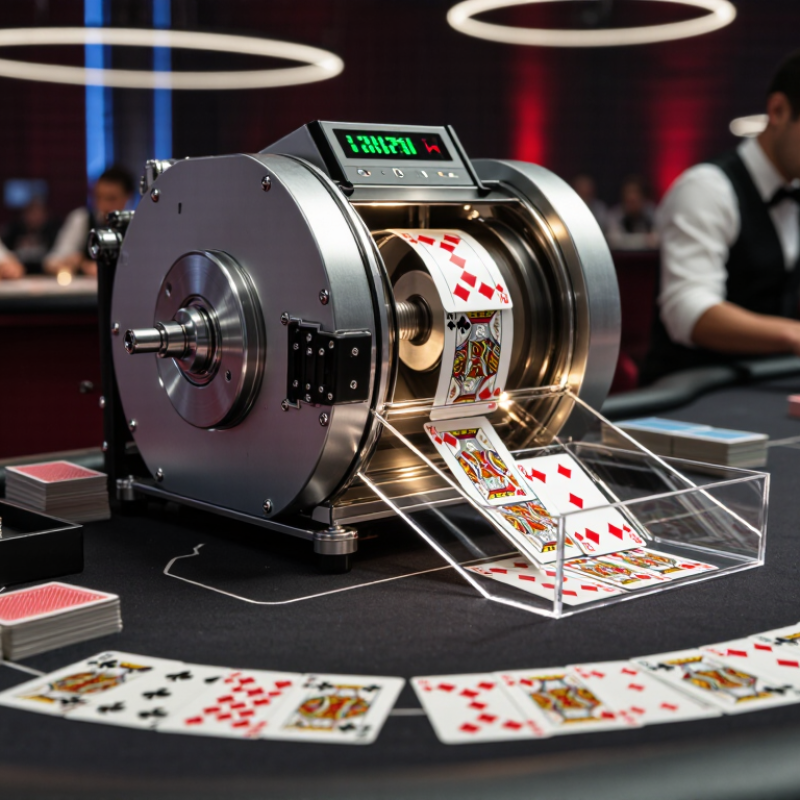
A high-speed card counter is defined by measurable throughput, not a dramatic product label. At 1,500 cards per minute, the machine processes about 25 cards every second. A 1,000-card batch could finish in roughly 40 seconds under suitable conditions. That pace supports card manufacturers, fulfillment teams, and inspection departments handling repeated batches.
Industry volume explains the need for dependable automation. The Federal Reserve’s 2022 Payments Study recorded 157.3 billion U.S. card payments in 2021. The Nilson Report also placed global card purchase transactions above 600 billion in 2022. These figures do not measure physical card counting directly. Still, they show why manual checking can become slow and inconsistent.
Speed alone is not enough. A practical counter should maintain stable feeding, detect double cards, and stop quickly when a jam occurs. It should also allow preset batch quantities and show clear count results. Card thickness, surface finish, static, and operator loading can reduce the advertised rate. Real work is messier. A clean test stack may reach 1,500 cards per minute, while mixed or worn cards may not. Buyers should request test results using their own card materials, then compare speed with accuracy, noise, maintenance time, and rejected cards.
It is a machine that counts cards quickly and consistently. Some models process up to 1,500 cards per minute. That equals about 25 cards each second.
Under suitable conditions, counting 1,000 cards may take roughly 40 seconds. Real stacks can take longer.
Printing, retail, manufacturing, fulfillment, finance, events, and healthcare teams may benefit. These groups often handle repeated card batches.
Common examples include gift cards, membership cards, admission cards, appointment cards, and supply labels. Thickness and surface finish still matter.
No. Clean, even stacks may reach the stated speed. Curled, worn, mixed, or static-affected cards can slow the machine.
Useful features include stable feeding, double-card detection, quick jam stopping, preset quantities, and clear count displays. Simple operation helps.
Test the machine with actual card materials before purchase. Keep sample counts for comparison. Clean dust regularly and train operators briefly.
Yes. Dust, uneven stacks, curled edges, and double cards may cause errors. The machine is helpful, but not perfect.
A second check can help with valuable or sensitive batches. It may slow the workflow, but extra confidence can matter.
Compare accuracy, noise, maintenance time, rejected cards, and batch controls. A slower machine may perform better in daily work.
A High Speed Card Counter is designed to process large volumes of cards quickly, with advanced models reaching speeds of up to 1,500 cards per minute. Its counting accuracy can reach 99.9%, helping reduce manual sorting errors, improve productivity, and maintain consistent results. A hopper capacity of up to 500 cards also supports continuous counting by reducing the need for frequent refilling, making daily operations smoother and more efficient.
This technology benefits industries and workplaces that handle high volumes of cards, tickets, labels, paper pieces, or similar flat items. Reliable feed systems guide materials evenly, while sensors detect movement and help prevent miscounts. Adjustable batch controls allow users to organize items into precise quantities, supporting packaging, inventory management, production, and quality inspection tasks. Together, these features provide a practical solution for businesses seeking faster processing, dependable counting, and less manual labor.