
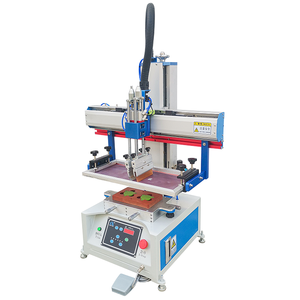
Explore our benchmark industrial silk screen printers, automatic foil stamping systems, and high-speed precision roll-to-roll converting machinery engineered for global manufacturing compliance.
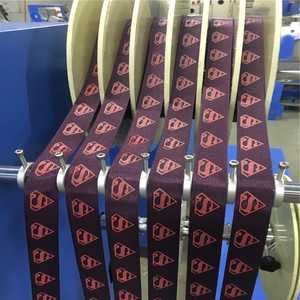
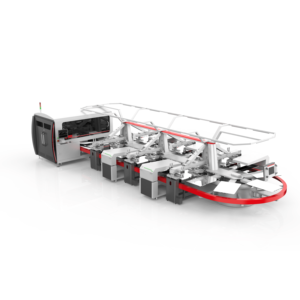
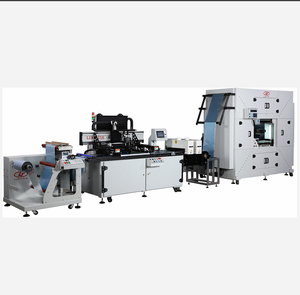
When selecting a high-precision CE Certified Hot Stamping Machine Manufacturer and Supplier, enterprise buyers must look beyond initial hardware acquisition costs. In industrial roll-to-roll converting, plastic card manufacturing, membrane switch printing, and packaging embellishment, true profitability is governed by registration repeatability, thermal transfer stability, and mechanical downtime mitigation.
Building upon six decades of precision engineering legacy established in Rolling Meadows, Illinois, USA, our manufacturing frameworks combine robust mechanical tonnage with state-of-the-art servo indexing and CCD camera-based optical registration systems. Every machine that leaves our production floor undergoes a rigorous 100% pre-shipment validation protocol, processing customer-specific substrates (PET, PVC, Polycarbonate, Webbing, paper laminates, and flexible printed circuits) under real-world production conditions to verify throughput speed and micron-level registration accuracy.
Full compliance with European Machinery Directive 2006/42/EC, EN ISO 12100 safety integration, dual-channel interlocks, light curtains, and zero-emission thermal shielding.
Integrated high-speed camera sensors compensating dynamically for web stretch, repeat distortion, and print skew down to ±0.05 mm accuracy.
Closed-loop servo motor synchronization across unwinding, foil pulling, heating platen pressure dwell, and rewinding stations for zero web slack.
Whether you require a heavy-duty mechanical platen press for volumetric plastic card gilding, a roll-to-roll silk screen printer for multi-color textile webbings, or a hybrid hot stamping and laser converting line (such as the modular CS2100 platform), our equipment ensures minimum foil scrap rates, extended die life, and rapid job changeovers in under 15 minutes.
As global packaging, medical device, electronics, and security printing sectors demand higher sustainability, shorter lead times, and customization, procurement managers must align their capital equipment investments with next-generation manufacturing paradigms. Below is an analytical whitepaper breakdown of key shifts driving hot stamping and converting machinery procurement worldwide.
Conventional hot stamping relies exclusively on physical copper, brass, or magnesium dies attached to heated platens. While unmatched for mass production speed, traditional tooling creates friction during short-run prototyping and variable SKU versioning. Procurement trends indicate a massive shift toward hybrid converting systems.
Thermal variance across large hot stamping platens leads to incomplete foil release, edge flaking, or substrate warping—especially on heat-sensitive materials like thin PET films, PVC cards, and polyolefins. Future-proof procurement requires advanced heat management architecture.
| Thermal Control Factor | Legacy Stamping Equipment | Next-Gen CE Certified Systems | Impact on Production Yield |
|---|---|---|---|
| Heating Zone Control | Single PID loop controller across entire bed | Multi-zone independent PID with micro-ceramic heating elements | Eliminates cold spots; maintains uniform transfer on 800mm+ webs |
| Temperature Feedback | Thermocouple placed deep inside platen frame | Infrared non-contact pyrometer real-time surface measurement | Immediate dynamic power adjustment; prevents thermal overshoot |
| Dwell Time Accuracy | Pneumatic mechanical relay timing (±100ms) | Servo-driven position-lock dwell control (±1ms precision) | Enables crisp micro-embossing and fine-line metallic foil release |
| Foil Tension Management | Friction brake clutch (manual tension adjusting) | Ultrasonic web sensor with active servo foil saver motor | Saves 15–30% foil consumption by indexing foil only where printed |
Environmental regulations across the EU (EPR directives) and North America are pushing brand owners to eliminate non-recyclable laminate packaging. Modern hot stamping suppliers are engineering machinery capable of applying ultra-thin eco-foils (under 12 microns) onto mono-material recyclable paperboards and biodegradable polymers without compromising gloss levels or rub resistance.
The industrial screen printing and foil decoration industry has evolved through four major technological phases. Understanding this evolutionary trajectory enables technical directors to select machinery built on long-term modular architectures rather than obsolete mechanical frames.
High manual labor, mechanical cams, uneven pressure distribution, strict batch size minimums, significant operator safety hazards.
Introduction of pneumatic cylinder drives, basic optical sensor registration, improved speed for cylindrical items (bottles, lighters).
Fully enclosed CE safety cabs, multi-axis servo positioning, PLC touchscreens, active foil-saving indexes, roll-to-roll integration.
For applications demanding high ink film thickness—such as tactile braille, conductive circuit paths on soft flexible printed circuit (FPC) boards, optical registration shear lines, and opaque white backing on dark synthetic ribbons—flatbed servo screen printing remains indispensable. When coupled with an inline hot stamping station, converters achieve multi-process decoration in a single continuous pass.
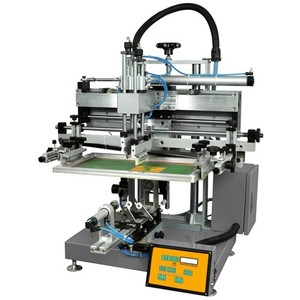
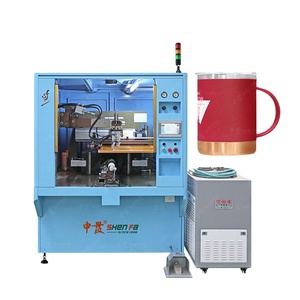
Our pneumatic and servo-driven silk screen printing kits (such as the specialized cylinder printers for medical containers, water bottles, and electronics) incorporate dual squeegee pressure leveling and linear guide rails engineered to withstand heavy continuous industrial duty cycles. This guarantees sharp image edge definition without color bleed or ghosting during 24/7 operating schedules.
Direct answers to critical operational, engineering, and compliance questions asked by plant managers and procurement directors.
Our machinery is manufactured in strict accordance with European Union harmonized standards, including the Machinery Directive 2006/42/EC, the Low Voltage Directive (LVD) 2014/35/EU, and the Electromagnetic Compatibility (EMC) Directive 2014/30/EU. Safety design features integrated optical safety curtains, emergency stop circuit safety relays, dual-valve pneumatic dump systems, and full CE protective enclosures.
Laser die cutting (offered on platforms like the Spartanics CS2100) eliminates tooling costs, die lead times, and physical die wear entirely. With spot sizes down to 0.004 in (0.1 mm), lasers excel in short-to-medium runs, versioned SKUs, and intricate contours directly from vector files. Mechanical rotary or platen dies remain ideal for ultra-long single-shape runs exceeding millions of units. We provide objective ROI analysis to guide your tooling selection.
Yes. Our roll-to-roll ribbon and web printing systems feature closed-loop servo tension control, chilled impression cylinders, and vacuum suction beds. Materials such as delicate satin ribbon, nylon, polyester webbing, ultra-thin PET, polycarbonate membrane switches, and soft circuit boards (FPCs) pass through heating and stamping zones without stretch deformation or thermal damage.
An optical registration shear (such as our M255 series) uses high-resolution CCD cameras to detect pre-printed fiducial registration marks or artwork features in real time. The machine’s software calculates web distortion, skew, and stretch, automatically shifting the mechanical cutting or stamping position down to ±0.05 mm prior to stroke execution.
Traditional mechanical foil feeds pull a uniform length of foil on every stroke regardless of the printed graphic size, wasting unused foil between images. Servo-driven foil indexers calculate the exact graphic length and step the foil forward precisely, yielding up to 30% savings on expensive metallic, holographic, and security foils.
Systems engineered and built in Rolling Meadows, Illinois are installed in over 60 countries. We back every equipment delivery with on-site installation, factory-trained technical service teams, stocked global spare parts, and integrated 24/7 remote IP network diagnostic gateways for instant troubleshooting.
Our specialized plastic card counters (e.g., model 680 series) count and optically verify up to 500 plastic cards in approximately five seconds through non-contact optical sensor technology, catering specifically to secure credit card, government ID, and gift card production lines.
Send our senior engineering team your material samples, technical drawings, and target hourly production goals. We deliver factory-tested samples, measured line speeds, and transparent machinery proposals—not sales scripts.
Contact Us