Explore our CE-certified equipment range engineered for roll-to-roll, flatbed, circular, and multi-color industrial printing and converting applications.
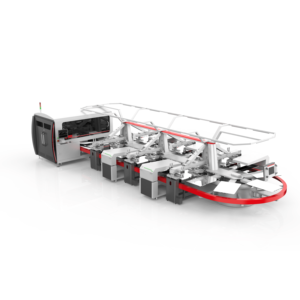
The global industrial converting and label finishing sector is undergoing a profound structural transition. Driven by modern print-on-demand economies, ultra-short job lifecycles, and rapid SKU proliferation, manufacturers are shifting away from heavy, tooling-dependent conventional rotary presses toward agile, modular, and CE-certified finishing solutions.
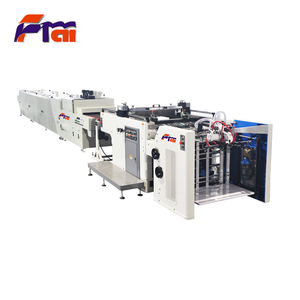
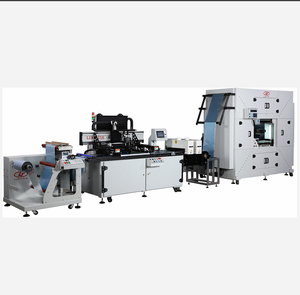
As leading CE certified label finishing manufacturers, engineering pioneers have established new benchmarks in operational throughput, waste reduction, and optical registration fidelity. Modern label converting equipment must now seamlessly integrate multiple processes—including high-speed roll-to-roll screen printing, precision laser die cutting, UV curing, optical shear registration, and automated inspection—into cohesive, high-efficiency workflows.
Traditional rotary dies require costly mechanical tooling, extended setup lead times, and dedicated physical storage. Modern laser die cutting systems utilize focused CO2 laser beams with spot sizes down to 0.004 inches (0.1 mm). This enables instant cut-file updates directly from vector graphics, eliminating plate costs entirely while executing kiss-cuts, micro-perforations, and intricate contours on the fly.
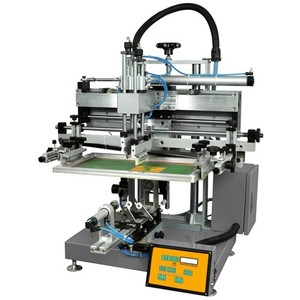
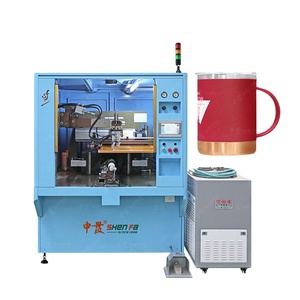
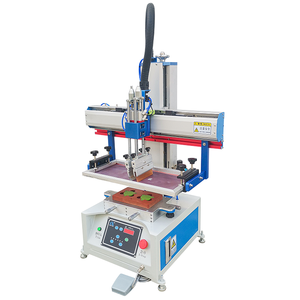
While digital inkjet handles variable graphics, industrial applications—such as membrane switches, flexible circuit boards (FPC), tactile labels, and security overlays—demand heavy ink laydown and specialized functional chemistry. Advanced automatic roll-to-roll screen printers deliver precision deposit control, pneumatic squeegee stabilization, and multi-color servo registration for demanding industrial substrates.
Substrate distortion, web stretch, and thermal expansion during UV curing present significant challenges to multi-pass registration. Industrial label converting platforms incorporate camera-based optical registration sensors that scan printed eye-marks in real-time. Automated servo motors continuously adjust web tension and lateral alignment, holding micron-level tolerances across thousands of linear meters.
Strategic machinery buyers and factory operations directors are increasingly prioritizing total cost of ownership (TCO), modular scalability, and stringent safety compliance over initial capital outlay.
| Procurement Vector | Legacy Sourcing Paradigm | Future CE-Certified Standard | Strategic Operational Advantage |
|---|---|---|---|
| Tooling Costs | Heavy spend on fixed mechanical dies & magnetic cylinders | Digital laser cutting & vector-driven contouring | Zero die wear, zero storage footprint, instant changeovers |
| Compliance Mandates | Basic machine safety standard compliance | Full CE Certification + EN ISO 12100 & IEC 60204-1 | Unrestricted global export, reduced liability & operator safety |
| Production Line Architecture | Single-function standalone machines with manual transfer | Modular hybrid lines (Screen Printing + Laser + Slitting) | Reduced labor overhead, single-pass inline production |
| Quality Control | Offline manual sampling and post-production inspection | Inline optical camera registration & instant verification | Near-zero scrap rates, real-time error detection |
| Maintenance & Service | On-site technician dispatch with lengthy downtime | IoT remote diagnostics, cloud recipes & PLC telemetry | 24/7 technical support, predictive maintenance alerts |
When procuring equipment from an established label finishing manufacturer, technical purchasing teams must evaluate the machinery's adaptability to emerging sub-assemblies. Facilities handling flexible electronics, automotive decals, medical self-service labels, and security cards require modular chassis designs where secondary stations (such as hot foil stamping, laminating, dynamic sheeting, or high-speed card counting) can be integrated without rebuilding the core web handling line.
Since 1963, our engineering team has designed, manufactured, and customized high-precision laser die cutting systems, digital converting platforms, automatic screen printing machinery, mechanical die presses, and card counting equipment. Built in Rolling Meadows, Illinois, USA, our systems are deployed in high-volume production plants across more than 60 countries worldwide.
Get authoritative answers to the most critical technical, compliance, and operational questions surrounding industrial label finishing machinery.
CE Certification ensures that industrial machinery meets strict European Union health, safety, and environmental protection standards (including the Machinery Directive 2006/42/EC and Electromagnetic Compatibility Directive 2014/30/EU). For global buyers, purchasing CE certified equipment guarantees high-grade electrical safety, emergency stop integration, protective light curtains, robust structural shielding, and smooth clearance through international customs authorities.
Laser die cutting is the superior choice for short-to-medium production runs, multi-SKU versioning, intricate shapes, and on-demand web converting. Because laser systems require zero physical plates or dies, manufacturers eliminate die fabrication wait times (saving days or weeks) and eliminate die wear expenses. However, for extremely high-volume single-shape runs spanning millions of identical labels, traditional mechanical die presses remain a cost-effective alternative. Our engineers evaluate your exact run lengths to recommend the ideal format.
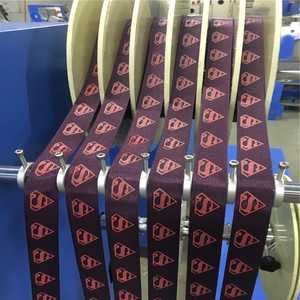
Our roll-to-roll and flatbed screen printers, laser cutters, and finishing machinery process a broad spectrum of technical materials, including pressure-sensitive paper label stock, Polyethylene Terephthalate (PET), Polyvinyl Chloride (PVC), Polycarbonate (PC), Polypropylene (PP), flexible printed circuit boards (FPC), satin/nylon/polyester ribbons, membrane switch overlays, in-mould decoration (IMD/IML) films, and reflective sheeting.
During roll-to-roll drying and tensioning, synthetic substrates frequently stretch or warp slightly. Our camera-guided vision systems dynamically scan fiducial marks or printed artwork borders in real time. The machine controller calculates positioning discrepancies and immediately adjusts the laser focal point, cutter stroke, or screen pass location, maintaining precise print-to-cut registration across the entire web roll.
All machinery engineered at our US headquarters is installed globally across 60+ countries. Overseas facilities are fully supported by factory-trained field engineers, localized service partners, secure remote diagnostic IP connections, and a fast-ship global spare-parts program. Comprehensive operator training, software calibration, and routine preventative maintenance schedules are conducted during initial commissioning.
Yes. Architectures such as the CS2100 modular converting platform are built specifically for future expansion. Converting plants can start with a core laser cutting or screen printing configuration and subsequently add digital inkjet modules, UV varnishing, laminating units, rotary slitting, dynamic web sheeting, or optical shears as production demands evolve.
Consult directly with our senior system design engineers. Send us your substrate specifications, engineering drawings, and target throughput metrics for a full technical evaluation and customized quote.
Send an Inquiry