CE Certified Machinery Directive 2006/42/EC

CE Certified Label Slitter Factory & Exporters

Precision Industrial Web Slitting, Servo Rewinding & High-Speed Digital Converting Systems Built for Global Exporters

High-Performance Equipment Portfolio

Industrial Label Slitting & Converting Machinery

Explore our export-ready, CE-certified servo-driven label slitters, web tension rewinding systems, screen printing platforms, and automated inspection units engineered to EU safety and operational benchmarks.
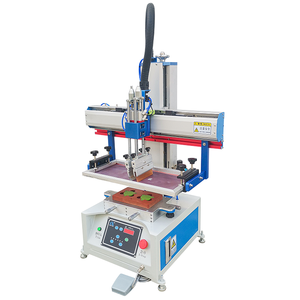
Flatbed & Servo Pneumatic Silk Screen Printing Machine Servo Serigraphic Press

Pneumatic Silk Screen Printing Machine Servo Serigraphic Press

  • Precision Servo-Driven Squeegee System
  • Micro-Adjustable Registration ±0.02mm
  • Compatible with Battery & Lighter Substrates
Get a Quote
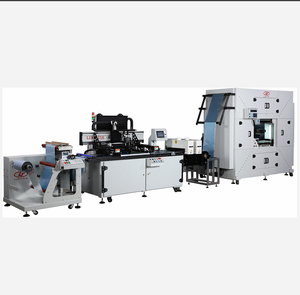
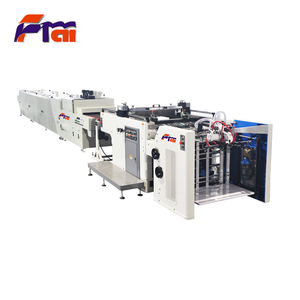
Roll-to-Roll High Output Ribbon Screen Printing Machine Automatic Roll to Roll Printer

High Output Ribbon Screen Printing Machine Automatic Roll to Roll Printer

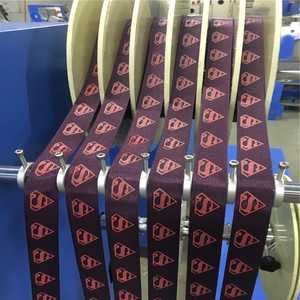
  • Multi-Color Webbing Tape Processing
  • Constant Tension Magnetic Brake Control
  • Infrared & UV Inline Curing Modules
Get a Quote
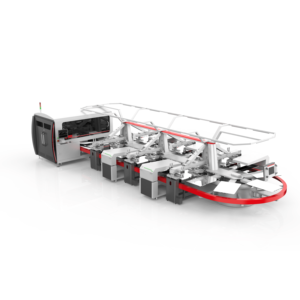
Multicolor Oval Xmay Full Automatic Digital T-Shirt Silk Screen Printing Machine

Xmay Full Automatic Digital T-Shirt Silk Screen Printing Machine

  • High-Speed PLC Touchscreen Control
  • Modular Oval Layout Expansion
  • Independent Indexing Print Stations
Get a Quote
High-Speed Roll Automatic High-Speed Soft Circuit Board Silk Screen Printing Machine

Automatic High-Speed Soft Circuit Board Screen Printing Machine

  • Flexible Circuit & Label Stock Ready
  • CCD Vision Registration Technology
  • Static Eliminator & Dust Removal Unit
Get a Quote
Specialized Kiosk Medical Self-service Printing Machine

Medical Self-service Printing & Media Handling Kiosk System

  • DICOM Compliant Media Output
  • Automated Film Sheeting & Slitting
  • Secure Enclosed Thermal Printer Unit
Get a Quote
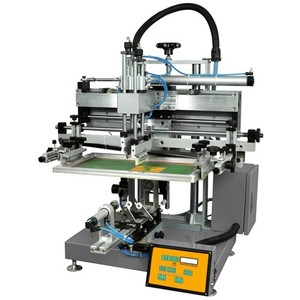
Desktop Series Desktop Cylindrical Screen Printer MSP-2030Q

Desktop Cylindrical Screen Printer MSP-2030Q Compact System

  • Micro-Pneumatic Cylinder Motion
  • Quick-Change Jig for Round Parts
  • Compact Lab & Small Batch Setup
Get a Quote
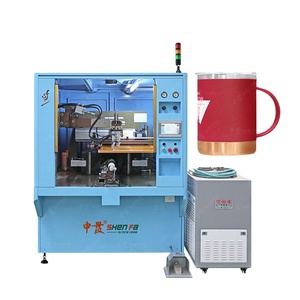
Container Print Semi Automatic Screen Printing Machine for 2 Color Water Bottles

Semi Automatic Screen Printing Machine for 2 Color Water Bottles

  • Dual-Color Synchronized Indexing
  • Flame Surface Pre-Treatment Option
  • Precision Optical Sensor Lock
Get a Quote
Industrial Cylinder FJ780 Automatic Reversible Silk Screen Printing Machine

FJ780 Automatic Reversible Silk Screen Printing Press

  • High-Speed Continuous Stop-Cylinder
  • Automatic Sheet Feeder & Delivery
  • Heavy-Duty Structural Cast Frame
Get a Quote
60+
Years Engineering Heritage
±0.02mm
Web Tension & Slitting Precision
600m/min
Maximum Servo Slitting Velocity
100%
CE Compliant & Pre-Shipment Tested
Enterprise Manufacturing Excellence

Built on 60+ Years of American & European Engineering Standards

As a premiere OEM/ODM label slitter factory and global exporter, our converting technology builds upon over six decades of precision machinery engineering. Originally established with foundational US manufacturing standards in Rolling Meadows, Illinois, our factory platforms integrate state-of-the-art European CE compliance directives (Machinery Directive 2006/42/EC, Low Voltage Directive 2014/35/EU, and EMC Directive 2014/30/EU).

We do not simply assemble parts—we design and manufacture comprehensive label slitting rewinders, digital label converting lines, laser die cutters, and screen printing equipment that reduce unit operational costs while maintaining flawless tension control across paper, film, foil, and medical-grade substrates.

CE Certified Compliance
ISO 9001:2015 Quality Factory
Exported to 60+ Nations

100% Pre-Shipment Validation Protocol

Every machine manufactured in our facility undergoes rigorous load testing using customer-supplied substrates prior to export clearance:

  • Dynamic Web Tension Calibration: Closed-loop load cell verification under variable web speeds from 50 to 600 m/min.
  • Slitting Edge Quality Audit: Microscopic analysis of shear, razor, and rotary slitting cuts on ultra-thin PET & OPP films.
  • Laser & Optical Alignment Check: Camera-based edge guiding accuracy tested within ±0.05 mm tolerance.
  • CE Safety Interlock Verification: Emergency stop response times validated under full emergency braking conditions.
Strategic Sourcing Whitepaper

Future Procurement Trends in Industrial Label Slitting Machinery

As global packaging and pressure-sensitive label converters transition toward short-run customization, eco-friendly substrates, and Industry 4.0 automation, machine procurement strategies are undergoing a fundamental transformation.

1. Transition to Servo-Driven Closed-Loop Tension Control

Traditional mechanical friction shafts and manual clutch tension systems are rapidly being phased out by Tier-1 procurement teams. Modern high-speed label slitters must utilize multi-axis independent AC servo drive architectures with active dancer rolls and digital load cells.

Information Gain Insight: Dynamic web tension control prevents substrate stretching on ultra-thin 12-micron PET liners and prevents edge crushing on thick 300gsm paperboard stocks, directly reducing material waste by up to 14% during startup cycles.

2. Automated Knife Positioning & Rapid Job Changeover

With batch sizes shrinking and digital label printing volume surging, downtime associated with manual blade positioning (shear knives, razor blades, or crush cutters) is no longer economically viable for competitive converters.

Key Technical Requirement: Next-generation slitter rewinder purchases increasingly demand automatic knife-positioning systems controlled via recipe management touchscreens, reducing set-up time from 45 minutes down to less than 3 minutes per run.

3. 100% Inline Vision Inspection & Defect Flagging

Global pharmaceutical, food, and electronics packaging buyers now demand 100% verified defect-free label rolls. Slitter rewinders are evolving into primary quality control hubs.

Integrated Inspection Systems: Integrating high-resolution line-scan camera systems directly onto the slitting zone enables real-time detection of print misalignments, missing labels, color shifts, and pinholes, automatically stopping the rewinder at the exact defect location for splice removal.

Engineering Specifications & Architecture

Slitting Technology Development Matrix

A technical comparison evaluating traditional mechanical slitters against modern CE-certified servo-electric label slitter rewinders for international purchasing directors.

Industrial Web Slitting & Rewinding Systems Comparison

Updated Engineering Standard 2026
Performance Feature Legacy Mechanical Slitter CE-Certified Servo Slitter Rewinder Impact on Unit Economics
Tension Control System Friction Shaft / Manual Powder Clutch Multi-Axis Servo + Closed-Loop Load Cells Eliminates web breaks; cuts substrate waste by 12–18%.
Slitting Blade Accuracy Manual Set-screw Blades (±0.5mm) Pneumatic Shear / Auto Positioning (±0.05mm) Prevents edge burrs and dust generation on film stocks.
Maximum Operating Speed 150 – 250 meters / min 400 – 600 meters / min Increases daily factory throughput by 140%.
CE Safety Compliance Basic Guarding / Manual Stop EN ISO 13849-1 Safety Light Curtains & Interlocks Ensures full compliance for EU/North America export markets.
Differential Rewind Shafts Standard Solid Steel Expansion Shafts Ball-Type Pneumatic Differential Friction Shafts Compensates for substrate thickness variations across the web width.
Job Memory & Recipes Manual Mechanical Setup Records PLC Touchscreen Recipe Storage (500+ Jobs) Reduces operator training requirements and setup errors.
Buyer Knowledge Base

Frequently Asked Questions by International Machinery Importers

Detailed technical, regulatory, and commercial insights for machinery buyers, factory operations managers, and procurement officers.

What specific certifications make a label slitter "CE Certified" for European export?
To achieve full CE certification for export into the European Economic Area (EEA), a label slitter rewinder must strictly comply with three primary directives:
1) Machinery Directive 2006/42/EC: Encompassing structural integrity, emergency braking times, risk assessments under EN ISO 12100, and safety guards with interlocks according to EN ISO 14119.
2) Low Voltage Directive 2014/35/EU: Ensuring electrical cabinet wiring, grounding, and control panels adhere to EN 60204-1 safety standards.
3) EMC Directive 2014/30/EU: Verifying that AC servo drives and high-frequency components produce no electromagnetic interference with surrounding equipment. Every machine we export includes an official EU Declaration of Conformity and technical construction file.
How do shear slitting, razor slitting, and burst slitting differ for label materials?
Selecting the appropriate slitting method depends directly on substrate physics:
• Shear Slitting (Rotary Male/Female Knives): Ideal for pressure-sensitive paper labels, cardboard, composite laminates, and thick film. It provides clean edges without generating debris.
• Razor Slitting (Razor Blade in Air or Groove): Most cost-effective for thin, non-abrasive plastic films such as BOPP, PET, and PE. Razor slitting offers quick setup times but requires frequent blade changes on abrasive materials.
• Crush/Burst Slitting: Best suited for non-woven fabrics and select specialized pressure-sensitive stocks where edge sealing is required. Our machines can be equipped with quick-interchangeable slitting cassettes to handle all three technologies on one chassis.
Why are pneumatic differential friction shafts essential for slitting multi-slit label rolls?
Extruded films and paper stocks inherently possess minor caliper (thickness) variations across their web width. When rewinding multiple narrow strips onto a single solid shaft, thicker lanes rewind tighter while thinner lanes become loose, leading to soft rolls, dish-shaping, and rejected stock. Pneumatic differential friction shafts allow individual friction rings to slip independently while maintaining constant, controlled internal air torque, guaranteeing equal rewind tension across every finished slit roll regardless of web thickness variance.
What factory acceptance testing (FAT) and global technical support are provided?
Prior to dispatch, our factory conducts a rigorous 48-hour continuous run FAT using your target materials, evaluating speed, edge straightness, splice durability, and tension control. We provide comprehensive high-definition video documentation, optical measurement reports, and live remote inspection streams. Post-delivery, our international engineering team offers remote PLC diagnostics via secure VPN gateways, factory-direct spare parts shipment within 24–48 hours, and on-site commissioning/training services globally.
Can these label slitters integrate inline with existing printing or die-cutting machinery?
Yes. Our slitting and rewinding platforms feature modular chassis architectures compatible with inline flexographic print units, digital inkjet engines, laser die-cutting systems, UV curing stations, and automated turret rewinders. Using standardized industrial communication protocols (Profinet, EtherCAT, Ethernet/IP), our slitters seamlessly synchronize line speeds and tension signals with upstream printing presses.
What is the typical lead time, packaging, and shipping procedure for export orders?
Standard CE-certified label slitter rewinders feature a manufacturing lead time of 30 to 45 business days depending on customized options (such as automatic knife positioning or optical camera inspection). For overseas ocean freight, machines are coated with anti-rust protective oil, vacuum-sealed in moisture-proof barrier foil, and secured inside heavy-duty fumigated ISPM-15 wooden crates engineered to fit standard 40ft HQ shipping containers.

Partner with a World-Class Label Slitter Manufacturer

Engineered for maximum operational uptime, precision tension control, and full European safety compliance. Request a customized machinery engineering quote, web tension assessment, or sample testing run today.