Engineered for extreme repeatability, high-volume production, sub-micron registration accuracy, and zero-tooling workflow flexibility.
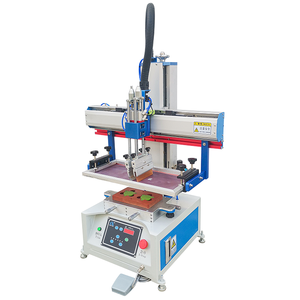
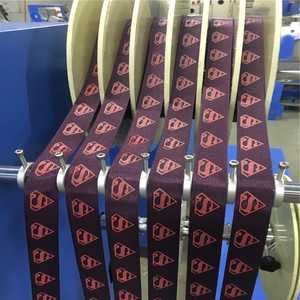
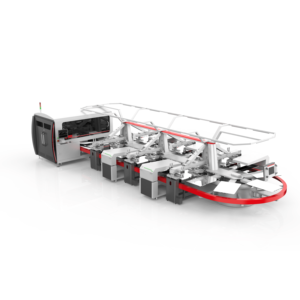
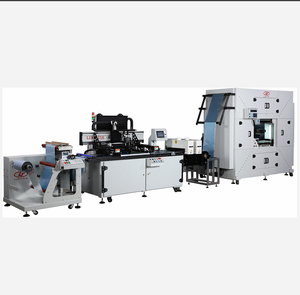
As global manufacturing demands transition from rigid high-volume single-SKU campaigns toward agile, variable-data, short-run, and high-frequency production, our factory stands at the apex of Chinese printing equipment manufacturing and export capabilities. Operating with over 60 years of foundational engineering expertise and an installed footprint spanning 60+ countries, our manufacturing complex seamlessly integrates European precision engineering standards with Chinese supply-chain efficiency.
Unlike standard equipment assemblers, our enterprise controls the complete manufacturing lifecycle. Every chassis is precision-machined using high-rigidity stress-relieved steel frames, housing multi-axis servo drives, Japanese PLC controllers, and high-resolution CCD optical vision systems. Before any machine receives export clearance, it undergoes rigorous factory acceptance testing (FAT) using your exact production substrates—whether pressure-sensitive labels, PET films, polycarbonates, flexible printed electronics (FPC), or heavy industrial webbing.
Future-proof chassis design permitting seamless drop-in integration of UV LED curing, single-pass digital inkjet heads, automated screen stations, and laser die-cutting modules.
Closed-loop camera registration systems providing real-time optical tracking to dynamically compensate for web stretching, thermal contraction, and multi-color print alignment.
Digital prepress workflows eliminating physical plate lead times, rotary die storage overhead, and lengthy mechanical setup routines, dropping changeover times to under 5 minutes.
Our position as China's top digital printer exporter rests on an unyielding foundation of quality verification. By implementing strict ISO 9001 and CE compliant manufacturing protocols, every roll-to-roll press, flatbed pneumatic printer, and oval textile system delivers maintenance-free longevity, minimal total cost of ownership (TCO), and direct Industry 4.0 IoT telemetry for remote diagnostics.
The global procurement landscape for industrial printing machinery is experiencing a structural paradigm shift. Analysis of procurement requests across North America, Europe, and Asia-Pacific reveals three key purchasing drivers dictating equipment investment through 2030:
Industrial printing operations no longer treat digital inkjet printing and traditional silk-screen printing as mutually exclusive technologies. Strategic buyers increasingly demand single-pass hybrid lines that leverage digital printing for intricate multi-color variable data paired with inline screen printing for tactile textures, high-opacity white under-bases, conductive inks, and protective varnishes.
With the rise of sustainable, ultra-thin, and heat-sensitive films (such as BOPP, thin PET, bio-based polymers, and membrane switches), machinery must maintain ultra-precise tension control. Modern procurement specifications demand tension variation below ±0.05 N across start-up, deceleration, and high-speed running phases to prevent substrate deformation or color registration creep.
Energy tariffs and international ESG mandates are pushing converter plants away from traditional mercury-vapor lamps and gas thermal drying tunnels. Modern buyers mandate integrated UV LED curing arrays (operating at 385nm–395nm wavelengths), reducing electrical energy consumption by up to 68%, lowering thermal stress on plastics, and eliminating ozone generation completely.
Staying at the forefront of digital printing and high-speed screen printing requires continuous technological evolution. Below are the primary architectural innovations incorporated into our newest generation of equipment:
Replacing mechanical chain linkages with multi-axis absolute servo motors to eliminate backlash, lower vibration, and achieve repeatability tolerances within ±0.01 mm.
Incorporating grey-scale drop-on-demand (DoD) piezo printheads capable of firing 6pL to 42pL droplets, reaching native resolutions of 1200 DPI at linear speeds exceeding 75 m/min.
Automated ink degasification, thermal viscosity regulation, and continuous negative-pressure ink recirculation to prevent printhead clogging and ensure consistent ink density.
Selecting the appropriate industrial printing system requires balancing throughput, substrate flexibility, ink film thickness, and capital investment. The table below outlines technical benchmarks across key printing modalities offered by our factory:
| Printing System Category | Optimal Substrates | Max Linear Speed | Registration Accuracy | Ink Layer Thickness | Primary Industrial Use Case |
|---|---|---|---|---|---|
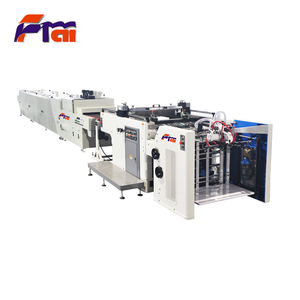
| Roll-to-Roll Screen Printer | PET, PVC, Satin Webbing, FPC | Up to 45 m/min | ±0.02 mm | 10 – 35 microns | Label tapes, RFID antennas, membrane switches |
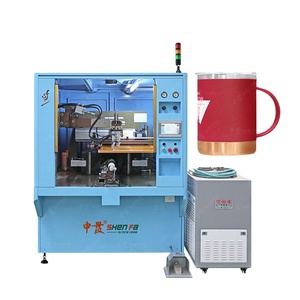
| Automatic Oval Textile Press | Cotton, Polyester, Garments | Up to 900 pcs/hr | ±0.05 mm | 20 – 100 microns | High-density apparel print, multi-color DTF hybrid |
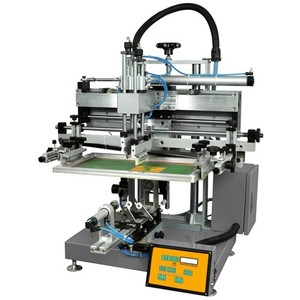
| Pneumatic Servo Flatbed | Battery casings, Lighters, Glass | Up to 1,200 cycles/hr | ±0.01 mm | 5 – 25 microns | Rigid electronics, industrial nameplates, promotional |
| Desktop Cylindrical Printer | Water bottles, Cosmetic tubes | Up to 800 pcs/hr | ±0.03 mm | 8 – 20 microns | Curved container decoration, labware, promotional |
| Digital Self-Service Kiosks | Specialized papers, Medical film | Instant output | Digital Native | Continuous Tone | Hospital diagnostics, automated customer terminals |
Below are detailed responses to the most critical technical and logistical questions submitted by international buyers, machinery importers, and plant engineering managers:
Transitioning to digital or automated roll-to-roll flatbed printing becomes highly economical when single-run order volumes drop below 3,000 meters or when SKU turnaround times must be executed within 24 hours. Digital printing completely eliminates screen prep, photolithography, chemical etching, and physical die storage costs. For jobs requiring heavy opaque ink deposits (such as white under-bases or conductive silver tracks), our automated roll-to-roll screen systems provide sub-micron accuracy without the immense setup overhead of continuous rotary cylinders.
Our roll-to-roll screen printing and digital finishing equipment utilize high-speed optical CCD camera systems combined with absolute servo tension control. The vision sensors continuously capture pre-printed eye-marks or artwork geometry at speeds up to 100 frames per second. The system dynamically adjusts the servo position on a pitch-by-pitch basis, compensating for material stretch, thermal shrinkage, or roll rewinding inconsistencies, keeping alignment within an incredible ±0.01 mm to ±0.02 mm tolerance window.
Yes. Our High-Speed Soft Circuit Board Silk Screen Printing Machines are engineered specifically for sensitive materials including polyimide (PI) films, PET flexible circuits, thin aluminum foils, and release paper. They incorporate vacuum-assisted continuous transport beds, low-tension web handling dancers, and low-temperature UV LED curing modules that dry inks instantly without transferring excess heat into the substrate, eliminating warping or thermal distortion.
All machinery exported from our factory carries comprehensive CE certification, conforming to European Machinery Directive 2006/42/EC and Electromagnetic Compatibility (EMC) standards. Internal electrical control panels utilize internationally recognized components (Schneider, Omron, Siemens, Panasonic) and strictly adhere to IP54 / NEMA 12 protective standards. Factory acceptance procedures include continuous 72-hour stress testing prior to export packing.
We provide full lifetime technical support for all international equipment deployments. Each machine is outfitted with an encrypted remote-diagnostic gateway allowing our software engineers to perform real-time troubleshooting, PLC firmware updates, and calibration assistance via secure cloud connections. Replacement components are standardized around global brands, and critical proprietary spare parts are dispatched via fast-track DHL/FedEx shipping within 24 hours of notification.
Transform your production capabilities with zero-tooling digital workflows, high-speed automated screen presses, and sub-micron optical registration systems engineered to your custom material specifications.
