As China’s premier laser marker OEM/ODM manufacturer and exporter, we integrate Spartanics-grade optical registration heritage with cutting-edge optical galvo scanning technology to deliver micron-level precision across metal, plastic, ceramic, and composite substrates.
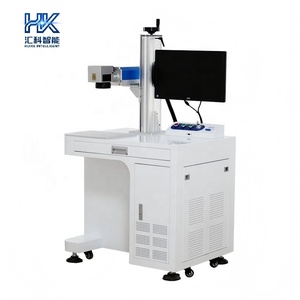
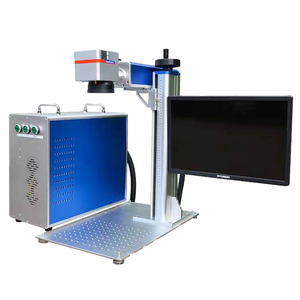
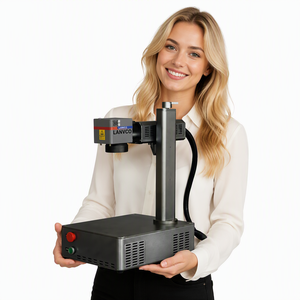
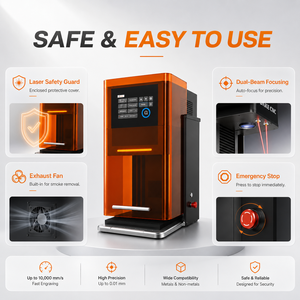
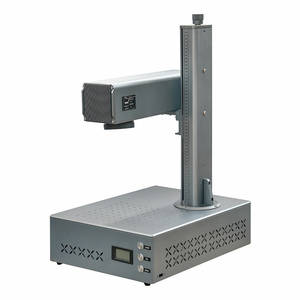
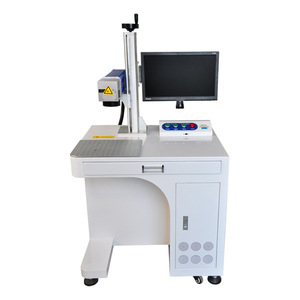
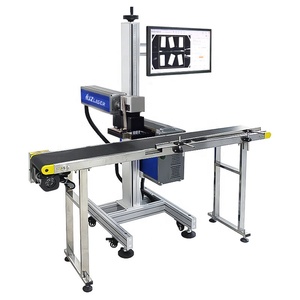
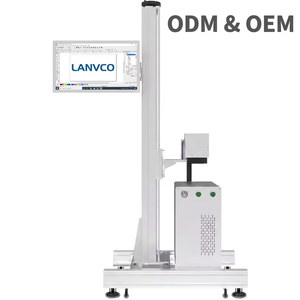
The global demand for high-speed identification, direct part marking (DPM), trace-ability coding, and precision converts has undergone a paradigm shift. Industrial manufacturers across automotive, semiconductor, medical device, aerospace, and consumer electronics sectors no longer view laser marking as a cosmetic secondary operation. Instead, it is an essential, inline component of modern smart manufacturing workflows (Industry 4.0).
China has emerged as the premier global hub for industrial laser processing equipment. By coupling a complete domestic photonics supply chain—encompassing raw optical crystals, high-efficiency fiber pumping diodes, digital galvanometer scanners, and high-speed motion controllers—with rigorous international quality standards (CE, FDA, ISO9001), Chinese manufacturers provide unprecedented value. As an industry-leading exporter, our manufacturing standard builds directly upon decades of optical registration precision and heavy-duty mechanical engineering, offering international buyers low total cost of ownership (TCO) paired with maximum operational uptime.
Information Gain Insight: Modern fiber laser markers achieve photon electro-optical conversion efficiency exceeding 30%, compared to legacy CO2 systems (<10%) or lamp-pumped YAG systems (<3%). This delivers dramatic power savings while eliminating consumable costs like lamps, gas bottles, and mechanical dies.
Understanding photon-material interactions is vital for optimizing machine configuration. When selecting a laser marking system from China, procurement engineers must evaluate beam parameters, galvo dynamics, and laser diode physics to match specific material absorption spectrums.
Different materials interact uniquely depending on the laser wavelength (λ) and pulse characteristics:
| Laser Architecture | Wavelength (λ) | Pulse Width Range | Primary Substrates | Key Advantage |
|---|---|---|---|---|
| Raycus / MAX Fiber | 1064 nm | 100 - 120 ns (Fixed) | Steel, Aluminum, Brass, Hard Plastics | High peak power, ultra-durable, cost-effective |
| JPT MOPA Fiber | 1064 nm | 1 - 500 ns (Adjustable) | Anodized Aluminum, Stainless, Thin Foils | Zero heat damage, vibrant color & dark marking |
| Ultra-Violet (UV) | 355 nm | < 15 ns (Picosecond opt.) | Glass, Medical Plastics, HDPE, PCB Boards | Cold processing, zero HAZ, microscopic micro-marking |
| CO2 Sealed Tube | 10.6 µm | Continuous / Pulsed | Wood, Acrylic, Leather, Packaging Cartons | Optimal absorption for organic non-metal materials |
The speed and accuracy of a laser marker are governed by its optical deflection system. Our systems incorporate high-speed digital galvanometer scanners equipped with optical encoders and quartz-coated mirrors. Capable of reaching marking velocities up to 12,000 mm/s with a drift specification under 0.3 mrad, these scanners ensure vector lines remain razor-sharp even at production line limits.
For non-planar, spherical, or stepped workpieces, standard 2D flat-field F-theta lenses suffer from focal spot degradation on sloped surfaces. Our 3D dynamic focus systems utilize a motorized dynamic z-axis expansion optical lens. By dynamically updating the focal distance in real-time synchronized with the X/Y galvo mirrors, the system maintains a constant focal spot size (<20 µm) across 3D contours, deep reliefs, and stepped molds up to ±40mm depth variance.
As international buyers re-evaluate supply chains, purchasing criteria have shifted from basic machine acquisition cost to long-term automation integration and process adaptability. Industrial procurement officers should plan around five key macro-trends:
Manual positioning of small components (such as electronic connectors, bird rings, or ear tags) creates significant labor bottlenecks and operator error. Modern laser marking procurement heavily favors machines equipped with coaxial or top-mounted CCD cameras. Machine vision algorithms automatically locate part positions, calculate rotation angles in 360 degrees, and instantly offset the laser vector path. This allows loose, randomly placed items on conveyor belts or tray fixtures to be processed with 100% positional accuracy.
Static benchtop units are increasingly giving way to inline "flying" marking systems. Operating continuously over high-speed belt conveyors, optical rotary encoders measure line speeds in real-time, allowing the JCZ/EZCAD system to dynamically adjust scan timing. This ensures micro-barcodes, 2D Data Matrix codes, and batch numbers are printed onto moving parts without halting production, dramatically boosting factory throughput.
Global environmental regulations (RoHS, REACH) and corporate ESG initiatives require factories to phase out chemical etching, ink-jet printing (which uses solvent-based inks and VOCs), and consumable mechanical tooling. Fiber laser marking is a 100% clean technology: zero chemicals, zero hazardous liquid waste, and zero consumable ink cartridges. Procurement teams migrating to laser marking gain immediate carbon footprint reductions and compliance safety.
Today's laser markers must communicate with Enterprise Resource Planning (ERP) and Manufacturing Execution Systems (MES). Our controllers natively support Modbus, TCP/IP, and EtherCAT communication protocols, enabling automatic variable data generation—such as sequential serial numbers, real-time timestamps, and dynamic database-driven QR codes—without manual operator input.
Choosing the right Chinese exporter requires looking behind the marketing brochure to evaluate core manufacturing discipline, quality control infrastructure, and global service capabilities. Here is how our engineering facility guarantees reliability:
Every laser resonator and power supply undergoes continuous 72-hour full-load stress testing and thermal cycle evaluation prior to assembly, ensuring zero infant mortality in optical components.
Building on proven optical registration shear engineering, our galvo alignment protocols guarantee positional repeatability to ±0.001mm, satisfying stringently controlled aerospace and medical specs.
Installed across 60+ countries, our equipment is backed by multilingual field support engineers, remote teamviewer diagnostic connectivity, and localized spare parts hubs for rapid deployment.
Fully compliant with European CE Directives (EMC & LVD), US FDA Accession registration, ISO 9001:2015 quality management systems, and Class 1 laser safety enclosure standards.
Laser marking versatility allows cross-industry adoption. Below is a validated material interaction breakdown compiled from our laser testing laboratory:
Raycus and MAX are ideal, cost-effective options for general metal marking, rust removal, and deep engraving where pulse duration flexibility is not required. JPT MOPA sources are premium fiber lasers featuring adjustable pulse widths (1-500ns), making them essential for non-destructive plastic marking, black marking on anodized aluminum/titanium, and delicate heat-sensitive foil applications.
Solid-state fiber laser sources have an expected operating lifetime of up to 100,000 hours (approx. 10+ years of 24/7 production). They require zero daily maintenance, zero laser gas refills, and zero optical mirror re-alignments. Periodic cleaning of the F-theta focal lens and keeping dust filters clear are the only routine upkeep tasks.
Open desktop and portable markers operate as Class 4 devices, requiring operators to wear certified protective laser safety eyewear (OD6+ for 1064nm). We also manufacture fully enclosed Class 1 laser safety workstations featuring interlocked safety doors and certified laser-safe observation glass, ensuring 100% compliance with EU and OSHA factory safety laws.
CCD visual positioning eliminates the cost and setup time of custom mechanical fixtures. Operators can place hundreds of small parts randomly on a tray or conveyor belt; the vision camera identifies each part's X/Y coordinates and rotational skew within milliseconds, automatically triggering the laser to mark in the correct location. This slashes loading labor costs by up to 80% and eliminates scrap due to operator misplacement.
All our industrial laser markers come with a comprehensive 1.5 to 2-year factory warranty. In case of operational issues, our photonics engineers provide remote diagnostic assistance via video conference or remote software access. Replacement modules (galvo heads, power supplies, controllers) are dispatched via express air freight within 24-48 hours from our global spare-parts inventory.
Yes. Our control software natively supports dynamic data input from SQL databases, Excel files, and network text streams. It automatically generates 1D barcodes (Code39, Code128) and 2D Data Matrix / QR codes in real-time, fully compatible with automated scanner verification lines.
Consult directly with our photonics applications team. Send us your substrate samples for free laser testing, cut/mark evaluation reports, and tailor-made automation quotes.
Get a Quote