Engineered for multi-substrate flexibility, rapid job changeovers, and continuous industrial operation.
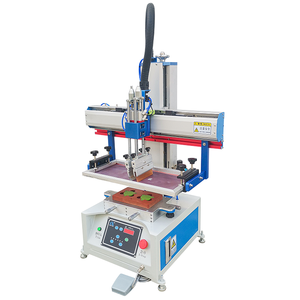
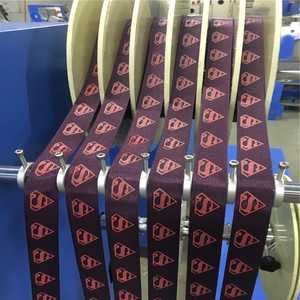
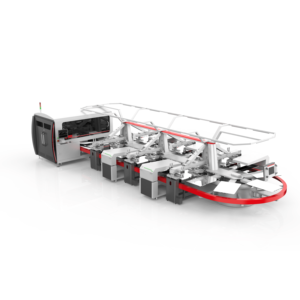
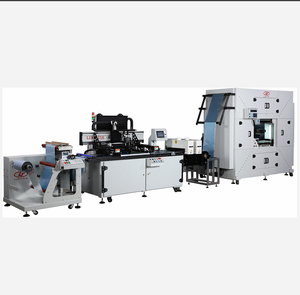
The global flexible packaging, label manufacturing, and industrial electronics converting sectors are undergoing a structural shift toward toolless digital finishing and high-speed laser slitting rewind systems. As traditional mechanical die-cutting and shear slitting face severe cost pressures—driven by mechanical blade wear, extended setup lead times, physical die storage overhead, and rising labor costs—leading engineering manufacturers in China have combined advanced US-originated optical registration technologies with ultra-scalable domestic manufacturing infrastructure.
As a flagship China laser slitter manufacturer and premier global exporter, our engineering division integrates over six decades of international motion-control heritage (inheriting technologies refined across legendary US platforms like Spartanics and CS2100) into state-of-the-art fiber, CO2, and UV laser slitting rewinders. Our systems achieve focused spot sizes down to 0.004 inches (0.1 mm), allowing converters to execute intricate kiss-cuts, continuous slit-rewinding, micro-perforations, and edge-trimming on a single continuous dynamic web line without consumable physical tooling.
A modern enterprise-grade laser slitting machine is not merely a laser source mounted on a roll stand. It is a highly synchronized electromechanical system incorporating closed-loop servo tension regulation, high-speed vision registration, dynamic Galvo dynamic scanning heads, and integrated fumes extraction systems.
High-speed optical galvo mirrors deflect the high-density laser beam across the web at vector speeds exceeding 50 m/min, providing seamless kiss-cutting and slitting with zero physical tool contact.
Integrated CCD camera networks read registration marks or artwork features in real-time, instantly adjusting laser toolpaths to compensate for web stretch, thermal distortion, or print skew.
Dual magnetic powder/servo magnetic particle tension control guarantees consistent web tracking on ultra-thin PET, polypropylene, and sensitive lithium-ion battery separator films.
One of the primary concerns for conversion process engineers when evaluating laser slitting equipment is the Heat-Affected Zone (HAZ). Excessive thermal energy can cause edge roll-up, discoloration, or polymer bead formation on heat-sensitive film substrates. Our proprietary beam-shaping optics and high-frequency pulse modulation technology deliver nanosecond laser energy bursts that instantly vaporize material without transferring ambient heat into adjacent polymer layers.
To quantify the return on investment (ROI) for global packaging and converter enterprise clients, our engineering lab has compiled an empirical performance baseline matrix:
| Performance Metric | Digital Laser Slitter Rewinder | Rotary Shear / Razor Mechanical Slitter |
|---|---|---|
| Tooling & Die Costs | $0 (100% Toolless Vector File) | $500 – $3,500 per die set / continuous blade replacement |
| Job Changeover Time | < 30 Seconds (Software Recipe Load) | 45 to 120 Minutes (Physical blade positioning & alignment) |
| Edge Wear & Sharpening Downtime | Zero (Non-contact optical process) | High (Frequent blade dulness, micro-burrs, and sharpening downtime) |
| Intricate Shape & Slitting Capability | Unlimited (Simultaneous slitting, perforating & kiss-cutting) | Linear slitting only (Requires separate rotary die station for contours) |
| Min. Slitting Width Tolerance | ± 0.05 mm (CCD Camera Compensated) | ± 0.25 mm (Subject to mechanical vibration & web drift) |
| Substrate Dust Generation | Zero particulate (Instant vaporisation + vacuum suction) | Moderate to High (Blade friction creates paper/plastic debris) |
As procurement executives and plant managers evaluate capital equipment purchases from China laser slitter exporters, understanding the trajectory of web converting technology is vital to prevent rapid equipment obsolescence. Over the next five years, four core technological pillars will define market dominance in digital converting:
Modern converters process vastly heterogeneous webs (e.g., paper laminated with thin metallic foils or PET). Dual-source hybrid slitters featuring CO2 (10.6 µm) and Fiber (1.06 µm) lasers operating on the same optical path dynamically select the optimal wavelength based on substrate chemistry, achieving maximum processing speed.
Inline high-resolution vision systems now go beyond simple registration. Advanced deep-learning vision modules inspect 100% of the cut path at 100 m/min, automatically adjusting laser power output dynamically in response to material density variations or substrate thickness fluctuations.
Top-tier Chinese equipment exporters are integrating real-time telemetry protocols (OPC UA, MQTT). Overseas manufacturing directors can monitor OEE (Overall Equipment Effectiveness), laser tube source degradation, beam uptime, and predictive maintenance schedules remotely via encrypted cloud portals.
Operating from our state-of-the-art manufacturing campus in China, our organization blends decades of American converting technology expertise with high-precision Chinese manufacturing scale. Every machine that leaves our factory floor undergoes rigorous 100% material run-testing using your specific technical substrate samples before export clearance.
Answers to critical questions asked by technical buyers, plant engineers, and global procurement directors:
Contact our senior application engineering team today for a complimentary substrate cut test, custom equipment proposal, or factory live video demonstration.
