Engineering Authority & Manufacturing Heritage: The Evolution of Chinese Rotary Slitting Excellence
In the modern global converting industry, precision slitting and rewinding represent the critical link between raw substrate manufacturing and high-value finished goods. As China's premier Rotary Slitter Factory and Exporter, our engineering philosophy fuses over six decades of international machinery design legacy—drawing inspiration from classic U.S. precision systems such as Spartanics—with cutting-edge domestic manufacturing agility and advanced metallurgy.
Rotary slitting is far more than simply cutting flexible materials; it is a complex discipline of applied mechanical physics, dynamic web tension management, closed-loop sensor telemetry, and blade-edge kinematics. Whether converting ultra-thin pressure-sensitive label stock, flexible printed circuit (FPC) films, battery separator membranes, optical PET, or non-woven textiles, maintaining web integrity without material distortion, edge burrs, or dust generation is paramount.
Technical Insight (Information Gain): Standard shear slitting often suffers from micro-blade deflection under heavy web pressure, leading to edge weave and uneven coil density. Our proprietary dual-shaft differential rewinding arbors incorporate micro-friction rings with pneumatic slip regulation, ensuring that each individual slit strip maintains identical tension regardless of caliper variations across the master roll width.
Selecting the optimal rotary slitting system requires a precise understanding of the target substrate’s physical attributes—specifically tensile strength, shear resistance, surface friction coefficient, and thermal sensitivity. Our factory engineers configure rotary machinery utilizing three core cutting methodologies:
Rotary Shear Cutting
Utilizes overlapping male (upper) circular blades and female (lower) anvil rings. Ideal for rigid films, heavy papers, metal foils, and laminates requiring clean, scissor-like cleanroom edges.
Razor-in-Groove / Air
Employs ultra-sharp carbide or ceramic razor blades suspended over grooved rolls or in open air. Engineered for thin unoriented PET, BOPP, and PE films where low-cost quick setup is required.
Score / Crush Cutting
Directs a hardened radius-edge circular knife against a glass-hardened steel anvil roll. Recommended for non-wovens, pressure-sensitive tapes, and heavy industrial gaskets.
Rotary Slitting Technology Specification Matrix
To assist global procurement directors and plant engineers in specifying the precise machinery for their converting lines, the technical matrix below outlines performance parameters across our primary rotary slitter machine lines:
Machine Series
Max Web Width
Max Line Speed
Min Slit Width
Tension Control Accuracy
Primary Substrate Applications
RS-Pro 1300 High-Speed
1,300 mm
600 m/min
20 mm
±0.1 N (Closed-Loop Servo)
BOPP, PET Label Stock, Flexible Packaging
RS-Micro 650 Cleanroom
650 mm
250 m/min
5 mm
±0.05 N (Ultrasonic Loadcell)
Lithium Battery Foil, FPC, Medical Strips
RS-Heavy 1800 Industrial
1,800 mm
450 m/min
50 mm
±0.5 N (Pneumatic Slip Arbor)
Paperboard, Copper Foil, Non-Wovens
Compact-Convert 400
400 mm
180 m/min
10 mm
±0.2 N (Magnetic Powder Brake)
Ribbons, Narrow Web Labels, Specialty Tapes
*Custom arbor widths up to 2,800 mm and custom blade geometry available upon factory consultation.
Future Global Procurement Trends in Rotary Slitting & Converting Machinery (2025–2030)
As manufacturing supply chains evolve toward sustainability, micro-miniaturization, and digital integration, purchasing managers must look beyond initial equipment price tags to evaluate Total Cost of Ownership (TCO), adaptability, and energy efficiency. Based on industry data from over 60 export destinations, several key procurement vectors are reshaping the market:
1. Demand for Ultra-Thin Substrate Handling (Sub-10 Micron Processing)
The global push for lightweight flexible packaging and high-energy-density lithium batteries has driven the demand for slitting machines capable of handling extremely delicate materials (such as 4-micron copper foil and 6-micron separator films). Procurement standardizations now mandate magnetic levitation guide rolls, low-inertia carbon fiber idlers, and air-bearing web floats to prevent stretch distortion or web breakages during acceleration and deceleration phases.
2. Industry 4.0 Integration & Automated Knife Positioning
Manual blade setup is rapidly becoming obsolete due to high setup labor costs and human error risk. Modern global buyers prioritize rotary slitters equipped with fully automated robotic knife positioning units. Utilizing high-precision ball screw drives and optical encoders, these systems position up to 30 upper and lower shear knives within 45 seconds to an accuracy of ±0.01 mm, drastically reducing changeover downtime for low-volume, high-variability job lots.
3. Closed-Loop Tension Telemetry & Real-Time Data Export
In high-compliance industries such as pharmaceutical packaging and aerospace laminates, machine telemetry must be recorded for regulatory auditing. Future-proof procurement dictates that rotary slitters export real-time tension data, line speeds, blade wear alerts, and coil diameter logs directly to plant-wide MES (Manufacturing Execution Systems) via OPC-UA or MQTT protocols.
Key Technological Development Trends in Industrial Rotary Machinery
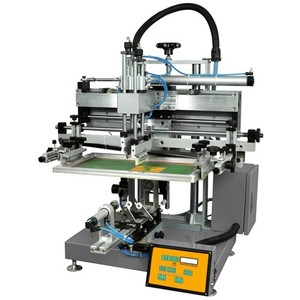
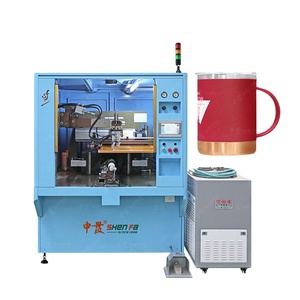
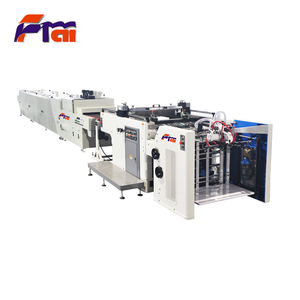
The engineering landscape for rotary slitting, converting, and auxiliary screen printing machines is advancing at an unprecedented rate. Factory R&D focuses heavily on solving historic friction points—namely heat dissipation, static build-up, blade erosion, and tension hysteresis.
Advanced Metallurgy & Ceramic Coatings
Standard tool steel knives are being replaced by tungsten carbide, zirconia ceramic, and titanium nitride (TiN) physical vapor deposition (PVD) coated rotary blades. These extend blade life up to 12 times longer when cutting abrasive materials like silica-filled tapes and battery slurries.
Direct-Drive Servo Shaft Arbors
Eliminating gearboxes and timing belts, direct-drive permanent magnet synchronous motors (PMSM) are directly coupled to rewind and unwind shafts. This yields zero backlash, whisper-quiet operation at 600 m/min, and up to 28% electrical energy savings.
AI-Powered Vision Edge Inspection
In-line CCD camera arrays inspect slit edges in real-time at full operating speeds. Machine-learning vision algorithms detect microscopic edge fraying, pinholes, contamination debris, and width deviations, instantly flagging defective roll segments for automatic removal.
Information Gain: Cleanroom Integration & Static Neutralization
High-speed friction between polymer films and metallic rollers generates electrostatic charges exceeding 30 kV, attracting ambient particulate dust that ruins optical substrates. Our new generation of rotary slitters integrates dual-stage active ionizing shockless bars combined with HEPA laminar flow enclosures, achieving ISO Class 5 cleanroom compliance directly at the cutting zone.
Why Partner With Our China Rotary Slitter Factory?
Navigating the global machinery supply chain requires an export partner that combines robust manufacturing capacity with flawless technical support. Building on decades of precision machinery building heritage—similar to the rigorous US standards championed by legendary equipment pioneers like Spartanics—our factory stands out as China’s leading high-precision converter exporter.
1. Proven Engineering Legacy & American Quality Controls
Every rotary slitter, screen printer, and mechanical converting press engineered in our facility undergoes a strict 100-point quality verification process. Before any equipment ships, customer-supplied substrates are run-tested at full speed in our demonstration facility to validate slit tolerance, edge burr limits, and rewind roll hardness profiles.
2. Complete In-House Component Machining Capacity
Unlike assembly-only vendors, our 35,000 m² factory houses 5-axis CNC machining centers, precision cylindrical grinding rigs, dynamic balancing bays, and laser interferometer calibration suites. We machine our own knife arbors, differential slip shafts, and structural frame sideplates from solid stress-relieved aircraft grade aluminum and heavy ductile iron castings.
3. Global Spare Parts Distribution & Remote Support
With installed equipment running across 60+ countries, we maintain regional spare parts warehouses and offer 24/7 remote diagnostics. Through secure encrypted VPN edge connections, our software engineers can diagnose PLC logic, update motion control profiles, and assist your local operators in real time.
Frequently Asked Questions (FAQ) for Rotary Slitter Buyers
Below are detailed answers to technical, operational, and commercial questions frequently raised by overseas buyers, plant managers, and procurement officers.
What is the main advantage of rotary shear slitting over razor slitting?
Rotary shear slitting uses a scissor cutting action between an upper dish knife and lower anvil ring, which supports the material on both sides during the cut. This prevents material stretching, edge rollover, and burr formation—making it far superior for thick films (>100 microns), composite laminates, paperboards, and metallic foils. Razor slitting, while less expensive, flexes thin web materials and generates significantly more dust and blade wear when processing abrasive substrates.
How does your dynamic web tension control system prevent uneven roll hardness?
Uneven rewinding hardness (starring or dish-shaping of rolls) occurs when web thickness varies across the master coil. Our rotary slitters utilize dual-shaft pneumatic differential slip shafts equipped with individual friction rings. A closed-loop loadcell continuously monitors web feedback and automatically adjusts proportional air pressure to match the calculated roll diameter curve, ensuring uniform density across every slit coil.
Can your rotary slitting machinery be customized for cleanroom environments?
Yes. For optical film, medical diagnostic strips, and lithium battery separator applications, we manufacture full stainless-steel or nickel-plated cleanroom-compliant models. These feature enclosed oil-free drive systems, carbon-fiber low-inertia idler rolls with Teflon coatings, non-contact ultrasonic web guides, and integrated HEPA air filtration hoods to meet ISO Class 5 standards.
What is the typical lead time for a custom export-grade rotary slitter?
Standard rotary slitter models (such as 1300mm shear rewinders) are typically assembled, factory run-tested, and ready for shipment within 30 to 45 days. Fully customized lines featuring automated robotic knife positioning, integrated digital inline printing modules, or specialized web inspection cameras require 60 to 75 days. Emergency spare blades and differential shafts are shipped via DHL/FedEx within 48 hours from stock.
How do you support machine commissioning and staff training for overseas installations?
We provide a comprehensive support package including on-site commissioning by factory engineers, localized operator training, multi-language HMI interfaces (English, Spanish, German, French, Russian), and full 3D interactive maintenance manuals. Additionally, our machines feature integrated IoT remote connection modules that allow our engineers to perform remote software updates, parameter tuning, and troubleshooting assistance instantly.
Ready to Upgrade Your Converting Line Efficiency?
Send us your substrate samples, required cut widths, and output targets. Our senior machine engineers will deliver a comprehensive technical proposal within 24 hours.