Explore high-output screen printers, servo-driven digital flatbed converting kit, and automatic web-fed machinery engineered for precision global production lines.
In the rapidly evolving landscape of digital label converting, sign graphics, industrial membrane switches, and packaging decoration, navigating China’s top vinyl cutter factories and OEM suppliers requires looking beyond superficial hardware costs. Modern converting demands micro-meter registration accuracy, dynamic tension control, and seamless integration between pre-press digital art files and post-press finishing equipment.
Historically, international buyers evaluated Chinese suppliers primarily on hardware affordability. However, over the past decade, premier Chinese manufacturing clusters—specifically in Guangdong, Jiangsu, and Shandong provinces—have underwent a profound technological transformation. By combining European and American motion control algorithms with domestic precision assembly lines, top-tier factories now manufacture industrial-grade vinyl cutting plotters, roll-to-roll laser die-cutters, and high-speed screen printing machinery that match Western benchmarks at a significantly optimized total cost of ownership (TCO).
According to modern converting benchmarks, print service providers (PSPs) and industrial label converters face three main operational bottlenecks: shrinking job run lengths, exponentially increasing stock keeping unit (SKU) variations, and tight turnarounds. Traditional rotary die-cutting systems require physical metal magnetic cylinders and customized solid dies that cost hundreds of dollars per design, accompanied by days or weeks of lead time.
Modern computerized vinyl cutters and modular laser finishing systems eliminate these physical tooling costs entirely. When sourcing machinery from leading Chinese suppliers, procurement officers must differentiate between three distinct tiers of equipment manufacturers:
| Manufacturer Tier | Primary Technology & Components | Target Substrates & Speed | Registration Accuracy | Typical Application Suitability |
|---|---|---|---|---|
| Tier 1: High-Precision Industrial OEMs | AC Servo Motors, Japanese THK Linear Guides, Integrated CCD Vision Cameras, CO2/Fiber Lasers | PET, PVC, Polycarbonate, Reflective Vinyl, FPC (Up to 1,200 mm/s) | ±0.05 mm (0.002 in) | High-speed roll-to-roll label converting, automotive graphics, membrane switch overlays, security card production. |
| Tier 2: Mid-Range Commercial Suppliers | Hybrid Stepper/Servo Motors, Taiwanese Hiwin Rails, Red-Dot Manual/Auto Registration Marks | Standard Monomeric & Polymeric PVC Vinyl, Heat Transfer Film (Up to 600 mm/s) | ±0.1 mm (0.004 in) | Signage shops, commercial sticker cutting, garment heat transfer vinyl (HTV), short-run banner graphics. |
| Tier 3: Low-Cost Entry Desktop Vendors | Basic Stepper Motors, Belt Drive, Manual Alignment Sensors | Lightweight craft vinyl, paper stickers (Up to 300 mm/s) | ±0.3 mm (0.012 in) | Entry-level prototyping, low-duty cycle craft cutting, localized low-volume sign making. |
To gain a sustainable competitive edge, enterprise buyers sourcing from China must ensure their target machinery incorporates key future-proof technological trends. The convergence of printing and converting technologies has shifted market demand toward hybrid systems that integrate digital printing, silk-screen deposition, micro-cut blade registration, and laser ablation into unified production workflows.
Advanced real-time vision algorithms automatically compensate for web stretch, skewing, and printing distortion. Optical sensors detect registration marks within milliseconds, dynamically correcting cut paths on pre-printed vinyl rolls.
Replacing traditional step motors with digital AC servo technology delivers whisper-quiet operation, eliminate step-loss errors during high-speed acceleration, and provides exact down-force control up to 1,000 grams for thick materials.
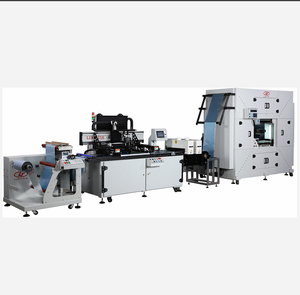
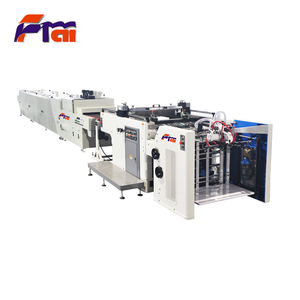
Modern industrial vinyl cutters feature modular web architectures. Tension-controlled unwinders, inline matrix slitting, lamination units, and automatic transverse sheet cutters allow seamless roll-to-roll or roll-to-sheet converting.
As showcased in enterprise converting platforms like the Spartanics CS2100 and XIPHOS digital series, laser die-cutting has become a cornerstone of high-end label converting. Delivering spot sizes down to 0.004 in (0.1 mm), galvo laser heads vaporize or kiss-cut vinyl stock directly from vector CAD files.
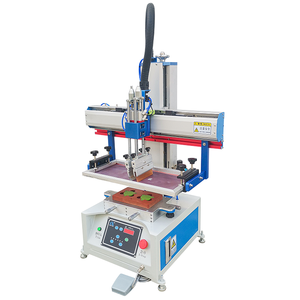
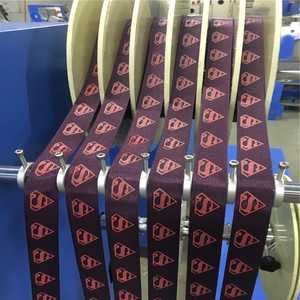
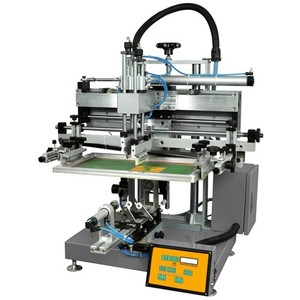
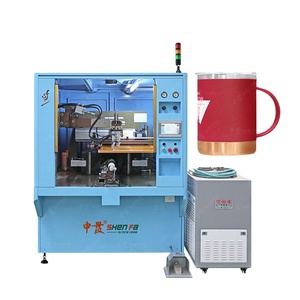
When combined with pneumatic silk-screen printing units, flatbed roll-to-roll screen printers, or high-output ribbon printing equipment, manufacturers can apply tactile varnishes, metallic inks, or heavy white undercoats prior to precision contour cutting. This hybrid approach enables complete end-to-end manufacturing of industrial nameplates, battery labels, smart cards, and decorative automotive graphics in a single continuous pass.
Building world-class vinyl cutters and silk screen converting machinery requires rigorous mechanical engineering, precision component machining, and stringent factory testing standards. Leveraging decades of precision machinery engineering—drawing on robust US-built technical heritage combined with cost-efficient Asian assembly ecosystems—our manufacturing facilities set global benchmarks for reliability.
Sourcing industrial vinyl cutting plotters, screen printing units, or digital converting lines from Chinese suppliers involves evaluating several key technical parameters to ensure long-term ROI:
Ensure the machine supports fine digital blade force control (minimum 10g to 1000g). High blade force is vital for cutting reflective vinyl, sandblast stencils, magnetic sheets, and thick laminate films.
Verify native compatibility with industry-standard vector graphic suites including CorelDRAW, Adobe Illustrator, FlexiSign, SignMaster, and AutoCAD, utilizing direct HP-GL/DMPL control commands.
Inquire about replacement pinch rollers, carbide cutting blades (30°, 45°, 60° angle specs), blade holders, cutting mats, and linear guide bearings to ensure continuous factory uptime.
Get authoritative technical insights addressing the most common questions raised by global equipment buyers and manufacturing plant operations managers.