Engineered for high throughput, micron-level optical registration accuracy, and heavy-duty continuous production across global smart card and functional label manufacturing facilities.
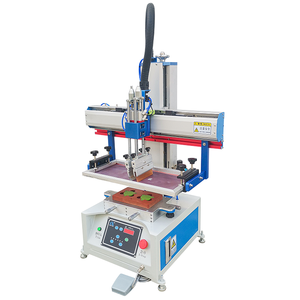
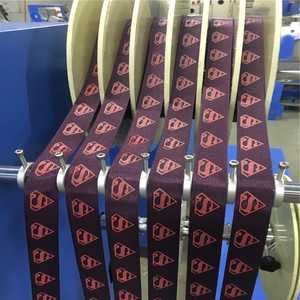
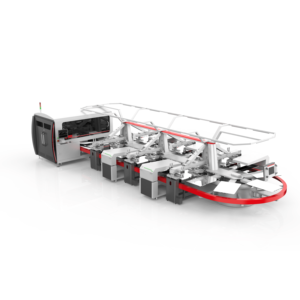
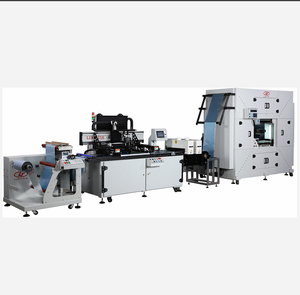
As a leading China wholesale card cutter manufacturer and global exporter, our engineering core centers on resolving the physics of shear stress, polymer micro-fracturing, and edge burr prevention during high-speed mechanical punching and digital laser converting. The modern manufacturing ecosystem for ISO standard financial credit cards (CR80), government identity credentials (polycarbonate multi-layer), RFID smart keys, and membrane switch overlays demands rigid mechanical stability paired with dynamic vision feedback.
Traditional mechanical rotary slitting often fails when processing complex polymer laminates due to material deformation, static build-up, and registration drift caused by thermal expansion during sheet feeding. Our advanced hydraulic card cutters and optical registration shears utilize heavy-duty cast-iron chassis combined with servo-driven CCD vision alignment. This allows the system to read printed target reticles in real time, calculating X, Y, and theta rotational offsets prior to blade engagement, guaranteeing micron-level punch accuracy down to ±0.05 mm.
| Cutting Technology | Supported Substrates | Punch Precision | Best Application Intent | Tooling / Maintenance Cost |
|---|---|---|---|---|
| CCD Optical Registration Shear | PVC, PETG, ABS, Polycarbonate, Teslin | ±0.05 mm | High-security ID cards, financial CR80 cards, laminated sheets | Low maintenance; precision blade re-sharpening every 3M cycles |
| Galvanometer Laser Die Cutter | Polyester, Polypropylene, Pressure-Sensitive Labels | ±0.10 mm (0.004" spot size) | Short-run custom shapes, kiss-cut stickers, micro-perforations | Zero tooling cost; zero physical die wear; software recipe changes |
| High-Speed Hydraulic Punch Press | Heavy PVC, Laminated Smart Cards with RFID Inlays | ±0.08 mm | High-volume mass production of standardized card formats | Requires hardened D2/Tungsten Carbide male/female die sets |
| Roll-to-Roll Web Converter | Flexible Circuits, Webbing Tape, Ribbon Labels | ±0.08 mm | Continuous web screen printing, hot stamping, inline shearing | Modular cartridge replacement; integrated web tension control |
When selecting card cutting equipment from Chinese exporters, international procurement teams must evaluate the metallurgical grade of the cutting die components. We employ imported Japanese SKD-11 and Swedish Uddeholm tool steels treated through vacuum heat processes to achieve a Rockwell Hardness of HRC 60-62. This prevents blade chipping, eliminates burr heights exceeding 0.02 mm (violating ISO/IEC 7810 standards), and extends tool lifecycle across millions of punching cycles under cleanroom operating conditions.
Unlike standard OEM aggregators, every single machine built at our facility undergoes rigorous pre-shipment validation using your exact customer-supplied substrate. We measure edge quality, cycle speed, and vision calibration tolerances, providing full digital test reports prior to container loading.
Our automated high-speed card verification platforms are capable of counting, checking, and validating up to 500 plastic cards in approximately five seconds, equipped with multilingual touchscreen interfaces for secure ISO financial and government credential lines.
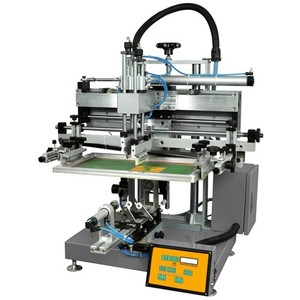
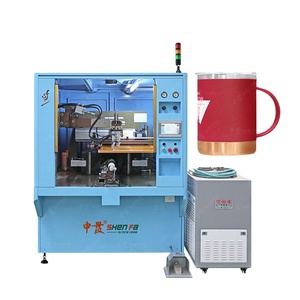
Invest staged capital aligned with actual order volume. Our web converting platforms allow modular integration of digital screen printing modules, magnetic stripe laminators, UV curing units, and optical card shears onto a unified servo chassis.
Legacy card cutters relied on simple single-point photo-electric sensors that frequently failed on reflective foils or dark substrate backgrounds. Next-generation card cutting procurement is shifting rapidly toward multi-camera CCD systems driven by AI pattern-recognition algorithms. These systems continuously adjust the shearing angle in real time to compensate for non-linear sheet distortion during thermal lamination cycles.
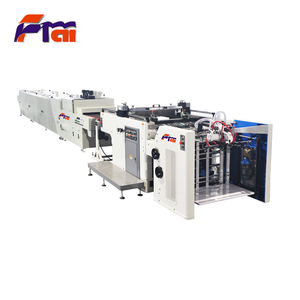
Global buyers are eliminating standalone offline processing steps. Modern equipment requests prioritize hybrid configurations where roll-to-roll screen printing, UV curing, hot foil stamping, dynamic registration inspection, and final card shearing occur in a single continuous servo-driven line—reducing operator labor by up to 65% and eliminating buffer inventory.
With the rapid surge in contactless RFID payment cards and dual-interface passport chips, punching machinery must protect micro-chips embedded inside PVC/PETG inner layers. Future card cutter procurement mandates soft-touch hydraulic clamping and vibration-damped punch strokes to prevent chip cracking or copper antenna wire detachment during the punching impact phase.
Overseas factory directors require real-time visibility into machine health. Modern card cutters manufactured in China are now equipped with OPC-UA cloud telemetry, tracking punch stroke counts, hydraulic oil temperature, motor current draw, and automated alerts for scheduled blade re-sharpening before micro-burrs degrade product compliance.
The global card manufacturing market is transitioning rapidly away from traditional virgin PVC toward eco-friendly substrates, including recycled PVC (rPVC), Bio-PET, PLA (Polylactic Acid), and pure Polycarbonate (PC). Each of these materials exhibits dramatically different mechanical properties under shear stress:
By engineering customizable clearance control between male and female punch dies (down to 0.008 mm clearance settings), our card cutters guarantee razor-sharp edges on all eco-friendly substrates, meeting ISO standard 7810 corners without requiring manual edge polishing.
Mechanical card cutters utilize high-precision male and female tool-steel punch dies (or shear blades) to physically stamp out plastic cards with extreme speed and zero thermal distortion—making them ideal for high-volume standard formats like ISO CR80 credit cards. Laser die cutting systems use focused CO2 or fiber laser beams to cut contours without physical die tooling, making laser the superior economic choice for short-run custom shapes, frequent SKU changes, micro-perforations, and delicate flexible circuit overlays.
Our high-resolution CCD cameras capture target marks or specific graphic features printed on the sheet. The onboard servo control system calculates positional variance against the CAD master artwork, automatically compensating for sheet skew, stretch, or shrinkage in X, Y, and rotation angles before the punching blade descends. This achieves repeatable registration tolerances of ±0.05 mm across complex multi-up sheet layouts.
Yes. Our heavy-duty hydraulic card cutters are specifically designed for high-security passport and national ID production lines. We utilize vibration-damped hydraulic stroke profiles and custom micro-smooth clamping pads that hold multi-layer polycarbonate sheets firmly without micro-cracking the integrated circuit (IC) module or damaging internal antenna loops.
Constructed from premium vacuum-heat-treated SKD-11 or Tungsten Carbide tool steel, our standard card cutting dies deliver between 2,000,000 and 5,000,000 punch cycles on standard PVC before requiring re-sharpening. Die sets feature modular alignment pins allowing fast disassembly and re-grinding, extending total die lifespan past 20,000,000 total cards.
We provide full international commissioning and support. Every machine order includes complete English operating documentation, factory video FAT reports, and remote IoT diagnostic access. For facility installation, our factory-trained field support engineers deploy to client sites worldwide for mechanical setup, operator interface training, and maintenance protocol handover.
You can send your raw material samples, CAD drawings, speed targets, and sheet layout specifications directly to our engineering team. We will process your samples on our factory demo equipment, generate an edge-quality inspection report, and provide an itemized commercial proposal tailored to your line setup.
Transform your plastic card, label, and functional film production line with our high-speed optical registration cutters, screen printing presses, and custom web automation systems. Speak directly with an application engineer today.
