Explore our flagship automated screen printing, roll-to-roll converting, and digital finishing systems built for global industrial manufacturers, converters, and commercial printing hubs.
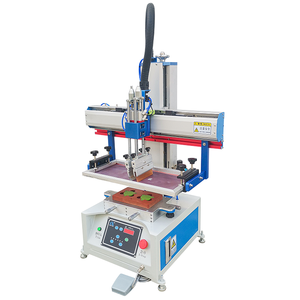
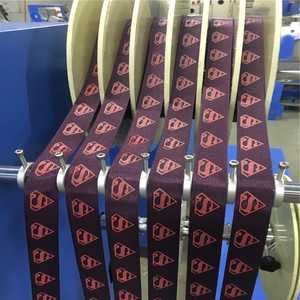
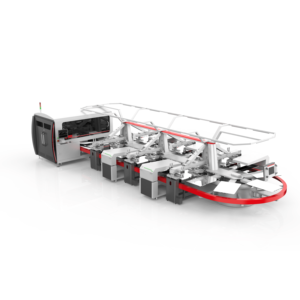
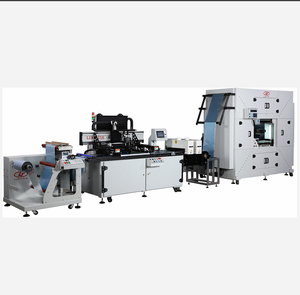
The modern packaging, labeling, and specialized industrial graphic conversion landscape is undergoing a paradigm shift. Procurement directors, converting managers, and OEM equipment buyers face unprecedented market demands for ultra-short runs, dynamic SKU proliferation, variable data encoding, and micro-tolerance finishing. Traditional rotary mechanical dies—while efficient for millions of identical impressions—impose severe structural bottlenecks, high capital lockup in tooling inventories, and extensive job setup downtime.
As a premiere Custom OEM Label Converter Factory & Supplier with over six decades of machinery design heritage based in Rolling Meadows, Illinois, USA, Spartanics bridges the critical engineering gap between digital printing capabilities and automated post-press converting. Our proprietary modular ecosystems, such as the flagship CS2100 Converting System and the ultra-compact XIPHOS Laser System, integrate multi-axis galvo laser cutting, servo-driven flexographic web control, and optical registration sensors into a unified production matrix.
By leveraging real-time vision-based mark reading and high-speed galvanometric beam steering, custom OEM converters can process complex pressure-sensitive paper, PET, PVC, Polycarbonate, roll-to-roll metallized films, and flexible circuitry substrates in continuous web setups without physical tool contact or structural thermal edge degradation.
Selecting an OEM machine partner requires rigorous technical evaluation beyond simple speed parameters. Spartanics' engineering architecture is founded on 100% factory pre-shipment validation, heavy-duty mechanical frame construction, and software-defined automation. Over 3,000 systems across 60+ nations attest to our machinery's multi-decade duty cycles.
Software-directed CO2 and Fiber laser integration capable of spot sizes down to 0.004 in. Precise energy density control guarantees clean kiss-cuts on pressure-sensitive labels without scoring the underlying silicon release liner.
For high-volume standard blanking, government ID card punching, and heavy gasket fabrication, our mechanical presses supply up to 50 tons of uniform force with micron-level mechanical repeatability.
Systems like the Spartanics 680 plastic card counter process 500 finished cards in under 5 seconds with non-contact optical sensing, serving secure financial card, driver's license, and gift card production lines.
Every OEM system manufactured at our US facility undergoes custom material validation. We request your specific substrate web, printed artwork files, and target operational speeds. Our engineers run test trials, measure edge quality via optical microscopy, and provide fully documented performance metrics prior to quote finalization.
To guide technical procurement teams, converting managers, and factory layout planners, the following matrix compares core operational dynamics across primary converting technologies:
| Evaluation Parameter | Rotary Die Converting | Galvo Laser Die-Cutting | Automatic Screen Printing |
|---|---|---|---|
| Tooling Cost per SKU | $800 – $3,500 (Physical Dies) | $0.00 (Vector CAD File) | $50 – $150 (Screen Mesh/Stencil) |
| Changeover / Setup Time | 35 – 60 Minutes | Instant (< 10 Seconds) | 15 – 30 Minutes |
| Minimum Spot / Feature Size | 0.50 mm (Blade Limited) | 0.10 mm (0.004 in) | 0.15 mm Line Width |
| Substrate Versatility | Medium (Requires hard tooling) | High (PET, PVC, PC, Paper, Adhesives) | Extremely High (Textiles, Rigid, Web) |
| Ideal Production Run Length | > 100,000 Linear Meters | 1 to 50,000 Short-to-Mid Runs | Mid-to-High Volume Graphics |
| Variable Data / Serialization | Not Possible | Fully Integrated (On-the-Fly) | Static Screen Master |
As global supply chains demand heightened flexibility, reduced material waste, and localized just-in-time (JIT) manufacturing, label converters are shifting their procurement strategies towards hybrid, modular equipment. Key technological micro-trends shaping the next decade include:
Advanced closed-loop tension control systems and intelligent waste matrix stripping algorithms reduce edge-bleed material waste by up to 40%. Laser paths automatically optimize nesting density from continuous vector inputs.
Modern web converting lines feature high-resolution CCD camera registration. The system dynamically reads fiducial target marks or edge contours to dynamically compensate for web stretching, thermal distortion, or lateral drift.
Converters no longer purchase single-function machinery. Equipment frames like the Spartanics CS2100 allow converting plants to snap in laser modules, single-pass inkjet printers, UV flexo varnishing, or rotary shears on demand.
Furthermore, energy efficiency and reduced carbon footprints are now core OEM purchasing metrics. By eliminating physical magnetic cylinder shipping, mechanical die grinding energy, and solvent cleaning for mechanical dies, laser label converting offers a cleaner, lower-emission alternative for eco-certified manufacturing facilities.
Detailed technical answers to common questions raised by plant managers, purchasing directors, and converting engineers during capital equipment evaluation.
Galvo laser die-cutting is the clear economic winner for short-to-medium production runs (under 50,000 linear meters), versioned SKUs, and jobs with frequent contour variations. Because laser cutting relies entirely on digital vector artwork files, there are zero die acquisition costs ($800–$3,500 savings per SKU), zero plate lead times, and zero physical die storage costs. Additionally, laser systems can execute micro-perforations, complex intricate internal cutouts, and kiss-cuts that are physically impossible for mechanical blades to achieve. For long, uninterrupted runs of a single geometric shape exceeding hundreds of thousands of meters, heavy-duty mechanical presses remain an efficient alternative.
Edge discoloration or pin-head melting is prevented through precise laser pulse duration control, high-velocity galvo optical scanners, and specialized air-assist extraction nozzles. Spartanics laser cutting systems employ high peak-power, short-pulse CO2 and Fiber lasers that vaporize target material rapidly (photothermal ablation) before thermal energy can conduct into surrounding substrate fibers. Combined with focused vacuum exhaustion plates beneath the web, synthetic films such as PET, PVC, Polycarbonate, and BOPP maintain clean, sealed, unburned edges.
Our equipment is validated across a wide spectrum of industrial materials, including pressure-sensitive papers, polypropylene (PP), polyethylene (PE), polyester (PET), polycarbonate, polyimide, membrane switch overlays, metallic foils, adhesive tapes, in-mold decoration (IMD/IML) films, and thin flexible printed circuit boards. Every OEM client is encouraged to send sample reels to our Rolling Meadows testing facility for complete material laser cutability and screen print adhesion reports.
Spartanics utilizes proprietary optical vision registration sensors and camera tracking systems. As pre-printed webs move through the cutting station at high linear speeds, the vision system scans printed mark registration targets or graphic feature contours in real time. The software automatically calculates any web stretch, shrinkage, or lateral wander, dynamic adjusting the laser galvanometer cut coordinates on every frame to maintain tight registration tolerances within ±0.1 mm.
With equipment operating in over 60 countries, Spartanics maintains a robust global service architecture. All platforms are built with secure, encrypted remote diagnostics hardware allowing our Illinois-based factory software engineers to troubleshoot PLC control parameters, calibrate sensors, and update system recipes over the air. Additionally, we provide comprehensive spare parts packages, regional factory-trained technical field support, and multilingual operator training video modules.
Partner with a 60+ year leader in USA machinery engineering. Contact our technical team today for substrate material testing, machine customization, and factory layout planning.
