Explore our high-performance OEM/ODM product portfolio designed for banking, national ID, office, commercial, and heavy-duty card manufacturing applications.
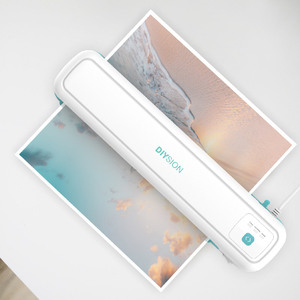
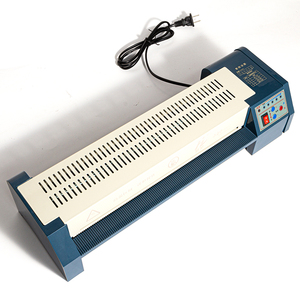
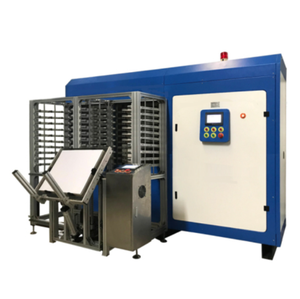
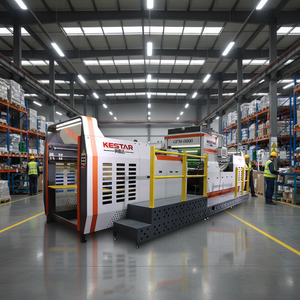
In modern secure identity, banking, and high-volume commercial printing, card durability and anti-counterfeiting security depend entirely on thermal fusion integrity. As a premier OEM/ODM Card Laminator Manufacturer & Exporter, our engineering philosophy inherits over 60 years of US-built precision standards, combining optical registration, dynamic thermal balancing, and zero-defect adhesive containment.
This comprehensive paper synthesizes strategic procurement methodologies, material compatibility frameworks (PVC, PETG, Polycarbonate, ABS), and future-proof automation trends for B2B buyers, government contractors, and enterprise distributors worldwide.
Card lamination is no longer a simple process of applying heat to plastic sleeves. Modern financial credit cards (EMV compliant), government-issued driver’s licenses, biometric security passes, and smart access cards require rigorous structural integrity. A sub-standard lamination process results in micro-bubbling, corner peeling, warping, magnetic stripe degradation, and premature RFID chip failure.
Our manufacturing infrastructure bridges the gap between desktop flexibility and heavy industrial throughput. Leveraging engineering expertise pioneered across global converting systems, our card laminators incorporate multi-zone quartz heating elements, precision-ground chrome rollers, and closed-loop PID thermal micro-controllers. Whether operating continuous roll-to-sheet lamination at speeds exceeding 20 meters per minute or multi-layer hydraulic pouch processing, maintaining absolute temperature uniformness (within ±1°C across the entire active roller bed) is paramount.
As global environmental regulations tighten and security demands escalate, the card manufacturing ecosystem is rapidly transitioning away from traditional monomeric PVC toward high-durability, eco-friendly thermoplastic materials:
Partnering with an experienced OEM/ODM original manufacturer ensures that your equipment is optimized for your exact manufacturing environment, substrate mix, and regional electrical standards (110V/220V/380V).
Specially calibrated roller nip pressures and high-release silicone/chrome outer surfaces eliminate adhesive squeeze-out, keeping card surfaces pristine and operational down-times zero.
All export models strictly comply with ISO 9001:2015 quality management benchmarks, CE security standards, RoHS environmental guidelines, and UL electrical safety mandates.
Integrated micro-camera sensors detect printed registration marks on pre-printed webs, continuously compensating for web skew and thermal expansion in real time.
Designed with open-architecture industrial frames, allowing easy retrofitting of magnetic stripe encoders, inline contactless IC chip testers, surface foil stampers, and optical inspection modules.
Equipped with intelligent touchscreen HMIs featuring multivariable memory storage for up to 100 job profiles, automated cool-down cycles, and predictive maintenance diagnostics.
Every equipment unit undergoes a continuous 72-hour operational trial under maximum thermal load using customer-supplied substrates prior to export packing and global logistics clearance.
Strategic buyers and machinery importers must align their procurement cycles with overarching technological shifts driving the security card printing and packaging industries. Analyzing current market data reveals four key procurement imperatives for the coming decade:
With the global surge in contactless payments, electronic ID cards, and RFID transit passes, modern laminators must process ultra-thin sensitive copper micro-antennas and embedded chips without causing thermal shock or mechanical pressure damage. Our custom OEM solutions feature specialized dynamic pressure compensation rollers that relieve localized strain on embedded chips during the heat-sealing cycle.
Governmental identity programs increasingly require custom optical variable devices (OVDs), tactile security patterns, and registered holographic patches. High-end ODM lamination systems now incorporate high-speed optical eye sensors to register and apply holographic patches within a strict micro-tolerance of ±0.1mm at high linear speeds.
Traditional industrial card laminators required 30 to 45 minutes of warm-up time, consuming significant baseline electrical power. Modern procurement specifications demand rapid heating induction technology capable of reaching operating temperatures (up to 180°C) in under 3 minutes, slashing energy consumption by over 40% during low-volume or print-on-demand production runs.
Manual visual checks are being replaced by automated inline camera inspection systems mounted immediately after the cooling roller station. These vision modules instantly detect micro-scratches, air inclusions, edge delamination, or color shifts, automatically flagging or ejecting defective cards prior to final counting and batch packing.
To assist procurement officers and plant engineers in selecting the correct equipment configuration, the following comparative matrix details key technical metrics across our main machine categories:
| Equipment Category | Target Substrates | Max Speed / Throughput | Temperature Control | Primary B2B Application |
|---|---|---|---|---|
| Industrial Automatic Laminator (SMCLM-Series) | PVC, PETG, Polycarbonate, ABS | Up to 20 m/min (2,000+ cards/hr) | Dual-zone Digital PID (±1°C) | High-Volume Bank Cards, National ID Lines |
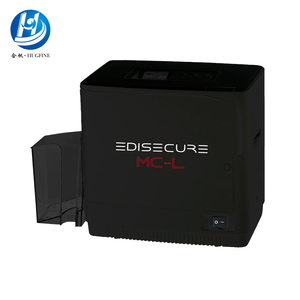
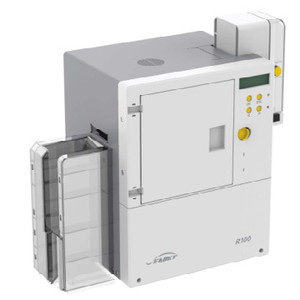
| Desktop Dual-Sided Security Laminator (MC-L / R100) | Pre-punched PVC, PET Composite Cards | 120 – 180 cards/hour | Infrared Quartz Heating (±1.5°C) | On-Demand Enterprise Badging, Government ID |
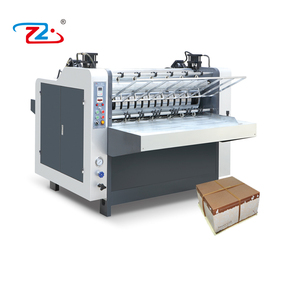
| Semi-Automatic Zero-Residue Card Laminator | Paperboard, Coated Cards, Foil Laminates | 12 – 15 m/min | Adjustable Thermal Roller (±2°C) | Packaging Inserts, Commercial Cards, Greeting Cards |
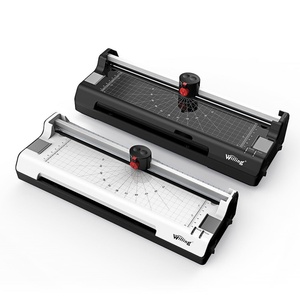
| Multi-Roller Hot & Cold Pouch Laminator (A3/A4) | Standard PVC Pouches, Photo Paper, Craft | 0.5 – 1.8 m/min | 4 to 6 Silicone Roller Heaters | Office Documentation, Small Craft, Prototype Samples |
As an original equipment manufacturer, we provide complete, turn-key customization services engineered around your specific operational requirements:
You provide material samples (PVC, PETG, PC, composite). Our materials laboratory analyzes glass transition temperatures, melt flows, and optimal roller nip pressure requirements.
Our mechanical engineering team designs custom roller widths, heating configurations, voltage adaptations, and machine footprint layouts tailored to your cleanroom or factory floor.
We configure custom touchscreen HMI software supporting localized language interfaces, custom brand branding, automated job profile memory, and secure user privilege access controls.
We build a pilot production unit and conduct extensive 72-hour stress testing under actual factory load conditions, providing full video, thermal camera imaging, and sample delivery validation.
Machines are enclosed in vacuum-sealed anti-corrosion barrier foil, encased in IPPC-certified reinforced wooden crates, and shipped via ocean freight or expedited air transport.
Supported by factory-trained engineers, remote diagnostic access, quick-dispatch spare parts programs, and comprehensive operator maintenance video guides.
Below are detailed answers to key technical and commercial queries raised by global importers, equipment distributors, and card manufacturing plant managers:
