Explore our engineered lineup of OEM/ODM flexographic presses, high-speed rotary screen machinery, and roll-to-roll converting platforms customized for high-duty manufacturing environments.
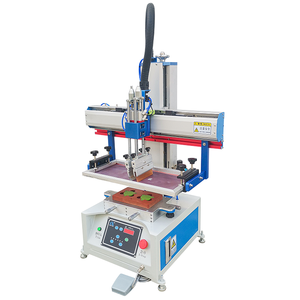
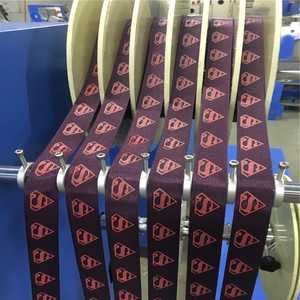
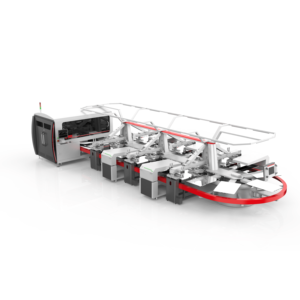
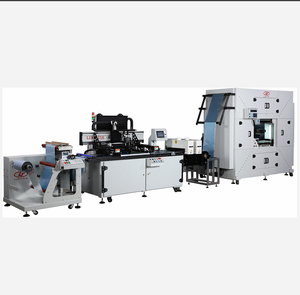
In the rapidly changing global packaging sector, procurement managers, process engineers, and plant operations executives face an unprecedented operational reality: short-run SKU proliferation, tighter lead times, strict environmental compliance mandates, and increasing demand for functional coatings. Selecting the right OEM/ODM Flexo Printer Factory & Supplier is no longer merely a purchasing decision—it is a core strategic investment in manufacturing capability.
Modern flexographic printing machinery has evolved from basic mechanical gear-driven units into sophisticated, servo-synchronized mechatronic platforms. Utilizing direct-drive sleeve technology, closed-loop tension control systems, and chambered doctor blade fluid management, modern OEM flexo machinery can achieve steady-state web speeds of up to 500 meters per minute while maintaining color-to-color registration tolerances tighter than ±0.05 mm.
At the mechanical core of high-gain flexo printing is ink metering system performance. Factory-customized OEM flexo platforms leverage laser-engraved ceramic anilox cylinders featuring cell counts ranging from 200 LPI to over 1200 LPI, dependent on wet film thickness requirements. Advanced cell geometry—including 60-degree hexagonal, elongated 75-degree, and custom open-channel structures—allows precise volumetric fluid transfer ($cm^3/m^2$ or BCM).
Laser-ablated cell structures engineered for stable fluid transfer, reduced ink spitting, and prolonged doctor blade wear life during continuous high-velocity runs.
Gearless plate cylinder and anilox rotation driven by dedicated AC servo motors eliminates mechanical backlash, gear marks, and pitch restrictions.
Automated closed-loop ink temperature and viscosity stabilization systems reduce color shift across long-run flexible packaging production.
Compare standard factory configurations across our high-performance flexographic press line-up:
| Parameter / Feature | Modular Inline Flexo Press | Central Impression (CI) Flexo | Stack Flexo Printing Machine | Hybrid Flexo-Digital Platform |
|---|---|---|---|---|
| Max Web Width | 330 mm – 850 mm | 800 mm – 1600 mm | 600 mm – 1200 mm | 330 mm – 520 mm |
| Print Speed Range | 150 – 250 m/min | 300 – 500 m/min | 80 – 150 m/min | 70 – 120 m/min |
| Substrate Compatibility | BOPP, PET, Paper, Foil, Board | Thin PE, Breathable Film, Shrink Film | Paper Bags, Woven Poly, Kraft | Self-adhesive Labels, Flexible Packaging |
| Registration Accuracy | ±0.05 mm (Servo Optical) | ±0.03 mm (CI Drum Driven) | ±0.15 mm (Mechanical Gear) | ±0.05 mm (Digital Synced) |
| Drying / Curing System | UV LED / Hot Air Dual System | High-Efficiency Gas / Thermal Air | Standard Electric Air Dryers | UV LED Instant Pinning |
| Changeover Time | < 8 Minutes (Sleeve System) | < 15 Minutes (Hydraulic Cantilever) | 25 – 40 Minutes (Conventional) | < 5 Minutes (Digital Recipe) |
Global procurement strategies for printing and converting machinery are undergoing a fundamental transformation. As consumer brands enforce stringent sustainability targets and supply chains compress, packaging converters require flexo printing presses designed for operational adaptability.
Regulatory pressures on Volatile Organic Compounds (VOCs) and rising energy tariffs drive factories to transition from solvent-based inks to eco-friendly water-based and UV-LED cured systems. UV-LED curing cuts energy draw by up to 60% while eliminating thermal distortion on heat-sensitive shrink films.
Procurement teams now prioritize OEM flexo machinery equipped with quick-change lightweight carbon fiber sleeve systems. Replacing heavy plate cylinders with air-mandrel sleeve mounts reduces job setup times from 45 minutes down to less than 8 minutes, maximizing total effective equipment performance (OEE).
With substrate raw material representing over 60% of total job cost, automated web inspection and intelligent waste-reduction controls at startup are non-negotiable. Modern press designs utilize auto-register pre-setting routines that minimize substrate setup waste to under 15 meters per job.
The technological trajectory of flexographic machinery merges continuous physical process enhancement with digital intelligence. When evaluating factory partners for OEM/ODM machinery development, buyers should verify R&D investments across the following vectors:
The border between flexo and digital printing continues to blur. Modern inline platforms combine flexographic stations—ideal for low-cost high-coverage primers, metallic pantones, dense white under-bases, and tactile varnishes—with high-speed inkjet modules. This modular hybrid approach allows converter plants to capture short-run variable data capability while maintaining the unit-cost economics of flexo for heavy solids.
Line-scan matrix camera systems now interface directly with servo motion controllers via real-time industrial Ethernet protocols (EtherCAT or PROFINET). The vision system inspects printed webs at full speed, identifying dynamic register drift, color deviation ($\Delta E$), pinholes, or doctor blade streaks, triggering automatic motorized micro-axial and circumferential cylinder corrections without operator intervention.
Flexo printing is increasingly bundled with post-print converting inline. Integrating full-rotary flexo stations with laser die-cutting, rotary hot stamping, web slitting, and automated turret rewinders turns raw film roll into fully finished pressure-sensitive labels or flexible pouches in a single continuous manufacturing pass.
Drawing upon over six decades of American precision engineering heritage—originated in Rolling Meadows, Illinois, and expanded through worldwide OEM/ODM manufacturing partnerships—our facilities build converting equipment that operates with high reliability.
We do not simply sell off-the-shelf equipment. Our engineering staff collaborates directly with your production team to adapt machine footprints, frame stiffness, drying capacity, web path geometry, and control software interfaces to match your specialized substrate demands.
Before any OEM flexo press or converting line leaves our assembly floor, your actual production material and artwork files are validated on-machine. We provide full speed validation runs, measured register drift reports, and thermal curing verification ahead of final sign-off.
Constructed with stress-relieved solid steel side frames (up to 80 mm thickness), our machinery minimizes mechanical vibration at high operating speeds, protecting print accuracy and extending ceramic anilox and bearings operational life.
With operational equipment installed across 60+ countries, our field service network is backed by secure encrypted IoT telemetry gateways. Our factory engineers perform real-time PLC diagnostic audits, motion tuning, and firmware maintenance anywhere on Earth.
Explore comprehensive engineering responses to the most common technical and commercial queries raised by industrial machinery buyers and plant management teams.
Inline Flexo Presses excel in versatility, label production, heavy folding carton printing, multi-process combinations (such as inline screen printing, foil stamping, and laser die-cutting), and applications requiring rapid job changeovers on narrow to mid-web substrates.
CI Flexo Systems, conversely, support wide-web flexible packaging on extremely thin, extensible films (e.g., 12-micron PE or breathable diaper backing) where the web must remain locked against a temperature-controlled central steel drum to prevent stretching and register loss.
Our modern servo-driven OEM flexographic systems equipped with high-resolution web-guiding and camera-based optical sensor systems hold dynamic registration tolerances within ±0.05 mm under constant web speed. Advanced closed-loop load cell tension control guarantees stability during machine acceleration and deceleration phases.
UV-LED curing systems provide instant spectral energy output at target wavelengths (e.g., 385nm or 395nm) without emitting infrared heat. This prevents thermal shrink or distortion on heat-sensitive plastic films, consumes up to 60% less electrical power, eliminates ozone exhaust ducting, and offers an operational diode lifespan exceeding 20,000 hours compared to ~1,000 hours for traditional mercury arc lamps.
Standard modular OEM configurations generally ship within 60 to 90 days following technical drawing sign-off. Highly customized ODM lines—incorporating multi-station hybrid digital units, custom web widths, or specialized inline converting automation—typically require 120 to 150 days, inclusive of factory acceptance testing (FAT) at our facility.
All critical electrical and pneumatic components are sourced from globally available tier-one automation suppliers (e.g., Siemens, Schneider, Rexroth, SMC). This ensures off-the-shelf local availability for standard wear items. Furthermore, we maintain a comprehensive inventory of custom machined parts, ceramic anilox cores, and replacement sleeves for immediate worldwide dispatch, backed by remote video diagnostics and regional field engineer coverage.
Our machinery routinely processes pressure-sensitive paper and film label stock, PET, PVC, Polycarbonate, Polypropylene, Aluminum Foil, metallic substrates, membrane switch overlays, in-mould decoration (IMD/IML) films, and light folding carton board (up to 450 gsm).
Contact our senior application engineers today to discuss your OEM/ODM machinery specifications, request substrate sample testing, or obtain a comprehensive total cost of ownership quote.
