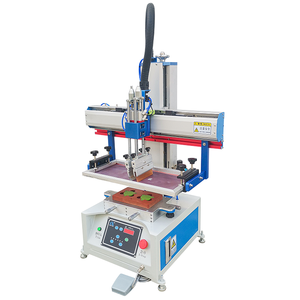
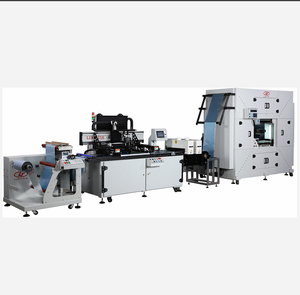
Explore our advanced line of roll-to-roll screen printers, flatbed serigraphic presses, automated circuit printing machines, and optical registration shears engineered to rigorous global specifications.
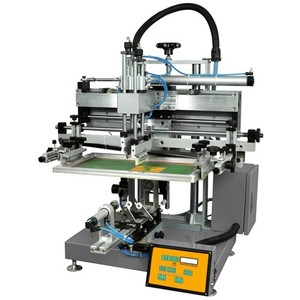
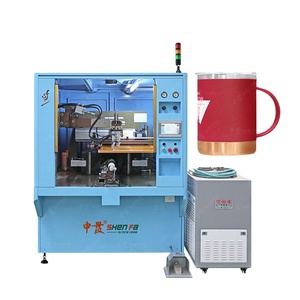
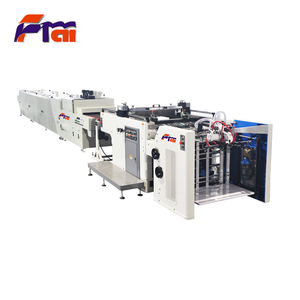
In modern high-speed converter environments, achieving dimensional accuracy during sheet shearing, contour die-cutting, and web sectioning is the ultimate factor governing yield efficiency and material wastage. Mechanical feeding mechanisms alone—reliant solely on physical edge stops or uncompensated web tractor feeds—inevitably fail when processing temperature-sensitive polymers, thin polycarbonate films, flexible printed electronics (FPC), and membrane switches. Substrates naturally suffer from thermal expansion, web stretch, dynamic hysteresis, and humidity-induced pitch distortion.
As an authority in engineering precision cutting, counting, and printing systems since 1963, our manufacturing framework incorporates high-speed CCD camera vision systems and digital closed-loop motion control. An Optical Registration Shear (such as the industry-benchmark M255 series) operates by reading printed registration crosshairs, target fiducials, or actual artwork edge gradients in real time. Rather than making static cuts at fixed mechanical pitch intervals, the system continuously adjusts the shear stroke angle and lineal feed via micro-stepping servo motors. This eliminates registration drift completely, holding cut-to-print tolerances down to micron-level repeatability.
Information Gain Metric: Traditional mechanical shear tooling introduces cumulative position errors averaging ±0.35 mm across a 1,000-sheet run due to material stretch. Integrated optical camera shearing reduces tolerance accumulation to less than ±0.025 mm, effectively reclaiming up to 14.8% of high-cost industrial substrates including optical polycarbonate, solar cell backsheets, and metallic foils.
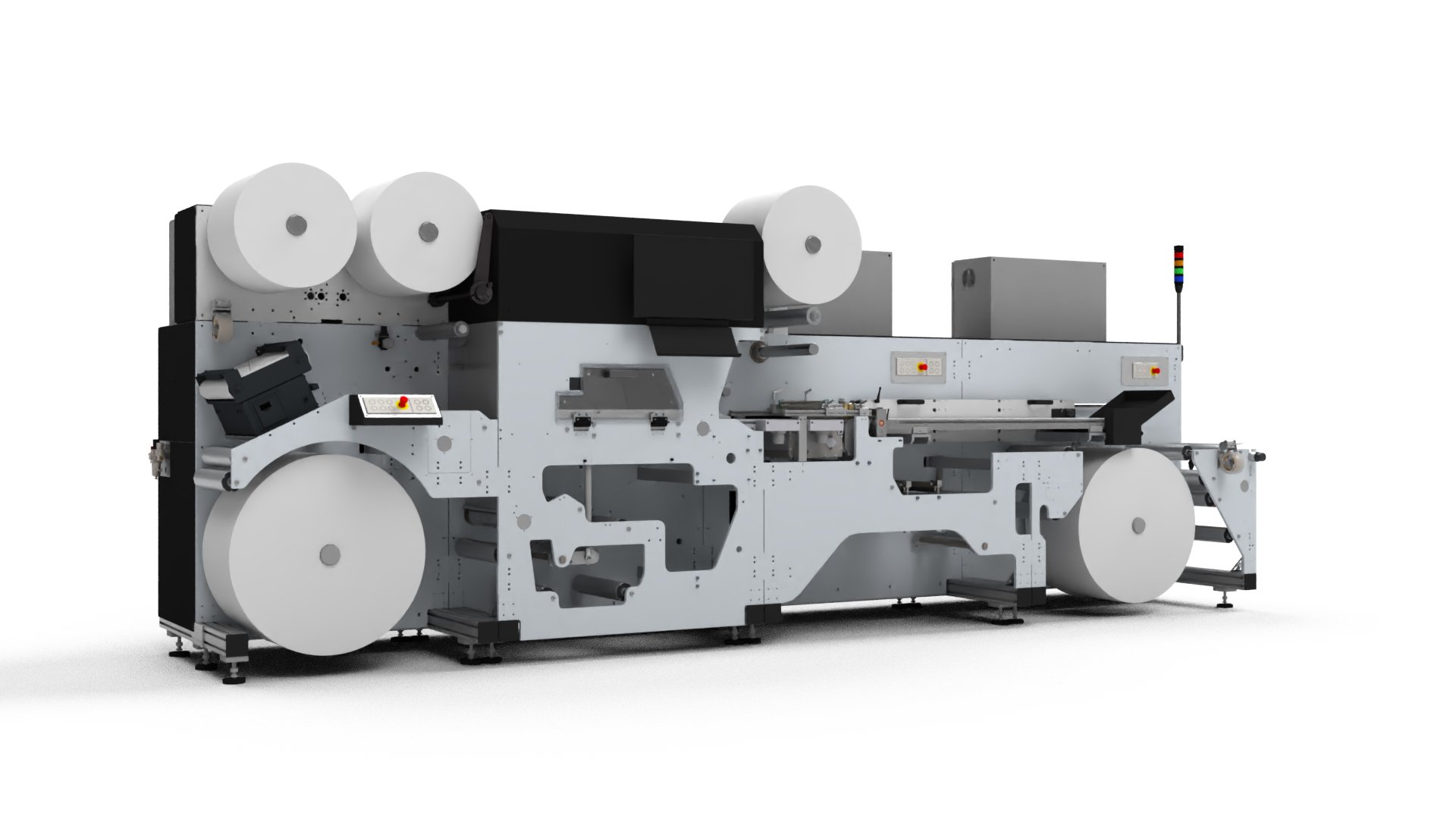
The structural design of an OEM/ODM Optical Registration Shear requires absolute rigid mechanical damping paired with ultra-responsive optics. Built in our Rolling Meadows, Illinois production facility, our optical shears utilize heavy-duty tool steel shear blades ground to sub-micron sharpness, capable of processing rigid plastic sheets, metallized labels, and flexible circuits.
Whether you require custom white-label machinery builds (OEM) or complete ground-up system co-development (ODM), our engineering team transforms unique substrate challenges into automated industrial machinery.
Tailor-made vision sensing configurations designed to detect difficult substrates, including low-contrast transparent films, highly reflective foils, holographic overlays, and dark textured materials using multi-spectrum LED ring lighting.
Get a QuoteIntegrate optical registration shearing directly with inline roll-to-roll screen printing, UV LED curing stations, digital inkjet units, rotary kiss-cutting, or automatic stack counting in a single continuous production line.
Get a QuoteODM design of robotic sheet feeders, suction web pullers, continuous scrap extraction vacuum systems, and automated card/stack counting output bays operating 24/7 in demanding industrial environments.
Get a Quote| Performance Spec / Parameter | Standard Mechanical Shear | Rotary Die Cutting Line | Spartanics OEM Optical Registration Shear |
|---|---|---|---|
| Target Alignment Tolerance | ±0.35 mm to ±0.50 mm | ±0.15 mm (Static Tooling) | ±0.02 mm to ±0.04 mm (Dynamic Optical) |
| Tooling & Die Lead Time | None (Standard Knife) | 2 to 4 Weeks Custom Dies | Zero Tooling Required (Vision Guided) |
| Substrate Distort Compensation | None | None | Real-Time Closed-Loop Pitch & Skew Correction |
| Ideal Production Run Profile | Low-accuracy bulk sheets | Ultra long single-SKU runs | Short, Medium, & High-Precision OEM/ODM SKUs |
| Edge Finish Quality | Shear burr on rigid plastic | Crush/bevel edge wear | Razor-Clean Micro-Sheared Edge Profile |
Next-generation optical registration systems are transitioning from basic threshold optical sensors to deep-learning neural vision chips. These sensors automatically recognize deformed target marks, dark substrate bleed, or inconsistent ink densities without requiring manual operator calibration. This technology ensures uninterrupted shear speeds exceeding 120 strokes per minute even under challenging material lighting conditions.
The boundary between laser die cutting and optical mechanical shearing is collapsing. Modern converting facilities are adopting hybrid architectures like the Spartanics XIPHOS and CS2100 platforms, where high-speed CO2/Galvo lasers cut intricate interior contours, while high-velocity optical registration shears execute clean perimeter rectangular cuts to minimize cycle times.
With global regulatory shifts demanding sustainable packaging and flexible electronics entering consumer products, converted materials are becoming significantly thinner, stretchier, and more thermally sensitive. Procurement focus is shifting toward non-contact web tension systems combined with optical registration shear knives designed specifically to cut without micro-cracking thin brittle coatings.
Procurement managers are no longer buying standalone machines; they are investing in networked converting cells. Modern optical shears feature IoT PLC connectivity, offering real-time blade wear tracking, substrate yield telemetry, remote cloud diagnostics, and automated maintenance alerts to guarantee 99.8% operational uptime.
Our OEM/ODM Optical Registration Shears and screen printing lines process a vast array of high-value industrial materials across 60+ countries worldwide:
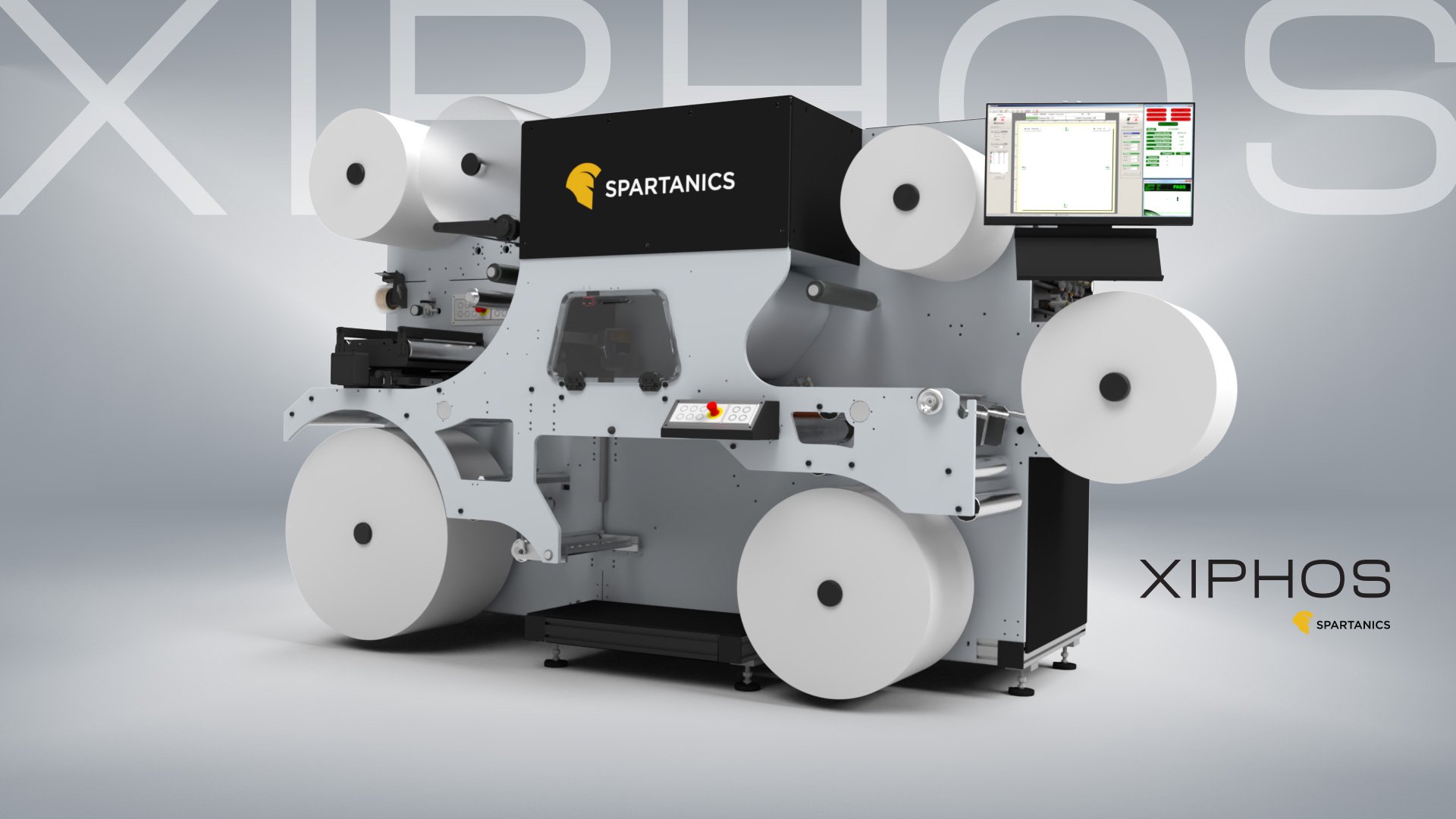
We do not ship on promises. Before any machine leaves our Rolling Meadows facility, your exact substrate materials are processed on our factory floor to prove cut accuracy, cycle speed, and registration tolerance in real-world conditions.
With thousands of platforms operating in over 60 countries, our client roster includes high-tier converters, security printers, and industrial manufacturers who measure machinery performance by ROI, reliability, and precision.
Supported by factory-trained engineers, remote software diagnostics, and a global spare-parts replacement system, our machinery delivers low cost of ownership across decades of continuous operation.
Send us your material specifications, engineering drawings, and target production rates. Our engineering application specialists will evaluate your requirements and provide an objective technical assessment and quote.