Explore our export-grade OEM/ODM inkjet printing machinery designed for corrugated cartons, food containers, cosmetics, flexible packaging, and high-speed batch coding.
In the contemporary global supply chain landscape, packaging is no longer merely a protective shell; it serves as a critical node for brand verification, regulatory traceability, automated logistics handling, and dynamic consumer engagement. As global manufacturing standards migrate toward micro-run customization, variable data serialization, and strict zero-defect quality thresholds, industrial packaging converters and global exporters are fundamentally reassessing their capital equipment strategies.
Traditional flexographic and offset printing presses, while highly economical for million-unit production runs of static designs, create major operational bottlenecks when applied to modern print-on-demand environments. Plate manufacturing lead times, high setup waste, intensive manual color calibration, and substantial physical plate storage requirements severely degrade operating margins on short-to-medium packaging jobs. Consequently, the industrial packaging sector is witnessing a rapid structural pivot toward single-pass piezoelectric digital inkjet engines, UV-curable Drop-on-Demand (DOD) systems, and integrated high-speed Thermal Inkjet (TIJ) date coding hardware.
As a leading premier OEM/ODM Package Printer Exporter, our engineering philosophy bridges the gap between raw digital printing innovation and rugged industrial conversion machinery. Drawing upon over 60 years of precision design pedigree—established through specialized web handling, optical registration shearing, and die-cutting technology built out of Rolling Meadows, Illinois, USA—our machinery portfolio delivers the mechanical stability, registration accuracy, and operational longevity demanded by tier-1 global manufacturing entities.
Eliminate die plates, prepress tooling overhead, and lengthy setup cycles. Digital single-pass engines enable instant artwork switching directly from CAD/PDF vector files within minutes.
Leveraging high-speed vision sensors and camera-based registration arrays, our machines achieve registration tolerances as tight as ±0.1 mm (0.004 inches) across dynamic web speeds.
Engineered to process raw porous corrugated boxes, coated kraft liners, non-porous PET bottles, high-density polyethylene (HDPE), coated paperboard meal boxes, and metallic foil packaging seamlessly.
A comparative analysis of industrial package printing technologies engineered for modern manufacturing lines.
| Technology Platform | Optimal Application Scope | Max Print Speed | Substrate Compatibility | TCO & Maintenance Profile |
|---|---|---|---|---|
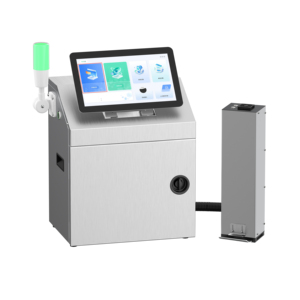
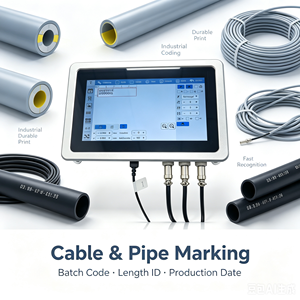
| Thermal Inkjet (TIJ 2.5/3.0) | High-resolution batch coding, expiry dates, GS1 QR codes on primary/secondary packaging. | Up to 90 m/min | Porous paper, carton boxes, coated foil bags, pharmaceutical blasters. | Ultra-low maintenance; zero moving liquid components; ink cartridge replacement renews printhead. |
| UV Inkjet Drop-on-Demand (DOD) | Direct-to-container printing, water bottle labeling, cosmetic bottles, plastics. | Up to 60 m/min | Non-porous plastics (PET, PVC, PP), glass, metals, slick UV-varnished boxes. | Medium operational cost; superior chemical & scratch resistance; requires UV-LED curing units. |
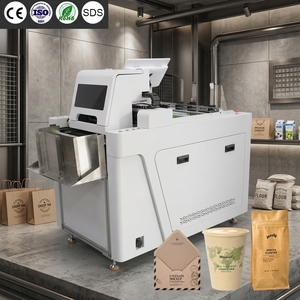
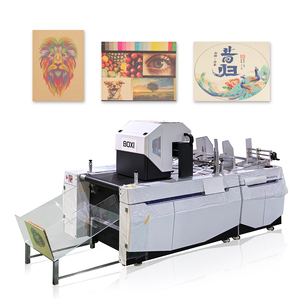
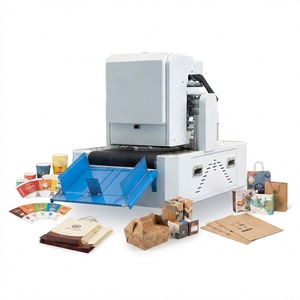
| Single-Pass Digital Corrugated Printers | Full-color box printing, customized takeaway packaging, fast-turnaround e-commerce cartons. | Up to 45 m/min | Corrugated paperboard, kraft paper, pizza boxes, paper bags, mailing envelopes. | High capital cost, ultra-low cost-per-print for short runs; zero setup scrap loss. |
| High-Speed Industrial Continuous Inkjet (CIJ) | Ultra-high-speed curved product coding, wire marking, bottling lines. | Up to 300 m/min | Extremely wide range including irregular glass, tin cans, cables, rigid plastic. | Requires solvent management, regular filter changes, and specialized ink fluids. |
Strategic buyers, plant operations directors, and international machinery distributors evaluating long-term capital investments must align their procurement criteria with four critical macro-technological shifts currently reshaping the global package printing landscape:
Global regulatory authorities (including US FDA DSCSA for pharma and EU anti-counterfeiting directives) are enforcing dynamic, unique product identification down to the individual SKU level. Packaging printers can no longer rely solely on static barcode plates. Modern OEM package printers must feature real-time variable data controllers capable of generating 100% scannable high-density QR codes, DataMatrix identifiers, and serialized anti-counterfeiting micro-text at full line speeds without buffer latency.
As international environmental ESG standards tighten and single-use plastic regulations proliferate, food, beverage, and takeout packaging manufacturers are shifting rapidly away from harsh solvent-based chemistries toward water-based pigment inks and low-migration UV-LED formulations. Equipment exporters must provide specialized fluid pathways, degassing modules, and custom temperature-controlled sub-ink tanks to ensure long-term jetting stability with eco-friendly ink matrices.
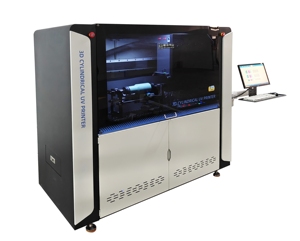
To reduce overall packaging material weight and eliminate paper label application steps, beverage and cosmetic brand owners are aggressively adopting semi-automatic and fully automatic cylindrical UV printers. Direct-to-shape printing applies 4-color CMYK + White + Varnish directly onto glass bottles, aluminum cans, and cosmetic tubes, slashing label substrate inventory holding costs and enabling true circular packaging recyclability.
In global cross-border procurement, overseas buyers cannot afford multi-day technician deployment delays during an unexpected system stoppage. Advanced package printers now incorporate IoT-enabled PLC systems with end-to-end encrypted remote diagnostic capabilities. Operations teams can execute remote firmware updates, recalibrate printhead firing voltages, monitor ink viscosity curves, and perform predictive maintenance on servo drives in real time from anywhere in the world.
Combining US-engineered precision standards with factory-direct manufacturing scalability to deliver turnkey industrial print and converting solutions worldwide.
We believe cut quality, registration tolerance, and jetting speed must be proven—not promised. Every single OEM/ODM machine undergoes rigorous validation with your exact target material before leaving our facility.
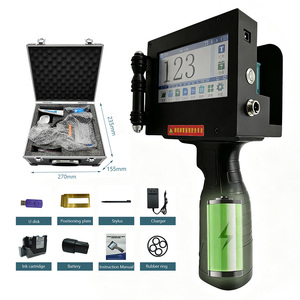
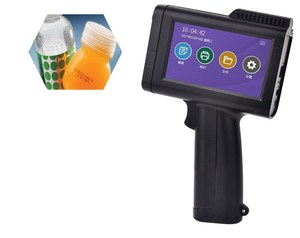
From single-head handheld markers to integrated multi-head inline UV inkjet arrays with custom automated friction feeders, our engineering teams customize web widths, chassis footprints, and software interfaces to match your plant automation workflow.
With operational deployments spanning over 60 countries across North America, Europe, Asia, and Latin America, we maintain a robust global stocking program for critical consumables, piezoelectric printheads, drive belts, and optical sensors.
In-depth technical answers to critical questions faced by international procurement managers and factory engineering leads.
Thermal Inkjet (TIJ) utilizes rapid thermal vapor bubble projection to propel water- or solvent-based ink drops through micro-nozzles integrated directly into disposable ink cartridges. It is ideal for high-resolution text, 2D barcodes, and batch date printing on flat porous cartons or foil packets at zero maintenance costs. Conversely, Piezoelectric UV Inkjet uses physical piezo crystal deformation to fire micro-droplets of UV-curable polymer ink, which instantly solidifies under intense UV light. UV inkjet is essential when printing on non-porous surfaces (such as plastic water bottles, slick varnished boxes, or glass) where extreme scratch resistance and high lightfastness are required.
Our industrial printing machinery utilizes high-resolution optical fiber registration sensors paired with camera-based vision alignment software. These sensors detect pre-printed eye-marks, edge contours, or structural artwork features in real-time, sending microsecond encoder pulses to precision servo motors. This continuously corrects paper feeder drift and web tension fluctuations, maintaining optical registration tolerances within ±0.1 mm (0.004") even during high-speed acceleration ramps.
As an experienced OEM/ODM Package Printer Exporter, we provide turnkey white-label and custom co-development options. These include custom chassis powder-coating colors, customized metal badging, localized multi-language touchscreen HMI interfaces (English, Spanish, German, French, Chinese, Japanese), custom PLC firmware integration, and proprietary ink cartridge chip keying tailored to your regional distribution strategy.
Our package printing systems are pre-tested and validated on a broad spectrum of industrial materials, including: single- and double-wall corrugated cardboard, kraft paper bags, coated paper meal boxes, coated envelopes, rigid PET plastic water bottles, cylindrical cosmetics packaging, flexible aluminum foils, membrane switch films, and treated polypropylene (PP) film substrates.
When operated using approved ink formulations and adhering to recommended automated printhead capping and wiping routines, industrial piezoelectric printheads (such as Epson, Ricoh, or Konica Minolta heads utilized in our systems) typically deliver a service life of 2 to 4 years under multi-shift continuous production conditions. Built-in positive pressure ink filtration systems prevent nozzle clogging and particulate damage.
All export machinery is engineered for modular plug-and-play assembly. Every unit ships with comprehensive step-by-step video installation guides, detailed electrical schematics, and factory calibration certificates. We provide direct remote commissioning sessions led by senior engineers, along with 24/7 remote diagnostics over encrypted IoT channels. Factory-trained field service technicians are also available for on-site commissioning and operator training upon request.
To accurately determine TCO over a 5-year operating lifecycle, enterprise buyers should calculate: (1) Initial capital equipment acquisition cost; (2) Ink consumption cost per 1,000 standard prints based on drop volume (measured in pico-liters, pL); (3) Consumables and wear-parts replacement intervals; (4) Substrate scrap rate during job changeovers (digital single-pass printers achieve near-zero setup waste compared to flexo offset setups); and (5) Labor costs associated with washdown and cleanup routines.
Yes. We offer specialized low-migration water-based inks and indirect food-contact UV ink formulations that comply with stringent global safety guidelines, including US FDA 21 CFR standards, EU REACH regulations, and Swiss Ordinance guidelines for food container exterior packaging.
Partner with an established OEM/ODM exporter capable of delivering custom engineering, sub-millimeter precision, and robust export support worldwide. Request a material test run or custom equipment quotation from our engineering team.