Discover our enterprise-grade portfolio engineered for micron-level register accuracy, high-speed automated web handling, and continuous industrial duty cycles.
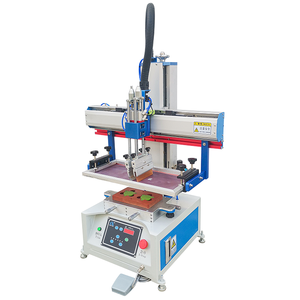
Engineered for flatbed printing on battery casings, lighters, and rigid substrates with precision servo-driven ink stroke control.
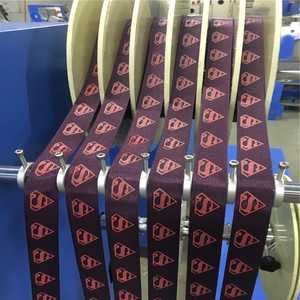
Multi-color continuous roll-to-roll screen printing system optimized for satin, nylon, polyester webbing, and flexible ribbons.
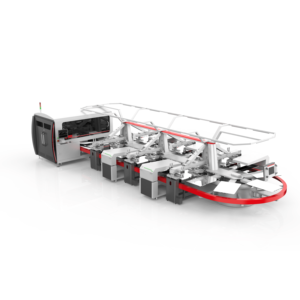
Heavy-duty PLC-controlled oval screen printing platform designed for high-throughput textile, garment, and cut-piece production.
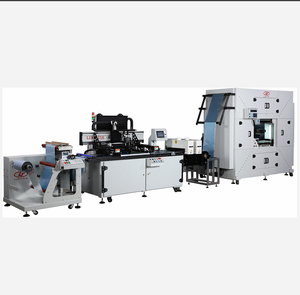
Ultra-precise optical registration press tailored for flexible printed circuits (FPC), specialty labels, and technical films.
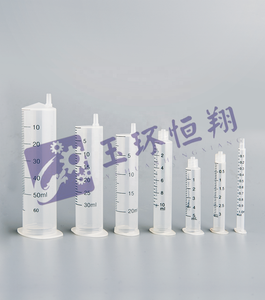
Automated industrial-grade self-service kiosk platform integrated with DICOM medical film and document output modules.
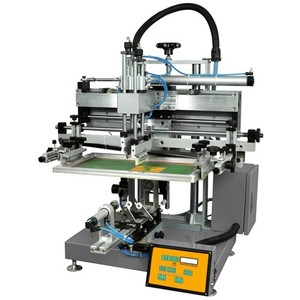
Compact, high-precision benchtop screen printer designed for round, cylindrical, and tapered containers and industrial parts.
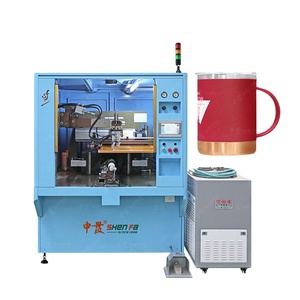
Dual-color cylindrical screen printing machine equipped with rapid optical mark indexing for drinkware and labware.
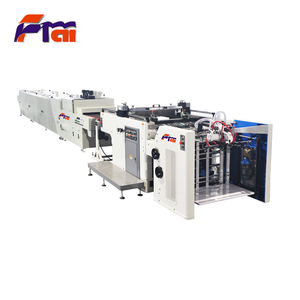
Heavy-duty reversible sheet-fed screen printing press optimized for transfer paper, metallic nameplates, and rigid packaging.
Founded on a heritage of North American machine building, our enterprise engineers, manufactures, and integrates direct-to-plate (CTP) systems, roll-to-roll laser die-cutting platforms, optical registration shears, and industrial screen printers. Operating with over 60 years of precision machinery heritage and machinery deployed in over 60 countries, we empower converters to lower scrap rates, shrink job setup times, and eliminate expensive physical tooling costs.
Every OEM/ODM solution undergoes rigorous factory acceptance testing (FAT) at our state-of-the-art facility before global dispatch. Customer materials are processed on production-grade machinery to ensure register tolerance down to 0.004 in (0.1 mm), web tension consistency, and output performance match contract parameters without deviation.
An analysis of technological breakthroughs driving flexographic, screen printing, and photopolymer plate production forward in high-velocity manufacturing environments.
Traditional chemical-etching and manual analog film processes are rapidly being phased out by fiber and diode laser Computer-to-Plate (CTP) engines. Modern plate makers incorporate fiber lasers operating at sub-micron wavelengths, enabling edge-definition resolutions up to 5,080 DPI. This shift guarantees crisp dot retention, zero line-edge creep, and repeatable print fidelity on high-line flexo and screen meshes.
Mechanical gear lash introduces cumulative error, ruining multi-color register alignment on dynamic webs. Next-generation plate makers and silk screen printing platforms utilize multi-axis closed-loop servo drives tied to high-speed CCD camera vision sensors. Real-time pitch correction compensates instantly for film stretch, thermal expansion, and substrate distortion during continuous high-speed runs.
Environmental compliance and VOC reduction are forcing converters to move away from solvent-washed flexo plates. OEM plate making equipment now prioritizes water-washable photopolymer technologies and thermal dry-exposure units. Integrated solvent recycling and high-efficiency UV-LED curing banks drastically reduce energy consumption while extending plate life cycles by up to 40%.
Smart sensors integrated across squeegee pressure heads, exposure lamps, vacuum beds, and laser power cells continually broadcast telemetry data to cloud analytics platforms. Maintenance algorithms predict laser diode degradation, UV intensity drops, and mechanical wear before downtime occurs, supporting operational uptime SLAs exceeding 99.5%.
Modern industrial converters demand systems that scale alongside production volume. Hybrid OEM plate maker architectures feature modular sub-assemblies—allowing operators to retrofit direct inkjet heads, inline laser die-cut units, corona surface treaters, or hot foil stamping cassettes onto a unified structural base plate.
For flexible printed electronics, membrane switches, and medical test strips, tension variations cause registration drift and micro-fractures. Advanced digital screen printers utilize closed-loop pneumatic strain gauge tensioners to ensure screen mesh pitch remains distortion-free across multi-thousand impression production cycles.
Navigating total cost of ownership (TCO), customized contract manufacturing engineering, and supply chain resilience over the next decade.
Global commercial printers and industrial membrane switch manufacturers are moving away from stock catalog machinery. Industrial applications—such as printing conductive silver inks on flexible circuit boards, coating medical test strips, or producing anti-counterfeiting security cards—demand micro-customized physical frames, specialized drying tunnels, and localized software interfaces.
Procurement teams are prioritizing OEM/ODM partnerships where mechanical engineers collaborate directly with plant managers from initial CAD design to field installation. Key purchasing drivers now include:
| Performance Metrics | Legacy Analog Systems | Standard OEM Plate Makers | Advanced ODM Hybrid Platforms |
|---|---|---|---|
| Registration Accuracy | ± 0.25 mm (Mechanical Stops) | ± 0.08 mm (Optical Eye) | ± 0.01 mm (Multi-CCD Servo Alignment) |
| Changeover Setup Time | 45 – 90 Minutes | 15 – 30 Minutes | < 3 Minutes (Recipe Memory Recall) |
| Plate / Cut Spot Resolution | 1,200 DPI Analog film | 2,540 DPI Digital CTP | 5,080 DPI Laser Optics (0.004" Spot) |
| Tooling & Die Consumables | High (Physical Dies & Plates) | Moderate (Standard Plate Stock) | Zero Tooling Spend (Digital Laser Path) |
| Industry 4.0 Telemetry | None | Basic Error Logging | Full OPC-UA / Cloud Edge Analytics |
Detailed answers addressing registration drift, flexible substrate processing, international compliance, and custom OEM capabilities.
Laser die-cutting and digital plate-making platforms provide substantial economic advantages for short to medium run lengths, multi-version SKUs, and complex geometric contours. Because laser processes require zero physical tooling, die storage costs, or die sharpenings, lead times drop from days to minutes. Spot sizes down to 0.004 in (0.1 mm) enable micro-perforations, kiss-cuts, and variable shape cuts from the vector file used for printing. For multi-million unit single-shape runs, conventional rotary tooling may still hold a slight unit-cost edge, but digital laser systems deliver vastly superior operational agility.
Our OEM/ODM machinery portfolio processes pressure-sensitive label stock, PET, PVC, Polycarbonate, Polypropylene, thermal paper laminates, membrane switch overlay films, in-mould decoration (IMD/IML) films, thin metallized foils, and conductive silver circuit traces. Every contract application is pre-validated on our equipment using your exact substrate samples before commercial terms are finalized.
Our optical vision registration systems utilize real-time CCD camera sensors to scan pre-printed fiducial registration marks or dynamic vector target features. The software continuously calculates positional drift, angular skew, and thermal pitch expansion. It dynamically adjusts the servo motors and laser cutting heads on-the-fly, ensuring spatial alignment remains accurate within ±0.01 mm throughout long continuous runs.
All machinery platforms are designed and built under strict ISO 9001 quality system protocols. Equipment exported to European and North American markets carries full CE certification, UL-compliant electrical panel wiring, interlocked safety guarding, emergency shut-off circuits, and class-compliant laser safety enclosures (Class 1 laser housing during normal operation).
Equipment engineered at our headquarters is deployed in over 60 countries and backed by factory-trained field support engineers, regional distributor networks, secure remote IP diagnostics, and a guaranteed rapid-ship spare parts program. On-site commissioning, operator training, and preventative maintenance audits are included standard in all major machinery contracts.
Yes. Our modular platform design philosophy ensures that structural frames, electrical bus systems, and software interfaces feature pre-engineered expansion ports. Converters can purchase a base printing or plate-making unit today and retrofit UV-LED curing banks, web cleaners, corona treaters, slitting modules, or automated stackers as operational requirements scale.
From material validation testing to global factory floor integration, our structured engineering pathway mitigates risk at every stage.
Clients send material samples (film, foil, paper, or plastic) to our engineering lab for laser cutability, tension response, and ink adhesion testing.
Our engineers formulate custom frame dimensions, optical sensor positions, pneumatic strokes, and PLC software interfaces tailored to your plant footprint.
Chassis components are machined from heavy-gauge structural steel and aerospace alloy plates to eliminate frame flex and vibration drift.
Factory Acceptance Testing (FAT) is conducted under full production load, recording cycle speed, registration tolerance, and continuous thermal stability.
Factory technicians oversee global installation, perform electrical/pneumatic integration, and complete certified hands-on operator training.
Consult with our senior machinery engineers to review substrate drawings, schedule material testing, or receive a tailored OEM contract proposal.
