In high-precision manufacturing, selecting an OEM industrial cutting, converting, and screen-printing partner requires strict technical scrutiny. As global demand shifts toward micro-perforations, versioned short-run packaging, sensitive electronic printed circuits, and complex membrane switches, global buyers must evaluate capital equipment based on repeatable mechanical registration, total cost of ownership (TCO), and automated digital workflows.
This industry whitepaper provides an exhaustive technical buyer’s guide for enterprise procurement teams, print service providers (PSPs), and industrial converters. Backed by 60+ years of North American US-built precision engineering (headquartered in Rolling Meadows, Illinois), our converting and flatbed finishing platforms are validated across 60+ nations. Every system highlighted below undergoes rigorous 100% material-run validation before export, ensuring immediate production integration without costly commissioning downtime.
Explore our export-grade portfolio of industrial flatbed presses, automatic roll-to-roll screen printers, and high-speed converting machinery engineered for rigorous industrial throughput.
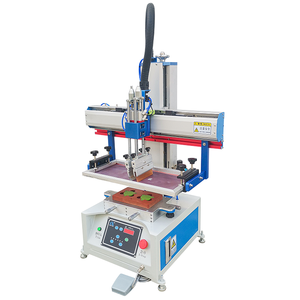
High-precision pneumatic flatbed screen printer equipped with dual-axis servo drives. Designed specifically for tight-tolerance cylindrical and flat component printing including batteries and electronic lighter casings.
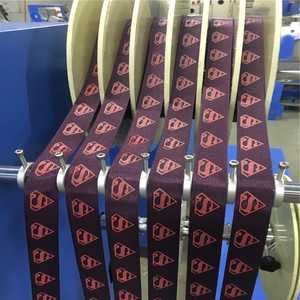
Automated roll-to-roll continuous screen printing unit tailored for multi-color textile webbings, satin ribbons, and industrial polyesters with infrared thermal drying tunnels.
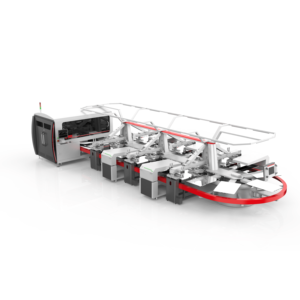
Heavy-duty industrial oval screen printing system controlled via Mitsubishi PLC and intuitive touchscreen interface. Optimized for apparel, cut-pieces, and high-density ink deposits.
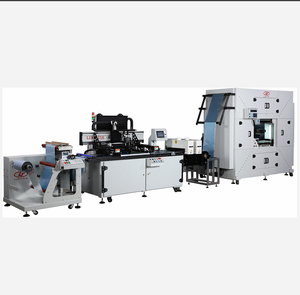
Engineered for flexible printed circuits (FPC), membrane switches, and fine-line conductive ink applications. Features micro-contrast CCD camera vision alignment.
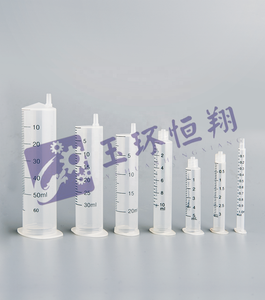
Fully integrated self-service diagnostic printing terminal constructed for healthcare networks. Provides rapid output of DICOM images, patient film, and secure reports.
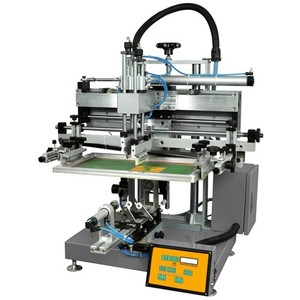
Compact desktop screen printer configured for round objects, mugs, vials, tubes, and cylindrical containers requiring pin-point registration in small footprint labs.
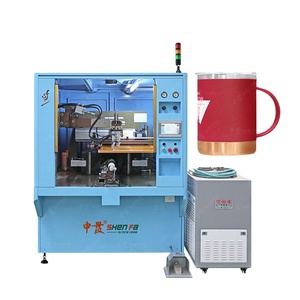
Semi-automated dual-color printing system designed for stainless steel flasks, plastic sports bottles, and glassware. Features synchronized gear rotation.
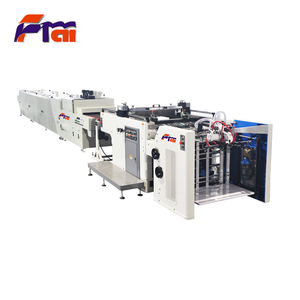
Heavyweight sheet-fed automatic screen printing press with reversible stroke cylinder technology. Engineered for cardboard, rigid plastic, and transfers.
When procuring a high-precision digital flatbed cutter or screen-printing line, engineering directors must look beyond static velocity specifications. Real-world overall equipment effectiveness (OEE) is determined by dynamic acceleration, software-driven path planning, registration camera latency, and thermal distortion management.
The choice between contactless laser flatbed cutting and mechanical blade cutting depends on substrate thickness, batch size, and material elasticity:
How toolless laser converting dramatically compresses total unit lead times across medium and short production runs:
Below is an empirical engineering baseline established across our U.S. testing facility for various web and sheet substrates across flatbed cutting technologies:
| Substrate Material | Optimal Technology | Max Thickness | Registration Accuracy | Edge Quality Finish |
|---|---|---|---|---|
| Pressure-Sensitive Label Stock | Galvo Laser / Flatbed Knife | 0.8 mm | ±0.05 mm (Optical CCD) | Sealed / Burr-Free |
| Polycarbonate (PC) Overlays | CO2 Laser Flatbed | 1.5 mm | ±0.02 mm (Camera Sync) | Polished Thermal Edge |
| Flexible Printed Circuits (FPC) | Precision Servo Screen + Laser | 0.5 mm | ±0.01 mm (Micro-Contrast) | Zero Delamination |
| Gaskets & Compressed Rubber | Oscillating Tangential Knife | 10.0 mm | ±0.10 mm (Mechanical) | Clean Square Cut |
| Multi-Layer Card Stock (PVC/PETG) | Optical Registration Shear / Die Press | 3.0 mm | ±0.03 mm (Sensor Array) | Smooth Mechanical Edge |
As smart manufacturing initiatives accelerate, industrial flatbed cutters are evolving from standalone manual machinery into autonomous production cells. Four macro technological trends are reshaping flatbed cutting procurement over the next decade:
Modern printed web and sheet materials undergo physical stretch and shrinkage during thermal ink curing. Legacy fixed-pin registration fails under these real-world distortions. Next-generation flatbed cutters utilize ultra-high-resolution CCD camera arrays coupled with artificial intelligence algorithms. These systems read continuous registration marks, calculate non-linear material skew in under 5 milliseconds, and dynamically distort the cutting vector in real-time to match the actual printed artwork perfectly.
Converter flexibility requires multi-process finishing on a single machine pass. Modern industrial flatbeds integrate quick-change tool heads carrying co-axial CO2 lasers, oscillating knives, creasing wheels, V-cutters, and inkjet marking heads on a single gantry system. This modularity allows a plant to handle kiss-cutting, thru-cutting, routing, and packaging creasing simultaneously without manual material re-loading.
Bridging the gap between roll-fed flexibility and flatbed rigidity, automated continuous feed conveyors with vacuum zone controls allow seamless feeding from large jumbo rolls directly onto a flatbed cutting table. Material is held completely flat by computerized multi-zone vacuum pumps, indexed with optical web tension control, cut, and automatically stacked onto unloading pallets.
Machine downtime severely impacts plant profitability. Smart flatbed platforms transmit real-time telemetry—including laser tube voltage decay, servo motor torque spikes, vacuum pressure drops, and blade travel mileage—to cloud diagnostic dashboards. Maintenance engineers receive automated alerts before mechanical failure occurs, enabling remote diagnostic support and proactive spare parts dispatch anywhere in the world.
Procuring flatbed cutting and industrial screen printing machinery from international OEMs requires evaluating factors beyond initial capital purchase price. Leading global manufacturers analyze the following procurement metrics:
For over six decades, Spartanics (headquartered in Rolling Meadows, Illinois, USA) has led the industrial converting industry in laser die-cutting, high-speed plastic card counting, screen printing equipment, and heavy-duty mechanical presses. Our engineering philosophy is grounded in robust mechanical construction combined with cutting-edge optical controls.
Direct technical answers to common questions raised by international procurement managers and plant operations directors.
Laser cutting is significantly more cost-effective for short-to-medium production runs, highly versioned SKUs, and intricate contour geometries. Because laser cutting relies entirely on digital vector files, manufacturers eliminate die tooling expenses ($500–$2,500 per job), eliminate physical die storage, and avoid multi-week die delivery wait times. Spot sizes down to 0.004 inches (0.1 mm) enable complex micro-perforations and kiss-cuts that are physically impossible with traditional rotary dies.
Camera vision systems (such as CCD sensors used in Spartanics systems) scan pre-printed registration marks or unique artwork fiducials in real-time. The machine software compares the actual physical location of the printed mark against the nominal CAD vector file. If the web or sheet has stretched, skewed, or rotated due to temperature variations during printing, the system automatically rescales and rotates the cutting vector path on the fly, guaranteeing cut-to-print registration tolerances down to ±0.02 mm.
Our equipment is routinely validated on pressure-sensitive label stock, polyester (PET), polycarbonate (PC), polyvinyl chloride (PVC), polypropylene (PP), membrane switch overlays, in-mould decoration (IMD/IML) films, conductive silver paste substrates, flexible printed circuits (FPC), and thin metallic foils. Every client substrate can be sample-tested in our Illinois application lab prior to quotation.
Machines operating outside the United States are supported via secure ethernet/Wi-Fi remote diagnostic software. Factory-trained application engineers can remotely view system telemetry, update PLC code, tune servo drive parameters, and diagnose sensor inputs in real-time. Overseas clients are further supported by local technical service partners and express worldwide dispatch of critical spare parts.
The industry-standard Spartanics 680 card counter counts and verifies up to 500 plastic cards (PVC, ABS, PET, polycarbonate) in approximately five seconds. Featuring an intuitive multilingual touchscreen and optical sensors, it guarantees 100% accurate count verification for secure financial credit card, government ID, driver’s license, and gift card production environments.
Speak directly with our industrial application engineers to review your substrate samples, test machine speeds, and receive a customized technical proposal.