Navigating the complex landscape of global industrial printing equipment requires an in-depth understanding of substrate tension dynamics, registration tolerance, thermal dwell parameters, and total cost of ownership (TCO). This benchmark evaluation guide analyzes the top tier of foil printer suppliers and silk screen press manufacturers to assist plant operations managers, process engineers, and global procurement directors in selecting high-yield production machinery.
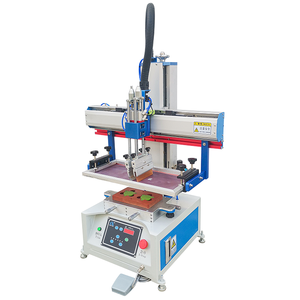
Engineered for precision flatbed printing on cylindrical and irregular components including battery casings and lighters. Features micro-registration adjustment and pneumatic control.
Get Catalog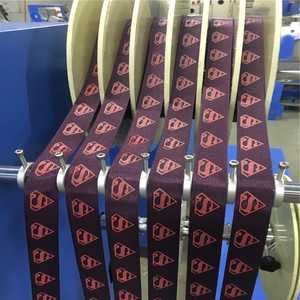
Continuous multi-color web printing platform optimized for satin, nylon, polyester webbing, and metallic foil applications with automated optical alignment.
Get Catalog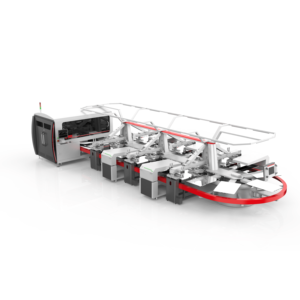
High-capacity oval textile and garment printer integrated with advanced PLC automation, offering multi-station screen foil decoration flexibility.
Get Catalog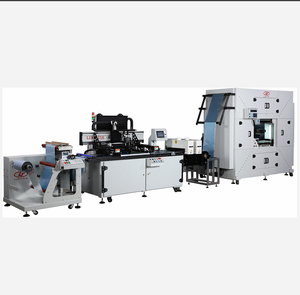
Ultra-precise screen press tailored for flexible printed circuits (FPC), specialty paper labels, and technical conductive film foil deposition.
Get Catalog
Automated, high-reliability self-service processing machine designed for medical diagnostics, film imaging, and secure patient document handling.
Get Catalog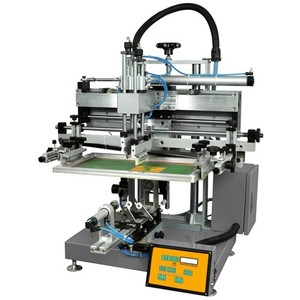
Compact precision benchtop printer engineered for round containers, plastic tubes, and small-batch cylindrical foil decoration projects.
Get Catalog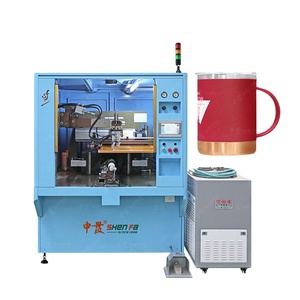
Heavy-duty semi-automated press designed for multi-color registration on drinkware, cosmetic containers, and industrial plastic bottles.
Get Catalog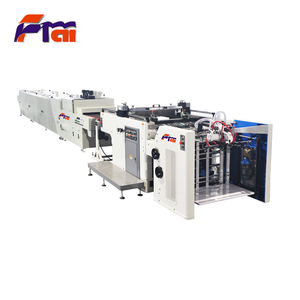
Large-format automatic reversible screen press delivering maximum speed, accurate repeat registration, and seamless foil transfer compatibility.
Get CatalogThe industrial embellishment industry has evolved rapidly beyond traditional analog hot stamping. Modern print operations must carefully evaluate the trade-offs between Hot Stamping, Cold Foil UV Transfer, Digital Foil Inkjet, and Screen-Based Metallic Decorating. Choosing the correct supplier depends on production volume, substrate elasticity, heat sensitivity, and registration tolerance limits.
Utilizes engraved copper or brass dies combined with precisely controlled thermal energy (120°C to 220°C) and mechanical hydraulic or pneumatic pressure. This method remains the gold standard for opaque metallic sheen, tactile embossing, and extreme longevity on heavy cardstock and structured synthetics.
Combines screen-printed UV adhesive with inline foil lamination or metallic screen inks. Highly ideal for flexible printed circuits (FPC), soft circuit boards, battery lighter casings, and synthetic webbing tapes where heat-sensitive substrates cannot endure extreme thermal die pressure.
Eliminates expensive mechanical dies by jetting UV-curable tack polymers directly onto webs or sheets before running through a lamination nip. Perfect for short-to-medium runs, variable data foil numbering, security holograms, and versioned packaging SKUs.
Integrates high-resolution cameras and real-time motion control algorithms to adjust print paths dynamically. Compensates for web stretch, substrate distortion, and pitch variation during continuous high-speed roll-to-roll operations.
| Technology Paradigm | Registration Accuracy | Max Production Speed | Substrate Thermal Impact | Setup & Die Costs | Ideal Batch Size |
|---|---|---|---|---|---|
| Pneumatic Servo Flatbed | ± 0.02 mm | 1,200 - 2,500 IPH | Low to Moderate | Low (Standard Screens) | Small to Medium |
| Roll-to-Roll Web Serigraphic | ± 0.05 mm | 35 - 75 m/min | Minimal (UV Cured) | Moderate | High Volume / Continuous |
| Platen Hot Stamping Press | ± 0.01 mm | 4,000 - 7,500 IPH | High (Thermal Heat Required) | High (Engraved Brass Dies) | Mass Production |
| Digital UV Inkjet Foiling | ± 0.03 mm | 15 - 50 m/min | Zero (Cold UV LED) | Zero (Digital File Driven) | Micro to Short Run / VDP |
Building world-class converting, die cutting, and screen printing technology demands uncompromising precision. Originating from our engineering research facilities in Rolling Meadows, Illinois, USA (established in 1963), our equipment legacy spans over six decades of pioneering advancements in optical registration, high-speed material handling, and custom automation.
Every machine engineered within our portfolio—from laser die cutters featuring laser spot sizes down to 0.004 in (0.1 mm) to specialized card stack verification units like the Spartanics Model 680 (capable of counting 500 cards in 5 seconds)—undergoes rigorous run-testing on actual client substrates prior to global dispatch. Installed across more than 60 countries, our platforms are supported by 24/7 remote diagnostics, factory-trained technical support, and modular expansion capabilities.
As global manufacturing shifts toward environmental sustainability, mass-customization, and Industry 4.0 telemetry, procurement executives must align equipment acquisition strategies with future-proof tech trends. Below are four key trends shaping the next decade of industrial foil printing and converting:
Traditional foil stamping generates substantial PET carrier liner waste. Next-generation roll-to-roll printers feature closed-loop servo tensioning and indexing algorithms that maximize foil utility. By skipping unused film areas during blank gaps, advanced machinery reduces consumable raw foil consumption by up to 35% annually.
High-speed decorative foil transfer demands instant defect detection. AI-driven vision cameras integrated directly past the lamination zone scan 100% of the web at speeds up to 100 m/min, detecting micro-pinholes, foil flaking, or mis-registration instantly. Systems automatically tag defective sections or signal upstream servo motors for immediate real-time pitch correction.
Buying single-function standalone machines creates operational bottlenecks and increases floor space footprint. Modern converter trends favor modular lines—such as combining a silk screen foil station inline with digital inkjet units, UV curing, and laser die-cutting stations (e.g., Spartanics CS2100 modular platform). This allows converters to print, foil, laminate, cut, and sheet complex substrates in a single pass.
Foil decoration is no longer restricted to graphic arts and luxury packaging. The rapid growth of flexible printed circuit boards (FPC), medical diagnostic strips, membrane switches, and RFID antennas requires screen foil presses capable of depositing micron-thin conductive metallic films on delicate polyimide and PET substrates with optical tolerances under ±0.02 mm.
A: Pneumatic screen printing machines are highly cost-effective and rugged for standard flatbed or cylindrical objects (such as lighters, bottles, or basic tags) where speed requirement is moderate. Servo-driven presses provide electronic control over squeegee motion, stroke distance, and registration, making them imperative for multi-color job overlays, flexible printed circuit boards (FPC), high-speed continuous ribbons, or applications requiring precision repeat accuracy under ±0.02 mm.
A: Mechanical edge guides rely on physical material borders, which fail if web edges flex, stretch, or contain thickness variations. Camera-based optical registration systems (like those integrated in Spartanics converting platforms and M255 optical shears) read printed registration marks or artwork geometry in real time. The controller dynamically calculates stretch, skew, and pitch distortion, adjusting the cut or print stroke instantly to maintain razor-sharp alignment.
A: Laser die cutting eliminates all tooling spend, plate creation lead times, and die storage logistics. It is the ideal economic choice for short-to-medium runs, versioned SKUs, intricate geometric cutouts, micro-perforations, and delicate substrates where mechanical punch force would deform the material. With laser spot sizes reaching down to 0.004 in (0.1 mm), complex contours are cut straight from the vector CAD design file.
A: Substrates with low surface energy (such as polypropylene, polyethylene, or silicone-coated films) require surface tension enhancement prior to foil adhesive deposition. Flame treatment or inline Corona treatment raising surface energy above 42 dynes/cm ensures optimal bond strength, preventing foil flaking, edge jaggedness, or peeling during stress tests.
A: Machinery manufactured in our Rolling Meadows, Illinois facility operates in over 60 countries. Global buyers receive comprehensive factory-backed support including 24/7 secure remote network diagnostics, local field service engineering partnerships, rapid spare-parts fulfillment, and comprehensive virtual operator training during system commissioning.
Send us your substrate samples, project engineering drawings, and throughput requirements. Our technical specialists will conduct a full application feasibility study and provide custom system quotes.
