Engineered for roll-to-roll web converting, high-speed slitting, optical registration, and narrow-to-wide web material processing.
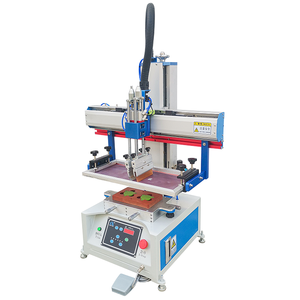
High-precision pneumatic registration press engineered for flatbed substrates, lighter housings, battery casings, and membrane overlays.
Get a Quote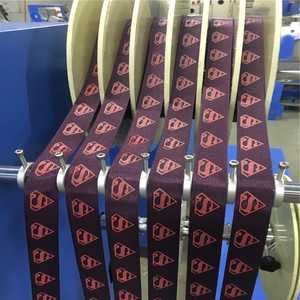
High-output multi-color screen printer for satin, nylon, polyester webbing tape, and narrow web slitting integration.
Get a Quote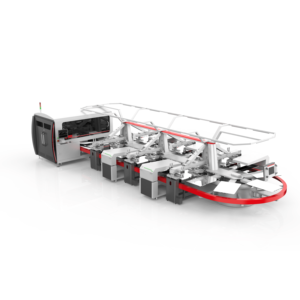
Industrial PLC-driven digital and silk screen combination press for high-speed multi-substrate roll and textile converting.
Get a Quote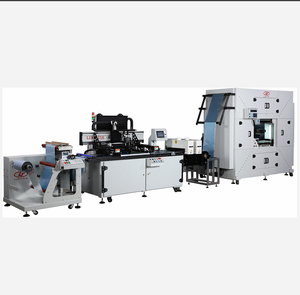
Ultra-precise registration printer designed for flexible printed circuits (FPC), paper stocks, and high-end label converting lines.
Get a Quote
Self-service medical diagnostic film and media processing machine with micro-slitting tension control.
Get a Quote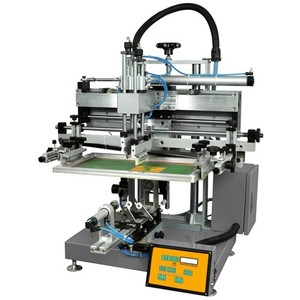
Compact precision printer tailored for cylindrical components, industrial tubes, and small format technical web items.
Get a Quote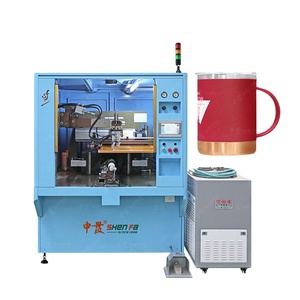
Heavy-duty semi-automatic screen printer engineered for 2-color bottle decorating and rigid packaging converting lines.
Get a Quote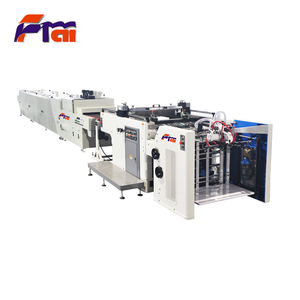
High-speed reversible silk screen printer optimized for industrial sheet-fed, card stock, and heavy film converting applications.
Get a QuoteIn modern high-speed roll-to-roll (R2R) material processing, selecting an elite web slitter factory & supplier directly impacts production throughput, material yields, edge quality, and overall operational profitability. Web slitting machinery serves as the foundational backbone for converting flexible substrates—including pressure-sensitive label stock, polyethylene terephthalate (PET), polyvinyl chloride (PVC), polycarbonate, polypropylene, aluminum foils, and technical non-wovens.
As converting lines accelerate beyond 500 to 800 meters per minute, legacy mechanical slitting methods frequently fail to maintain edge integrity, creating microscopic burrs, dust generation, edge stretch, and rewinding telescope defects. Global manufacturing leaders are transitioning to servo-driven dual-shaft rewinders, contact-less laser web slitting modules, and automated blade positioning systems (ABPS) that reduce set-up times from hours to fractions of a minute.
Procurement directors and plant engineers must evaluate slitting technologies based on substrate chemistry, caliper thickness, edge sensitivity, and production speed requirements. The matrix below outlines the operational boundaries of the primary slitting methodologies supplied by top-tier global OEMs:
| Slitting Method | Optimal Substrates | Slitting Velocity | Edge Quality & Dust | Setup Complexity |
|---|---|---|---|---|
| Shear Slitting (Tangential/Wrap) | Paper, Laminates, Heavy Films, Foils | High (>600 m/min) | Clean edge, minimal debris | Moderate (Precision alignment needed) |
| Razor-in-Groove / Air | Thin Unsupported Films (BOPP, PET) | Medium (Up to 400 m/min) | Ultra-sharp, risk of thermal blade wear | Low (Fast blade replacement) |
| Score / Crush Slitting | Non-Wovens, Pressure-Sensitive Tape | Moderate (<300 m/min) | Crushed edge, potential micro-dust | Low (Hardened anvil roll contact) |
| Contactless Laser Slitting | Abrasives, Complex Polymers, Label Stock | Variable / Digital Sync | Sealed edge, zero dust, zero blade wear | Digital Recipe Driven (Instant) |
While rotary shear slitting remains the industry workhorse for thick films and laminated foils, digital laser slitting technology—developed and refined by industry pioneers like Spartanics—has revolutionized short-run and variable-width web converting. Laser slitting completely eliminates die tooling spend, blade sharpening downtime, and mechanical edge deformation, rendering spot sizes down to 0.004 in (0.1 mm) directly from digital vectors.
Navigating the global OEM market requires a structured vendor rating framework. Beyond basic price-per-unit comparisons, industrial buyers must benchmark potential web slitter factories across six core technical competencies:
Closed-loop load cell sensors and independent servo-driven rewind shafts ensure linear tension taper compensation, preventing web stretch and crushed cores during high-speed rewind cycles.
Advanced ultrasonic and optical edge/line tracking sensors (CCD camera alignment) compensate for parent roll telescoping, lateral web drift, and thermal web expansion in real time.
Integrated pneumatic venture trim removal systems or motorized trim winders handle ultra-narrow edge strips cleanly without tangling or contaminating pristine finished rolls.
The web slitting and rewinding industry is undergoing a massive digital overhaul driven by Industry 4.0 automation, sustainability mandates, and the shift toward shorter SKU run lengths. Global converter plants are prioritizing several key advancements when issuing capital machinery RFQs:
Rooted in over 60 years of precision engineering in Rolling Meadows, Illinois, USA, Spartanics stands as an industry authority in custom converting solutions, laser die cutting platforms, card counting systems, and heavy-duty finishing machinery installed in more than 60 countries worldwide.
Unlike standard off-the-shelf equipment brokers, Spartanics designs, builds, and run-tests every custom converting and slitting platform under one roof in the United States. Before any machine ships to your facility, your actual substrate is run on factory equipment to guarantee edge tolerance, optical registration accuracy, and target line speeds.
From the flagship CS2100 modular converting platform and compact XIPHOS laser system to high-speed 680 card counters and precision optical shears, Spartanics empowers converters to reduce waste, lower unit costs, and eliminate tooling lock-in across diverse global supply chains.
Technical procurement guidance for enterprise buyers, plant engineers, and operations directors.
Laser web slitting outperforms rotary shear tooling for short-to-medium runs, variable SKU geometries, highly abrasive substrates (which dull physical blades quickly), and ultra-intricate contours. Because laser systems cut via concentrated light with zero mechanical contact, there is no blade wear, no physical edge drag, zero dust creation, and zero tooling spend. However, for extremely long, continuous single-width runs on simple paper or heavy foils, mechanical shear slitting remains a highly economical choice.
Delicate films such as 12-micron PET or extensible BOPP are prone to stretching, necking, and web weave if tension is inconsistent. Modern slitter rewinders employ closed-loop load cells, low-friction dancer arms, and servo-driven differential rewind shafts. This ensures that as rewind roll diameters grow, rewind torque automatically adjusts to maintain constant surface tension, eliminating telescoping and dish-shaped rolls.
Spartanics equipment is validated across pressure-sensitive label stock, PET, PVC, polycarbonate, polypropylene, paper, laminates, membrane switch overlays, in-mould decoration (IMD/IML) films, reflective license plate sheeting, and thin metallized foils. Material run-testing is performed free of charge prior to final machine specification.
Machines manufactured in Illinois, USA are supported globally in over 60 countries. Spartanics provides 24/7 remote IP diagnostic troubleshooting, local regional technical partner dispatch, comprehensive machine operator training, and rapid spare-parts fulfillment programs to guarantee high operational uptime.
Yes. Modular platforms such as the Spartanics CS2100 allow converters to integrate single-pass digital inkjet printing, screen printing, lamination, die cutting, slitting, sheeting, and optical camera inspection on a single servo-synchronized chassis, drastically reducing material handling steps.
Consult with Spartanics application engineers to analyze your substrate samples, receive a customized machine layout proposal, and calculate your return on investment.
Get a Quote