As modern packaging, smart electronics, automotive membrane switches, and security credentials demand unprecedented aesthetic sophistication and microscopic registration tolerances, choosing a qualified manufacturing partner in China is paramount. Modern foil stamping and screen printing technology has evolved beyond traditional mechanical presses into servo-driven, optic-registered, multi-axis automated lines capable of multi-color alignment, micro-embossing, and high-speed web conversion.
This technical white paper serves as an authoritative buyer's manual and industry overview. Synthesizing over 60 years of precision machinery heritage, advanced servo control mechanics, and rigorous optical registration engineering, China's leading OEM/ODM manufacturers deliver high-yield production infrastructure to converters across more than 60 countries worldwide.
Explore our flagship equipment range engineered for extreme repeat accuracy, high tactile ink deposition, rapid job changeovers, and continuous industrial uptime.
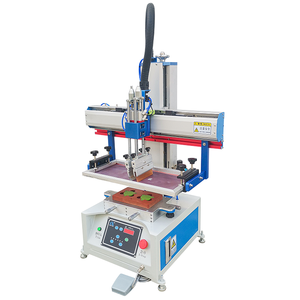
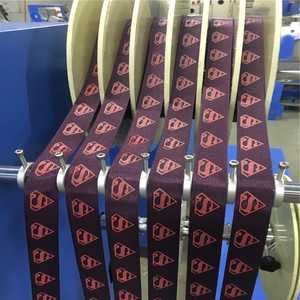
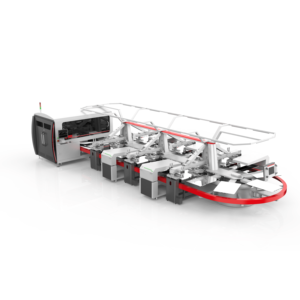
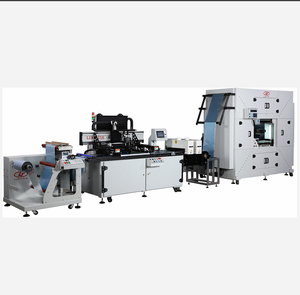
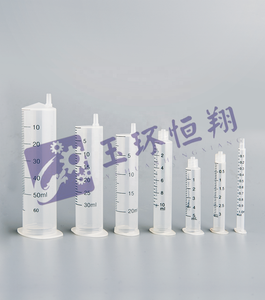
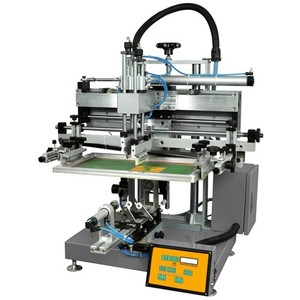
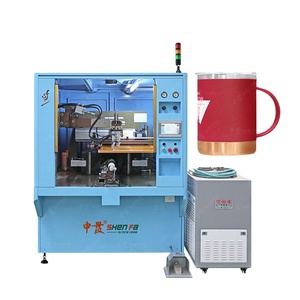
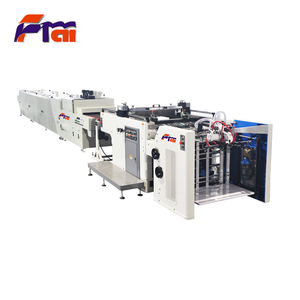
Building high-performance hot stamping presses, digital label converting lines, and roll-to-roll screen printers requires more than assembling off-the-shelf components. Our manufacturing philosophy centers on total structural stability, proprietary software control, and empirical validation.
Our intelligent vision sensors analyze pre-printed register marks or artwork contours in real time. The system automatically adjusts foil tension, stroke placement, and web feed to compensate for substrate thermal expansion or tension stretch up to ±0.01mm.
To eliminate frame deflection during high-pressure foil stamping and micro-embossing, our presses utilize heavy-duty vibration-damped cast frames. This ensures uniform foil release and crisp edge clarity across millions of cycles.
Each axis—from unwind tensioning, foil indexing, and squeegee movement to sheet rewinding—is driven by independent Yaskawa/Siemens servo motors, allowing instantaneous digital job recipe loading and zero waste setup.
Every machine undergoes a mandatory 72-hour continuous test cycle using your exact production substrate (PET, PC, Paper, or Metallic Foil) prior to international crating, guaranteeing zero-day commissioning delay upon delivery.
The global foil stamping and screen printing equipment sector is undergoing a massive technological shift driven by automation, sustainability, and digital integration. Manufacturers seeking to maintain competitive profit margins must align their procurement strategies with four key evolutionary vectors:
Traditional standalone hot stamping required separate die-making, manual setup, and long lead times. Modern lines combine single-pass digital inkjet units with inline servo cold/hot foil stamping modules. This allows converters to combine full-color variable artwork with metallic foils and tactile embellishments in a single continuous pass, drastically reducing scrap rates during short-run SKU changes.
Manual micrometer adjustments are rapidly being replaced by closed-loop CCD camera arrays. As flexible substrates like synthetic film, ribbon webbing, and membrane switches pass through heating zones, material shrinkage is inevitable. Real-time vision systems recalculate the die impression or screen vector on every single stroke, ensuring flawless register for security holograms and micro-circuits.
Energy consumption and volatile organic compound (VOC) reduction are shaping international buyer criteria. Advanced hot stamping machines now incorporate dual-zone quick-heat induction dies and intelligent foil-saving indexing systems that reduce foil waste by up to 45%. Concurrently, UV-cured cold foil options allow high-speed inline application without high thermal loads on heat-sensitive plastic substrates.
Global exporters are equipping machinery with secure cloud telemetry systems. Technical teams in China can perform real-time sensor diagnostics, firmware updates, and PLC ladder adjustments for clients in Europe, North America, or Southeast Asia, keeping downtime to an absolute minimum.
To assist technical procurement teams, the table below compares core structural parameters, substrate suitabilities, and registration systems across our key machinery lines:
| Equipment Category | Primary Substrates | Registration System | Production Speed | Ideal Application |
|---|---|---|---|---|
| Flatbed Servo Screen Printer | Battery cases, Lighters, ABS/PC Panels | Pneumatic / Mechanical Stop | 1,200 - 2,500 pcs/hr | Rigid product housings & industrial graphics |
| Roll-to-Roll Web Screen Printer | Satin, Nylon, Webbing Tape, Labels | Infrared / Photoelectric Sensor | Up to 45 meters/min | Textile ribbons, continuous wash care labels |
| Oval Automatic Textile Printer | T-Shirts, Garment Cuts, Canvas Bags | Multi-Station PLC Servo Index | Up to 900 prints/hr | High-volume multi-color apparel embellishment |
| FPC & Flexible PCB Printer | Polyester Film, Polyimide, Soft PCBs | CCD Micro-Camera Vision Alignment | High Precision (±0.01mm) | Flexible circuits, conductive ink deposition |
| Cylindrical & Bottle Printer | Cosmetic Tubes, Water Bottles, Vials | Optical Jig Color-Registration | 1,500 - 3,200 pcs/hr | Conical, cylindrical glass & plastic containers |
| High-Speed Foil Stamping Press | Paperboard, PET Labels, Plastic Cards | Dual-Zone Thermal Servo Indexer | Up to 5,000 sheets/hr | Luxury packaging, holograms, security cards |
When procuring industrial foil stamping and screen printing machinery from China, evaluating purchase price alone leads to inaccurate financial planning. International buyers must calculate the total cost of ownership across a 5 to 10-year machine lifecycle. Consider the following strategic procurement guidelines:
Always send physical material samples (uncoated paper, thermal-sensitive films, metallic foils) to the manufacturer for empirical trial runs before finalizing engineering drawings. Ensure tension controllers match your specific web weights.
Verify whether the hot stamping press accepts standard magnesium, brass, or copper dies, and check if magnetic cylinder mounts or quick-change plate clamps are integrated for rapid job setup.
Ensure critical electrical components (PLC, Servos, Relays, Pneumatics) are sourced from globally accessible brands like Omron, Schneider, Yaskawa, or SMC for fast local replacement.
Confirm electrical specifications match your plant's grid (e.g., 380V 3-Phase vs 220V 3-Phase, 50Hz/60Hz) and verify CE, UL, or ISO certification documentation required by regional safety inspectors.
In-depth technical answers addressing registration mechanics, custom OEM engineering, substrate handling, and overseas warranty support.
