Explore our high-performance board cutters, servo-driven screen printers, and automated converting lines engineered for micron-level tolerance.
A Comprehensive Engineering Assessment for B2B Operations Directors, Systems Engineers, and Global Procurement Officers
Modern industrial converting requires extreme repeatability, minimal material kerf loss, and fluid integration between printing, registered shearing, and web-handling units. As high-speed manufacturing scales globally, sourcing a qualified board cutter supplier entails evaluating mechanical stiffness, dynamic vision optical registration, knife geometry, and thermal expansion factors across heavy-duty paperboards, flexible printed circuit (FPC) boards, rigid polycarbonates, and multi-layer synthetic substrates.
From high-volume commercial packaging and membrane switch panels to technical electronic circuit board finishing, today’s industrial converting machinery must overcome the limitations of legacy guillotine shearers and traditional rotary die cutters. By integrating optical registration sensors, servo-actuated backgauges, and high-frequency laser finishing heads, automated board cutter platforms ensure consistent edge quality with zero delamination or structural micro-cracking.
Mechanical shear blades experience deflection when cutting rigid dense board compositions exceeding 1.5mm thickness. Advanced board cutter platforms mitigate shear stress by combining dual-actuated pneumatic clamping with optical camera alignment. This hybrid optical-mechanical approach guarantees a registration tolerance under ±0.05 mm across varying web tension coefficients and dynamic thermal shifts.
The following engineering data table outlines mechanical cutting parameters, tool selection criteria, and registered speed capability across primary industrial board and sheet media.
| Substrate Material | Thickness Range | Recommended Cutting Method | Registration Accuracy | Primary Industrial Application |
|---|---|---|---|---|
| Flexible Printed Circuit Board (FPC) | 0.1mm - 0.8mm | Optical Laser / High-Precision Shear | ±0.025 mm | Consumer Electronics, Medical Devices |
| Heavy Solid Bleached Board (SBB) | 0.5mm - 3.0mm | Heavy-Duty Servo Mechanical Cutter | ±0.050 mm | Luxury Packaging, Industrial Containers |
| Polycarbonate (PC) & PET Overlays | 0.125mm - 1.0mm | Optical Registration Shear / Laser | ±0.040 mm | Membrane Switches, Automotive Dashboards |
| Rigid Plastic Cards (PVC / ABS) | 0.4mm - 1.2mm | Progressive Hydraulic Die Shear | ±0.030 mm | Financial Cards, Government ID Credentials |
| Reflective & Metallized Films | 0.05mm - 0.5mm | Roll-to-Roll Sealed-Edge Cutter | ±0.035 mm | License Plates, High-Visibility Signage |
Matching Specific Manufacturing Intent with Specialized Machinery Architectures
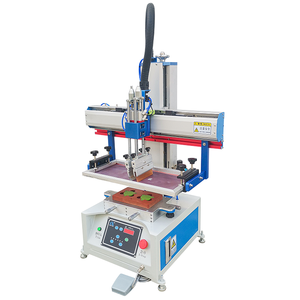
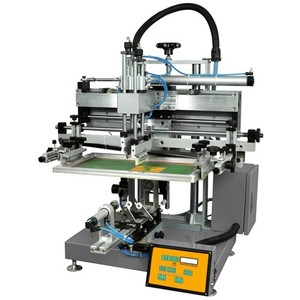
Recommended Solution: Automatic High-Speed Soft Circuit Board Screen Printing & Registered Shear Line.
Engineered for electronics manufacturers requiring sub-micron ink deposit uniformity followed by optical shear trimming. Prevents copper-trace micro-fracturing and eliminates post-process burrs on flexible substrates.
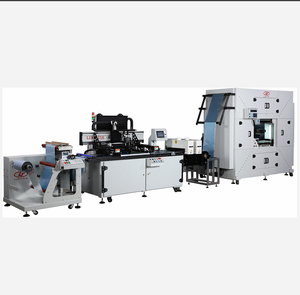
Recommended Solution: Servo-Driven Mechanical Board Cutter with Optical Registration Shear.
Delivers multi-ton shearing force for heavy paperboard, dense synthetic plastics, and rigid PVC card sheets. Features real-time optical mark tracking to compensate for web deformation during printing curing cycles.
Recommended Solution: Digital Screen Printer Integrated with Inline Laser Finishing System.
Eliminates physical die costs completely. Enables rapid short-to-medium run shifts, instant geometry changes via digital vector software, and sealed-edge cut boundaries on synthetic web stocks.
How Smart Automation, Zero-Tooling Workflows, and Sustainability Are Reshaping B2B Capital Equipment Investment
As global supply chains place an increased premium on agility, procurement directors are shifting capital expenditures away from single-purpose, rigid mechanical die presses toward dynamic, digitally-integrated converting ecosystems. Understanding these emerging technological shifts is essential for maintaining competitive yield advantages over the next decade.
The traditional requirement to order, store, and calibrate mechanical rotary dies or tungsten steel cutting blades is rapidly diminishing for short-to-medium batch runs. Laser board cutting systems eliminate die lead times entirely, allowing converters to process custom SKUs directly from CAD vector files within minutes of receiving customer artwork.
Web tension variance, humidity changes, and UV ink curing shrinkages inherently introduce dimensional distortion into printed sheets and webs. Next-generation board cutters feature high-definition camera arrays that read printed target reticles in real-time, dynamically adjusting the knife trajectory or laser focal path to match localized distortion.
Unplanned downtime on high-throughput board cutting lines severely impacts order fulfillment SLAs. Modern converters require machines equipped with edge computing sensors that continuously monitor servo vibration, hydraulic fluid temperature, blade edge degradation, and laser tube power output, automatically scheduling maintenance prior to failure.
Analyzing the Paradigm Shift Between Mechanical Shear Force and Digital Photonic Conversion
The manufacturing engineering landscape for board cutting equipment is undergoing a major evolution driven by material science advancements and digital control systems. Historical trade-offs between speed, cut edge smoothness, and dimensional tolerances are being solved through distinct mechanical and photonic innovations.
Traditional guillotine and mechanical shear blades rely on mechanical compression force to fracture substrate fibers. While highly efficient for straightforward rectangular cuts on thick paperboard, mechanical shearing creates micro-cracks and fiber flare on complex contours. In contrast, advanced CO2 and fiber laser conversion heads generate focused spot sizes down to 0.004 inches (0.1 mm), instantly vaporizing material along complex radii with zero mechanical stress.
To assist plant engineers in selecting the optimal operational dynamic, our technical directorship has compiled a comparative performance analysis evaluating modern mechanical shear technology against photonics-based laser cutting equipment:
| Performance Dimension | Servo Mechanical Board Cutters | High-Precision Laser Finishing Systems |
|---|---|---|
| Setup Time & Job Changeover | 10 – 30 minutes (Blade alignment & physical stop adjustment) | Instantaneous (Load new digital file software recipe) |
| Tooling & Consumables Spend | Periodic blade sharpening, tungsten knife replacement | Zero physical die wear; long-life sealed laser source |
| Contour & Micro-Perforating Capability | Limited to straight cuts, rectangular shearing, or punch dies | Unlimited geometric complexity, micro-perfs, internal cutouts |
| Edge Finish Quality | Clean mechanical shear edge; potential light burr on metals | Thermally sealed edges on synthetics; zero fiber fracture |
| Optimal Production Run Size | High-volume single SKUs, heavy industrial board sheeting | Short-to-medium runs, highly versioned SKUs, complex decals |
Six Decades of US Engineering Excellence, Global Field Integration, and Rigorous Validation
Since 1963, our engineering tradition (rooted in the Spartanics legacy of Rolling Meadows, Illinois, USA) has focused on a singular operational mission: engineering industrial equipment that turns complex substrate converting into reliable, high-yield profitability for our manufacturing partners worldwide.
We never ship equipment based on theoretical specs alone. Prior to factory dispatch, your exact production substrates are processed on your custom machinery build. Cut clean accuracy, speed thresholds, and optical registration tolerances are fully documented and proven.
With thousands of machine installations spanning over 60 countries across North America, Europe, Asia, and Latin America, our factory-trained field engineers and remote diagnostic modules ensure 24/7 technical continuity for your plant.
Our converting systems—such as our premier board cutting lines and screen printing assemblies—are designed as modular chassis. As your order book expands, integrate add-on modules including UV inline curing, camera inspection, web slitting, or laser die heads without replacing the base line.
Direct Technical Answers to Clarify Purchasing, Machine Integration, and Yield Optimization Questions
Standard graphic paper guillotines rely on manual or basic programmable backgauges designed primarily for soft, uniform paper reams. Industrial board cutters are engineered with heavy-gauge structural steel frames, high-torque servo drives, dynamic pneumatic hold-down clamps, and optical registration sensors. This enables them to shear rigid materials (such as dense cardstock, plastic circuit board laminates, and polycarbonate panels) up to multi-millimeter thicknesses without material slippage, edge distortion, or structural blade deflection.
Laser die cutting is significantly more economical for short-to-medium production runs, highly versioned SKUs, and intricate geometric shapes containing fine radii or micro-perforations. Because laser finishing relies entirely on digital vector files, operators eliminate physical die costs, die storage overhead, and hours of mechanical setup time. For simple rectangular sheeting at high volumes, mechanical board shearing remains cost-effective; however, for complex shapes or zero-tooling agility, laser technology delivers unmatched operational ROI.
Our equipment portfolio routinely converts pressure-sensitive label stock, polyethylenes (PET), polycarbonates (PC), polyvinyl chloride (PVC), polypropylene (PP), membrane switch films, flexible printed circuit board (FPC) materials, metallized reflective vinyls, and heavy solid bleached paperboards. Every customer substrate undergoes pre-sale testing in our application laboratory to confirm clean cut edges and throughput speeds before formal equipment quotes are issued.
During UV screen printing or high-temperature drying cycles, synthetic substrates and paperboards experience stretch, shrinkage, and skew. Our closed-loop camera vision systems read registration marks printed alongside the artwork in real time. The machine software calculates the localized linear and non-linear distortion matrix and dynamically shifts the servo backgauge or redirects the laser focal point, ensuring registration accuracy down to ±0.025 mm.
All machinery platforms are backed by factory-trained field support engineers, regional service partners, and secure remote diagnostic modules embedded directly within the PLC control system. We maintain an inventory of critical replacement parts (including shear blades, servo motors, optical sensors, and laser consumables) ready for rapid dispatch to support operational uptime in over 60 countries.
Send us your material specifications, tolerance guidelines, and target volume output. Our senior system application engineers will provide a comprehensive engineering assessment and tailored machine quote.
Get a Quote