Precision Engineering, Zero-Tooling Digital Converting & High-Throughput Manufacturing
Featured Industrial Machinery & Precision Print-Cut Systems
Explore our high-performance screen printing, digital web handling, and automated contour cutting solutions designed for global manufacturing compliance.
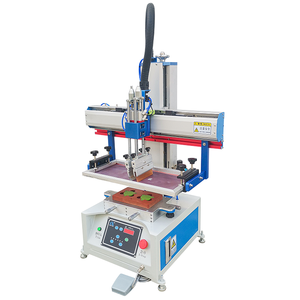
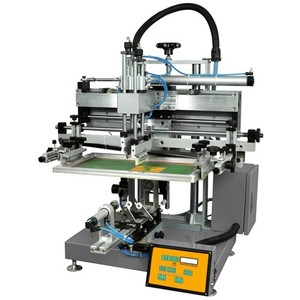
Flatbed press system engineered for precision printing on compact substrates including battery casings, electronic lighters, and rigid industrial components. Features multi-axis servo micro-registration.
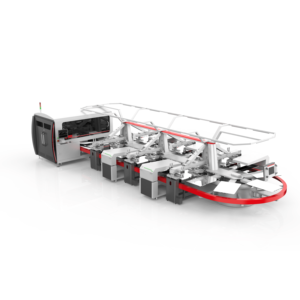
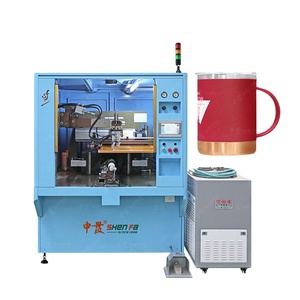
Full Automatic Multicolor Digital Oval Screen Printing Press
Industrial modular oval screen printer utilizing advanced PLC control architectures, high-precision indexing motors, and hybrid digital print heads for heavy textile production.
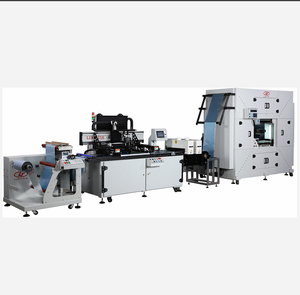
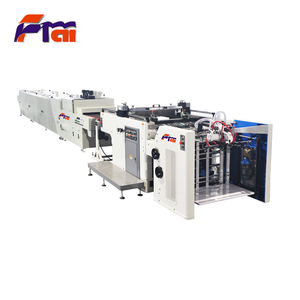
High-Speed Soft Circuit Board & Label Silk Screen Printing System
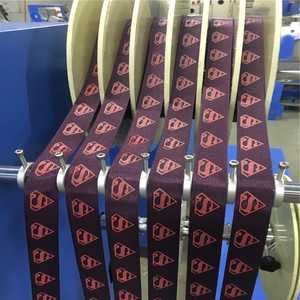
Ultra-precise registration printer designed for flexible printed electronics (FPC), conductive ink application, high-end paper labels, and technical membrane switch overlays.
Executive Industry Overview: The Paradigm Shift in Technical Contour Cutting & Converting
Modern manufacturing ecosystems demand unprecedented operational agility, zero-tooling setup times, and sub-millimeter registered cutting tolerances. Industrial contour cutting has evolved far beyond mechanical punch dies and basic vinyl blade plotters. Today’s premier original equipment manufacturers (OEMs) and print-to-cut converters rely on integrated galvo laser systems, vision-guided optical registration units, and hybrid web finishing machinery to maximize material yield and fulfill short-run, versioned order structures.
According to extensive industrial automation studies, the shift from traditional rotary dies to high-speed galvo laser contour cutting yields an average of 42% setup cost reduction for SKU runs under 5,000 units. By eliminating physical magnetic cylinders, steel rule dies, and lengthy line changeovers, converting plants can transition between complex geometric cut profiles directly from vector files in milliseconds.
Zero-Tooling Flexibility
Instant file-to-cut processing eliminates mechanical die wear, storage overhead, and weekly setup bottlenecks across short-to-medium converting batches.
Optical Camera Alignment
Real-time visual mark detection compensates automatically for substrate thermal expansion, web stretch, skewing, and print repeat inconsistencies.
Multi-Substrate Edge Sealing
Controlled thermal laser delivery seals edges on synthetic films, PET, PVC, and woven textiles, preventing substrate fraying and micro-delamination.
With an engineering legacy originating in 1963 in Rolling Meadows, Illinois, USA, our converting equipment standards represent over six decades of continuous mechanical, electrical, and optical innovation. Building robust industrial machinery requires strict validation: every machine built undergoes 100% full-duty factory run-testing with customer-supplied substrates prior to international dispatch.
Whether operating high-speed plastic card stack counters like the Spartanics 680 system, heavy-duty mechanical die-cutting presses, optical registration shears (such as the M255), or modular converting lines like the CS2100 and compact XIPHOS laser system, our equipment is built for 24/7 industrial duty cycles. Installed across more than 60 countries, our platforms are backed by global spare parts networks, factory-trained remote field engineers, and real-time cloud diagnostic capabilities.
Procurement directors and factory managers evaluating equipment suppliers must look beyond initial machine purchase price to analyze total cost of ownership (TCO), energy expenditure, spare parts accessibility, and inline modularity. The future of industrial converting centers around three strategic pillars:
Inline Modular Integration: Combining silk screen printing, digital color heads, UV curing, hot stamping, laser contour cutting, and automatic slitting/sheeting onto a single continuous web chassis to eliminate work-in-progress (WIP) inventory.
AI-Driven Dynamic Nesting: Algorithms automatically optimizing part placement along the continuous web in real time, reducing high-cost substrate scrap by up to 18%.
Predictive Maintenance & Remote Telemetry: Machine IoT sensors tracking laser diode degradation, web tension harmonics, pneumatic pressures, and servo heat signatures to prevent unscheduled plant downtime.
In high-reliability sectors such as membrane switch production, automotive decorative overlays, medical diagnostic kits, and RFID tag assembly, precision screen printing must be paired with accurate downstream contour cutting. High-density opaque inks, functional conductive silver pastes, and tactile varnish layers applied via roll-to-roll screen printers require exact thermal curing and stress-free cutting path execution.
When cutting pre-printed materials, web expansion and shrinkage occur during drying tunnels. Standard mechanical punch dies fail to account for non-linear distortion. Advanced laser contour cutters equipped with camera visual registration scan embedded fiducial marks on every frame, dynamically stretching, scaling, and rotating the laser cut path vector to mirror the physical distortion of the printed substrate perfectly. This guarantees crisp, edge-sealed, defect-free parts at speeds matching modern high-output print lines.
Expert answers to common engineering, sourcing, and operational queries from global manufacturing buyers.
When is laser contour die cutting superior to rotary tooling or mechanical presses?
Laser contour cutting is decisively superior for short-to-medium production runs, frequent job changeovers, complex geometric patterns, and versioned SKUs. Because laser cutting relies entirely on digital vector files, it completely eliminates die tool fabrication costs (which range from $300 to over $2,000 per die set) and waiting times. Laser systems achieve spot sizes down to 0.004 in (0.1 mm), allowing micro-perforations, kiss-cutting, and intricate internal cutouts that would destroy physical steel blades. For extremely long continuous single-shape runs exceeding 500,000 units, traditional high-speed mechanical presses may retain a raw speed edge, but laser platforms win on versatility, lead time, and zero die maintenance.
What range of materials and web substrates can be cut and printed?
Our equipment line handles a comprehensive matrix of industrial substrates, including pressure-sensitive self-adhesive label stock, PET (polyethylene terephthalate), PVC, polycarbonate (PC), polypropylene (PP), heavy paperboard, reflective security sheeting, membrane switch materials, IMD/IML (in-mould decoration films), woven ribbon tapes, and thin metallized foils. Every material sample submitted by prospective buyers undergoes rigorous testing in our application laboratory to prove cut edge quality, speed tolerances, and ink adhesion before machine quotation.
How does camera-based optical vision registration maintain cut accuracy on distorted webs?
During web transport through curing lamps or tension rollers, synthetic substrates naturally stretch, warp, or shift slightly. Our camera-based optical registration software captures high-resolution images of pre-printed registration marks or specific artwork features in real time. The control software compares the real image coordinates with the CAD/vector file, calculating offset, rotation, and dimensional scaling factors instantly. The galvo laser mirrors or mechanical shearing axis adjust their trajectories on the fly, delivering true registration tolerances down to ±0.05 mm.
What international aftermarket support, remote maintenance, and spare parts guarantees are provided?
All machines manufactured at our facility in Rolling Meadows, Illinois, USA are equipped with secure remote telemetry hardware. This allows our senior factory engineers to perform live diagnostic checks, firmware updates, and calibration tuning for installations in over 60 countries. We maintain localized spare parts inventories, offer comprehensive operator training programs during machine installation, and provide rapid express shipping on optical lenses, drive belts, pneumatic components, and servo modules.
Can existing modular lines like the CS2100 be upgraded post-installation?
Yes, modularity is a core principle of our engineering framework. Systems built on modular chassis designs allow factories to stage capital expenditure. You can begin with a dedicated laser die-cutting line, and later add digital inkjet printing stations, UV coating modules, rotary slitting units, lamination unwinds, or sheet stackers as customer order volume expands. This protects your initial machinery investment and keeps your facility aligned with emerging print-to-cut market trends.
Request a Custom Technical Assessment & Material Sample Run
Send our senior engineering team your material specification, CAD vector draw files, and target unit output. We will process your material in our US factory lab and return a detailed report on speed, tolerance, and ROI.