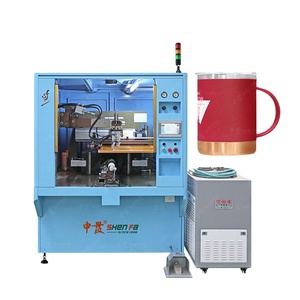
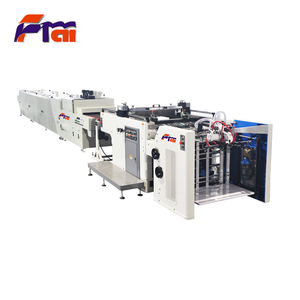
Top Trusted Cutting Press Manufacturers & Exporter

Global Engineering White Paper & Executive Sourcing Guide for Industrial Precision Cutting, Servo Screen Printing, and Automated Converting Engineering

Flagship Cutting Press & Screen Printing Systems

Engineered for micron-level tolerance, maximum hourly throughput, and zero-defect converting across flexible substrates, films, webbings, and rigid panels.
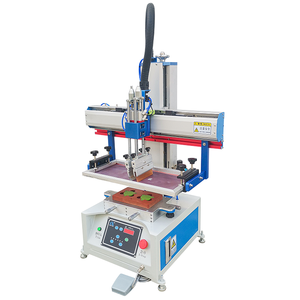
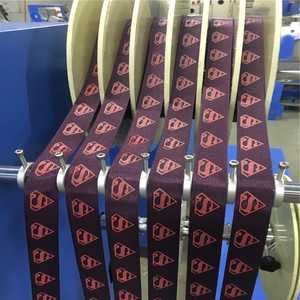
Pneumatic Silk Screen Printing Machine Servo Serigraphic Print Kit Flatbed Press Printers For Battery Lighter

Pneumatic Silk Screen Printing Machine Servo Serigraphic Print Kit

Heavy-duty flatbed press engineered specifically for small-component cylindrical and flat decorative printing. Integrates precision pneumatic drives with digital servo indexing for high-repeatability batch production on battery casings, lighters, and electronic hardware.
High Output Ribbon Screen Printing Machine Automatic Roll to Roll Printer for Multi Color Satin Nylon Polyester Webbing Tape

High Output Ribbon Screen Printing Machine Roll to Roll Printer

Industrial automated roll-to-roll continuous ribbon press for multi-color silk screen printing on satin, nylon, polyester webbings, and narrow fabric tapes. Features closed-loop web tension management and rapid infrared tunnel curing.
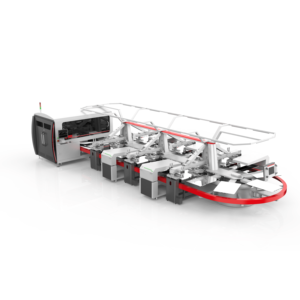
Xmay Full Automatic Digital T-Shirt Silk Screen Printing Machine Multicolor Oval Printer New Condition PLC Components Cloth

Full Automatic Oval Digital Silk Screen Printing Machine

Modular oval multi-color garment press combining traditional screen printing stations with high-speed digital printheads. Driven by industrial PLC microcontrollers for zero flash-curing distortion and ultra-fast garment turnover rates.
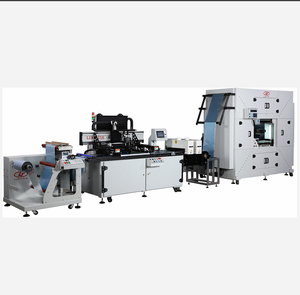
New Automatic High-Speed Soft Circuit Board Silk Screen Printing Machine for Paper & Label Printing

High-Speed Soft Circuit Board & Label Screen Printing Machine

Ultra-precision roll-to-roll printing line developed for Flexible Printed Circuits (FPC), membrane switches, special paper, and security labels. Employs optical CCD registration sensors delivering position calibration down to ±0.01mm.
Medical Self-service Printing Machine

Medical Self-Service Printing & Converting Kiosk System

Industrial-grade, high-reliability self-service medical imaging and film printing terminal. Designed for 24/7 continuous operation in clinical environments, equipped with automated cutting shears and thermal image transferring modules.
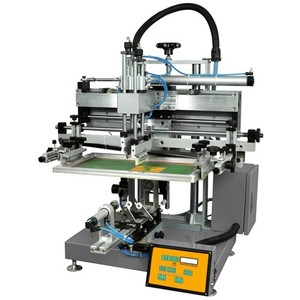
Desktop Cylindrical Screen Printer MSP-2030Q

Desktop Cylindrical Screen Printer MSP-2030Q

Compact pneumatic cylindrical printing equipment optimized for small-batch bottles, cups, tubes, and cylindrical housing. Offers micro-metric registration adjustments and silent pneumatic operation for industrial lab settings.
Semi Automatic Screen Printing Machine for 2 Color Water Bottles

Semi-Automatic 2-Color Water Bottle Screen Printing Machine

Heavy-duty dual-color silk screen printer designed for drinkware, water bottles, and industrial containers. Features quick mechanical changeover clamps and dual-pass flame pretreatment alignment for enhanced ink adhesion.
FJ780 Automatic Reversible Silk Screen Printing Machine for Sale

FJ780 Automatic Reversible Silk Screen Printing Machine

High-speed stop-cylinder automatic screen printing machine engineered for premium packaging, spot UV coating, transfer paper, and financial card substrate printing. Equipped with automatic sheet feeders and vacuum transport beds.
60+ Years
Engineering Excellence
±0.01mm
Optical Registration
60+ Countries
Global Customer Installations
100%
Pre-Shipment Material Tested

Why Global Procurement Leaders Choose Our Cutting & Printing Platforms

Delivering heavy mechanical durability combined with state-of-the-art laser optics and servo technology for global converting operations.

60+ Years US Machinery Lineage & Global Reach

Built upon robust US engineering practices established since 1963, our mechanical die cutting presses, hot stamping lines, screen printers, and laser converting platforms are deployed in over 60 countries. We construct continuous-duty machinery designed to run 24/7 with minimal mechanical fatigue.

Patent CCD Optical Registration Systems

Eliminate cumulative skew and web deformation issues. Our visual camera registration technology (such as installed on our M255 optical registration shear and CS2100 converting lines) dynamically readjusts cut paths in real time, guaranteeing micron-precise alignment on pre-printed webs.

Zero-Tooling Laser Die Cutting Technology

Transition seamlessly from traditional steel die plates to galvo-controlled laser beam converting. Achieving focal spot sizes down to 0.004 in (0.1 mm), our laser systems allow instant job changeovers without tooling expenditure, physical die storage, or lengthy setup downtime.

Empirically Validated Material Testing Protocol

We do not rely on theoretical estimations. Before any equipment purchase proposal is finalized, your specific raw substrate—whether PET film, rigid PVC, reflective license plate metal, soft circuit boards, or pressure-sensitive vinyl—is fully processed and validated in our customer application lab.

Modular Architecture & Expansion Capability

Protect your capital investment. Systems such as the CS2100 modular platform allow manufacturers to integrate roll-to-roll laser cutting, digital inkjet units, inline UV screen printing, lamination, slitting, and automated stack counting on a single unified frame as business demand scales.

Global Field Support & Remote Tele-Diagnostics

Every cutting press and screen printer exporter program includes factory-trained global technical support, comprehensive spare parts inventory, and secure cloud tele-diagnostic modules that enable real-time PLC troubleshooting and software optimization anywhere in the world.

Engineering White Paper: Process Comparison Matrix

Selecting the optimal converting technology based on substrate specifications, run length, and precision requirements.

Performance Metrics Galvo Laser Die Cutting Mechanical Die Cutting Press Servo Flatbed Screen Printer Continuous Roll-to-Roll Printer
Primary Substrates PET, PVC, Polycarbonate, Paper, Adhesives Heavy Cardstock, Laminates, Foams, Metals Rigid Panels, Circuit Boards, Glass, Plastic Ribbons, Textiles, Flexible Films, Webbing
Tooling Cost & Setup Time $0 Tooling / <3 Min Software Setup High Tooling Cost / 30-90 Min Physical Die Setup Screen Mesh Prep / 15-30 Min Calibration Screen Mesh Prep / Fast Continuous Feeds
Registration Precision ±0.05 mm (Vision Guided) ±0.10 mm (Pin / Mechanical Stop) ±0.01 mm (Servo / CCD Sensor) ±0.02 mm (Closed-loop tension)
Min Cut / Feature Radius 0.1 mm (0.004 in Spot Diameter) 1.5 mm (Tooling Radius Bound) 0.08 mm Line / Space Width 0.12 mm Line / Space Width
Economic Order Quantity (EOQ) Short-to-Medium (1 to 50,000 units) High Volume (>50,000 units) Flexible Batch & High Volume High Continuous Roll Runs
Maintenance & TCO Profile Ultra-Low (No physical blade wear) Moderate (Sharpening & die replacement) Low (Squeegee & screen mesh wear) Low (Mechanical roll bearings)

Industrial Sourcing Trends & Technology Roadmap (2025–2030)

Key technological shifts reshaping global manufacturing, cutting press procurement, and converting factory floor automation.

1. Shift to Digital Zero-Inventory Finishing

Brand owners demand shorter product lifecycles, seasonal SKUs, and customized versioning. Global converters are rapidly adopting digital laser converting systems to eliminate physical die inventory, shorten delivery turnarounds from weeks to hours, and streamline digital workflow pipelines.

2. Hybrid Printing & Inline Converting Integration

Standalone processing units are being replaced by single-pass hybrid lines. Modern manufacturing setups integrate silk screen ink application, digital UV jetting, laser kiss-cutting, waste stripping, slitting, and stack counting into continuous single-operator machinery configurations.

3. AI-Driven Visual Quality & Inspection

Automated optical inspection (AOI) systems integrated directly into cutting presses now detect misprints, color deviations, pinholes, and dimensional cut offsets at speeds up to 100 meters per minute, automatically marking or ejecting defective parts before packaging.

4. Sustainable Substrates & Thermal Edge Sealing

As recyclable mono-materials and bio-based plastics replace traditional PVC and laminated structures, laser converting technology provides a critical benefit: cleanly melting and sealing edge micro-frays on synthetic fabrics and eco-substrates without releasing toxic VOCs.

Procurement & Technical FAQ

Critical insights for buyers, project engineers, and machinery importers evaluating industrial cutting presses and screen printing equipment.

Q1: When is laser die cutting financially superior to traditional rotary or platen mechanical presses?
Laser die cutting yields superior total cost of ownership (TCO) for short-to-medium production runs, multi-SKU jobs, and intricate design geometries. Because laser cutters require zero mechanical dies, manufacturers eliminate die fabrication costs ($300–$3,000 per die set) and die storage overhead. Furthermore, job changeover on a laser system takes seconds via digital file loading, compared to 45–90 minutes of mechanical press calibration. However, for continuous single-shape long runs exceeding 100,000 identical units without versioning, traditional mechanical presses may maintain a lower per-piece cycling cost.
Q2: How do servo-driven screen printing machines prevent color misregistration during multi-pass operations?
Modern servo-driven screen printers (such as our automatic roll-to-roll and oval printers) replace mechanical chain drives with high-resolution digital servomotors coupled to optical CCD camera positioning sensors. These sensors scan pre-printed registration marks (or substrate edges) prior to squeegee stroke execution, dynamically compensating for material stretch, thermal expansion, or web distortion down to ±0.01 mm tolerance across multi-color overlays.
Q3: What critical technical parameters must be provided when requesting a cutting press custom quotation?
To receive an accurate engineering quotation and throughput calculation, buyers should specify:
1. Substrate Specifications: Material type (PET, PVC, Polycarbonate, Webbing, Paper), thickness range (microns or mm), and thermal sensitivity.
2. Input/Output Format: Roll-to-roll (web width and outer roll diameter), roll-to-sheet, or sheet-to-sheet feeding requirements.
3. Tolerance & Contour Complexity: Minimal internal radii, kiss-cutting vs. full-thru cutting, micro-perforations, and required dimensional precision.
4. Target Hourly Capacity: Desired throughput in meters/minute or parts/hour to determine motor sizing and laser wattage.
Q4: How do high-speed card counting machines verify stacks without damaging card surfaces?
High-speed plastic card counters (such as the Spartanics 680 series) utilize optical non-contact optical sensors or precision low-pressure mechanical sensors. By analyzing optical reflection or side-profile light beam interruptions, these systems can count and verify stacks of up to 500 plastic, payment, or ID cards in approximately 5 seconds without applying scratching friction or surface pressure to sensitive magnetic strips, RFID chips, or glossy holographic coatings.
Q5: What safety standards and international certifications do your exported machines comply with?
All exported industrial machinery—including laser cutters, pneumatic presses, and screen printers—is designed and constructed in compliance with international safety protocols. This includes CE Directive compliance (Machinery Directive 2006/42/EC, Low Voltage Directive, and EMC Directive), Class 1 or Class 4 laser safety enclosures with interlocked access doors, emergency stop circuits, and UL-compliant electrical panel assembly standards.
Q6: What is the expected lifespan of high-precision screen mesh and laser source components under 24/7 operation?
Industrial CO2 and fiber laser sources utilized in modern converting lines typically feature an operational lifespan ranging from 20,000 to 45,000 operating hours before requiring gas re-fill or diode refurbishment. For screen printing equipment, high-tension stainless steel or polyester screen meshes typically yield between 50,000 to 150,000 impressions depending on ink abrasiveness, squeegee hardness, and substrate roughness.
Q7: How is post-sale installation, training, and emergency spare part replacement handled overseas?
We maintain a comprehensive global support framework. Equipment commissioning is conducted by certified field service engineers or factory-trained local distribution partners. We provide complete operational and maintenance training during installation. Standard consumable parts (bearings, pneumatic valves, optical sensors) are stocked in regional hubs, while proprietary control modules can be dispatched via express air freight within 24-48 hours. Remote PLC diagnostics allow instant software troubleshooting online.
Q8: Can your equipment process complex multilayer materials like flexible printed circuits and membrane switches?
Yes. Processing multilayer substrates (such as conductive ink printed circuits, spacer adhesives, and graphic overlays) requires strict registration and depth control. Our high-speed soft circuit board screen printers and vision-guided laser converters are engineered specifically to execute differential depth kiss-cutting (cutting top functional layers while leaving the release liner intact) with micrometer-level vertical accuracy.

Ready to Upgrade Your Converting & Printing Efficiency?

Submit your substrate samples, drawings, or operational bottlenecks to our engineering team. Receive a comprehensive technical feasibility report and customized machinery proposal within 24 hours.

Contact Us