Engineered for extreme repeatability, high-speed automated output, and tight-tolerance web processing across global manufacturing sectors.
In the global industrial converting and secondary embellishment ecosystem, selecting a top-trusted embossing press factory and exporter is an enterprise-level decision that directly impacts operational yield, unit economics, and long-term capital efficiency. For over six decades, our engineering facilities—built upon rigorous US precision standards originating in Rolling Meadows, Illinois—have delivered thousands of heavy-duty mechanical die-cutting presses, automated hot stamping machines, industrial screen printing platforms, and software-driven laser converting machinery to contract manufacturers across more than 60 countries.
Unlike commercial print vendors or light-duty machinery assemblers, our plant operates as a vertically integrated machinery manufacturer specializing in high-tonnage structural integrity, closed-loop electro-pneumatic integration, and advanced optical vision registration. Every embossing press, continuous roll-to-roll screen printer, and mechanical die unit undergoes exhaustive Factory Acceptance Testing (FAT) with real customer substrates before export clearance. By uniting physical rigidity with digital control algorithms, we empower converters to achieve zero-scrap job changeovers, extreme micro-registration down to micron thresholds, and continuous 24/7 industrial output under demanding thermal and mechanical stress.
Core Engineering Guarantee: Every machine built within our plant is subjected to live material testing prior to shipment. Whether converting high-density polycarbonates, sensitive flexible printed circuits (FPC), metallized paperboard, or multi-layer synthetic cards, we validate registration tolerances, cycle speeds, and pressure distribution to ensure turn-key commissioning upon delivery.
Industrial embossing is not merely the application of mechanical force; it is a complex thermodynamic and viscoelastic deformation process. To create permanent, crisp tactile features, tactile micro-textures, raised security elements, or functional braille on dense substrates, an embossing press must maintain precise parallel platen alignment across the entire surface area while delivering uniform heat dispersion.
Our heavy-duty embossing presses utilize stress-relieved steel gantry frames capable of supporting dynamic loads up to hundreds of kilonewtons without micro-flexing. Frame deflection during maximum stroke impacts visual fidelity and degrades die life. By utilizing Finite Element Analysis (FEA) during the design phase, our chassis withstand continuous high-frequency cycle rates while guaranteeing structural deflection remains under 0.01 mm per meter of bed width.
Modern production environments demand smooth acceleration curves to prevent material shear and ink cracking. Our servo-driven flatbed screen printing machines and pneumatic embossing presses utilize digital position sensors coupled with high-torque brushless servomotors. This combination enables sub-millisecond motion correction, allowing operators to fine-tune squeegee speeds, print stroke lengths, dwell times, and embossing depth directly from a centralized PLC touchscreen interface.
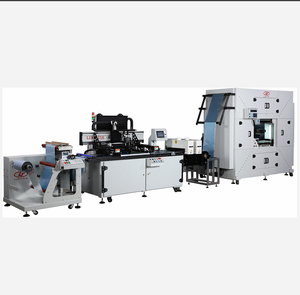
Industrial screen printing machinery remains the gold standard for applying high-opacity opaque whites, conductive silver pastes, tactile varnish, and heavy-deposit functional coatings that digital inkjet presses cannot replicate in a single pass. Products like our Automatic High-Speed Soft Circuit Board Silk Screen Printing Machine handle delicate flexible substrates (polyimide, PET films, thin copper laminates) by maintaining constant web tension control throughout unwind, print, drying, and rewind cycles.
As a specialized factory and exporter, our machinery portfolio spans across diverse manufacturing domains—ranging from electronics and automotive identification to secure ID cards, apparel, and medical diagnostics. Below is a rigorous technical evaluation of key machine classes manufactured within our plant.
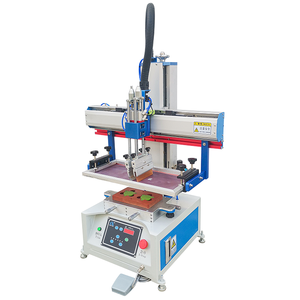
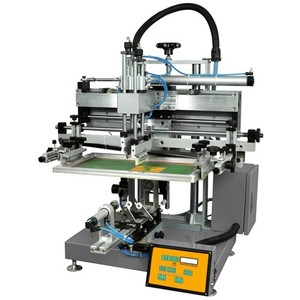
For compact industrial parts, lighter bodies, cylindrical containers, and small electronic housings, flatbed pneumatic screen printers with servo print kits (such as our pneumatic battery lighter printers and the Desktop Cylindrical Screen Printer MSP-2030Q) provide exceptional tactile sharpness. Featuring adjustable squeegee pressure, off-contact distance tuning, and micro-metric X-Y-theta alignment tables, these units eliminate image blur and maintain sharp edge definition even on curved or uneven polymer surfaces.
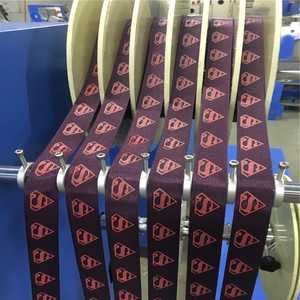
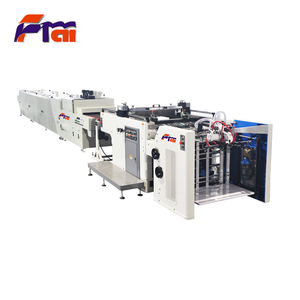
The continuous production of multi-color satin, nylon, polyester tapes, and pressure-sensitive roll labels demands synchronized web feeding. The High Output Ribbon Screen Printing Machine utilizes optical eye sensors and tension-controlled servo feed rollers to line up multi-pass color steps with zero spatial mismatch. Combined with inline UV or IR drying tunnels, these systems achieve continuous linear production rates suitable for high-volume export orders.
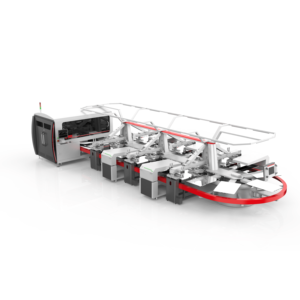
In the textile and industrial apparel sectors, the Xmay Full Automatic Digital T-Shirt Silk Screen Printing Machine represents the convergence of heavy mechanical indexers and digital control. Featuring modular oval expansion tracks and PLC control components, the system offers smooth station-to-station indexing with absolute position lock, ensuring multi-color prints and puff/embossed textile inks align flawlessly over thousands of continuous garment cycles.
The production of membrane switches, automotive dashboard control panels, flexible printed electronics (FPC), and medical self-service display panels requires cleanroom-compatible mechanical execution. Our soft circuit board screen printers incorporate particle-dust extraction units, precision vacuum platens, and optical camera alignment systems capable of registering print layers to underlying copper traces within tolerances of ±0.01mm.
Procurement directors and factory operational heads evaluating capital equipment investments must look beyond immediate production quotas to anticipate technical shifts over the next five to ten years. The global converting market is undergoing structural evolution driven by four key technological vectors:
Traditional rotary dies and mechanical male/female steel embossing dies incur high upfront tooling costs, long lead times, and substantial physical storage burdens. Future-ready converting lines are rapidly adopting digital laser die-cutting combined with fast-set dynamic embossing modules. By utilizing laser spot sizes down to 0.004 in (0.1 mm), converters can execute intricate contour cuts, micro-perforations, and kiss-cuts directly from digital vector files, reserving mechanical embossing strictly for high-value tactile elements. This hybrid approach slashes job set-up times from hours to minutes.
Manual alignment and periodic operator sampling are being replaced by dynamic vision feedback. Next-generation embossing presses and screen printers incorporate high-frame-rate CCD cameras that continuously scan pre-printed fiducial marks. If substrate expansion occurs due to ambient humidity or heat curing, the machine’s motion controller dynamically adjusts the cut/emboss coordinate matrix on the fly. Furthermore, AI-driven visual inspection modules detect ink pinholes, foil flakes, or shallow embossing depth instantly, flagging defective sheets before downstream packaging.
With global mandates pushing for recyclable mono-materials (polypropylene, recycled PET, bio-based films), embossing machinery must adapt to narrow processing temperature windows. Traditional hot stamping equipment can warp heat-sensitive recycled films. The future belongs to low-thermal-impact LED-UV curing systems coupled with rapid-response induction-heated embossing rollers, allowing converters to embellish sustainable films without compromising web structural integrity or consuming excessive grid power.
Modern international machinery buyers demand full Industry 4.0 integration. Our press platforms come equipped with OPC-UA communication protocols, enabling direct data bridging into enterprise ERP and MES software. Operational dashboards monitor motor vibration, hydraulic pressure stability, heater element resistance, and squeegee cycle counts. Predictive algorithms alert maintenance teams to replace wear parts prior to mechanical failure, maximizing Overall Equipment Effectiveness (OEE) across multi-factory global networks.
Evaluating an industrial embossing press or screen printing exporter based solely on initial purchase price (CapEx) often leads to higher long-term operating costs (OpEx). Enterprise buyers must analyze equipment reliability, scrap rates, power efficiency, tool wear, and machine versatility across a 10-year lifespan.
When calculating ROI on high-speed equipment—such as our plastic card counters capable of verifying 500 cards in 5 seconds or automatic reversible silk screen presses like the FJ780—the primary financial driver is labor reduction and audit security. Automated verification eliminates human counting errors in secure ID and payment card production, protecting manufacturers from costly inventory discrepancies and contract penalties.
Choosing a long-term manufacturing partner requires verifying factory credentials, engineering methodologies, and quality control infrastructure. Operating from our central manufacturing hubs, our production facilities adhere strictly to ISO 9001 quality management standards and CE safety directives. Every frame is stress-relieved prior to precision CNC machining to eliminate residual material tension, ensuring that platen parallelism remains uncompromised over decades of multi-shift operation.
Our global engineering network provides complete lifecycle support. From initial sample testing and die geometry advice to post-warranty overhaul kits, we work side-by-side with commercial print shops, security card printers, and industrial component manufacturers to maximize throughput, minimize maintenance downtime, and maintain unmatched tactile quality.
