Top Trusted Laser Cutter Manufacturers & Supplier

Precision Industrial Laser Die Cutting, Digital Converting & High-Speed Web Roll Processing Systems

Featured Machinery & Converting Equipment

Explore our engineering-grade roll-to-roll, screen printing, and automated industrial converting lines built for maximum throughput and sub-millimeter precision.
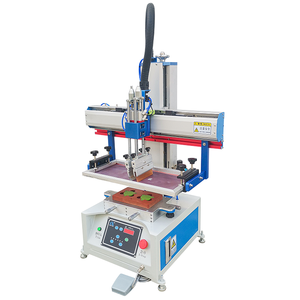
Pneumatic Silk Screen Printing Machine Servo Serigraphic Press

Pneumatic Servo Flatbed Screen Printing Machine

High-precision servo-driven flatbed serigraphic printing press engineered for cylindrical and flat substrate applications like battery casings and lighter housings.
  • Servo Motor Micro-Registration
  • Pneumatic Squeegee Drive
  • High Repeatability Tolerances
Get Catalog
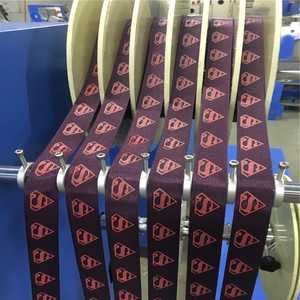
High Output Ribbon Screen Printing Machine Roll to Roll Printer

Automatic Roll-to-Roll Ribbon Screen Printing Line

Multi-color continuous web screen printer for high-output manufacturing of satin, nylon, polyester webbings, ribbons, and narrow textile strips.
  • Continuous Web Tension Control
  • Multi-Color Inline Alignment
  • IR / UV Curing Integration
Get Catalog
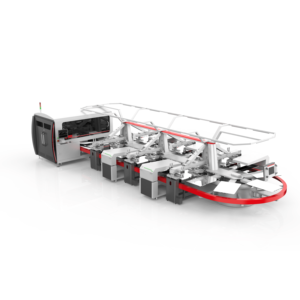
Full Automatic Digital T-Shirt Silk Screen Printing Machine Oval Printer

Full Automatic Oval Digital Screen Printing Press

Industrial-scale oval format screen printing system featuring integrated PLC logic control for garment, t-shirt, and textile manufacturing.
  • PLC Component Architecture
  • High-Speed Indexing Motion
  • Modular Print Head Stations
Get Catalog
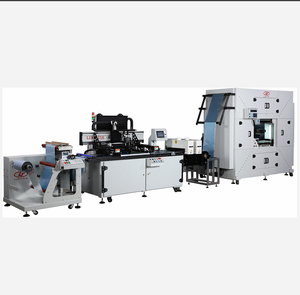
Automatic High-Speed Soft Circuit Board Silk Screen Printing Machine

High-Speed Flexible Circuit (FPC) Screen Printer

Ultra-precise screen printing equipment specially configured for flexible printed circuit boards (FPC), technical paper substrates, and fine label processing.
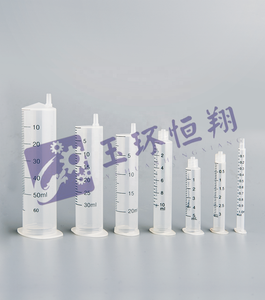
  • Micron Optical Camera Tracking
  • Cleanroom Compatible Frame
  • Conductive Ink Deposition
Get Catalog
Medical Self-service Printing Kiosk Machine

Medical-Grade Self-Service Output System

Heavy-duty kiosk and automated media delivery unit engineered for medical diagnostic film, patient records, and high-security document dispensing.
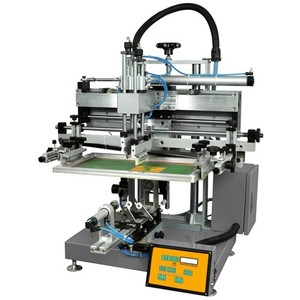
  • 24/7 Continuous Duty Cycle
  • Automated Media Handling
  • Encrypted Network Integration
Get Catalog
Desktop Cylindrical Screen Printer MSP-2030Q

Desktop Cylindrical Screen Printer MSP-2030Q

Compact precision desktop printer designed for small cylindrical items, plastic cups, containers, and short-run industrial packaging components.
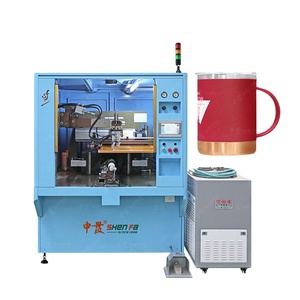
  • Compact Desktop Footprint
  • Easy Fixture Adjustments
  • Quick-Change Screen Holders
Get Catalog
Semi Automatic Screen Printing Machine for 2 Color Water Bottles

Semi-Automatic 2-Color Bottle Screen Printer

Dual-color registration screen printing apparatus for curved surfaces, drinkware, stainless steel flasks, and plastic water bottles.
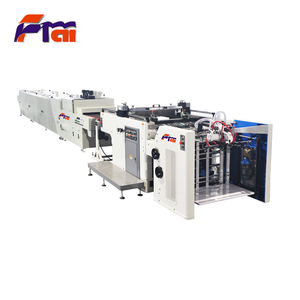
  • Optical Color-to-Color Alignment
  • Flame Treatment Option
  • Pneumatic Indexing Rotary Table
Get Catalog
FJ780 Automatic Reversible Silk Screen Printing Machine

FJ780 High-Precision Reversible Screen Printing Press

Industrial cylinder-type reversible silk screen printing press optimized for high-volume transfer paper, membrane switches, and packaging stock.

  • Reversible Cylinder Motion
  • Vacuum Sheet Feed Bed
  • Sub-Micron Overlay Precision
Get Catalog
60+
Years Engineering Lineage
60+
Countries Deployed
0.004"
Laser Spot Precision
3,000+
Global Installations

1 Industrial Laser Die Cutting vs. Traditional Mechanical Tooling

In modern roll-to-roll converting and web-fed manufacturing, choosing the optimal finishing technology directly dictates operational profitability, material yield, and market responsiveness. As global supply chains demand shorter production runs, variable SKU customization, and zero-inventory manufacturing models, digital laser die cutting has emerged as the clear successor to conventional flexible magnetic dies and mechanical rotary cylinders.

Technical Insight (Information Gain): Unlike mechanical die cutting—which relies on physical shear stress and knife edge sharpness—galvanometer-steered laser optics utilize high-energy thermal photons ($10.6\,\mu\text{m}$ to $9.3\,\mu\text{m}$ CO2 wavelengths) to instantly vaporize substrate molecules. This eliminates mechanical distortion, edge burr formation, and material stretch on thin films down to 12 microns.
Evaluation Parameter Digital Laser Die Cutting Systems Rotary & Mechanical Tooling Impact on Unit Cost
Tooling & Setup Cost $0.00 (CAD/Vector DXF File Driven) $300 – $2,500 per magnetic/solid cylinder die Eliminates upfront capex per SKU
Job Changeover Speed Instantaneous (Recipe recall < 10 seconds) 45 to 90 minutes (Physical die swap & setting) Increases press uptime by up to 38%
Geometric Complexity Unlimited (Micro-perfs, sharp inner corners < 0.1mm) Restricted by physical blade bending radius Enables complex intricate vector patterns
Blade Wear & Degradation Zero Wear (Non-contact beam delivery) Continuous dulling; requires re-sharpening Guarantees 100% consistent cut line over time
Kiss-Cutting Depth Control Sub-Micron Power Modulation (Closed-loop encoder tracking) Manual mechanical anvil pressure adjustments Prevents backing liner puncture on sensitive labels

For enterprise converters managing high SKU counts, seasonal promotions, or rapid prototyping cycles, eliminating physical die lead times (which typically range from 48 hours to 5 business days) translates to an immediate competitive advantage. Digital laser systems yield a positive ROI within 6 to 12 months for facilities processing more than 15 tool swaps per week.

2 Future Procurement Trends in Industrial Laser & Web Converting

The global industrial laser processing equipment market is undergoing a structural paradigm shift. According to recent manufacturing procurement analysis, B2B buyers and chief operating officers are restructuring their capital expenditure strategies around four foundational technology vectors:

1. Closed-Loop AI Optical Registration

Legacy web registration relied on simple contrast sensors. Next-generation systems integrate multi-camera vision arrays driven by machine-learning algorithms. These systems calculate web stretch, distortion, and thermal elongation dynamically in real time, adjusting beam trajectory vectoring on-the-fly to maintain tolerances under ±0.05 mm at line speeds up to 100 m/min.

2. Modular Hybrid Converting Architectures

Procurement teams are moving away from single-function standalone equipment toward modular all-in-one chassis (such as the Spartanics CS2100 platform). Modern lines integrate digital UV inkjet printing, rotary screen units, dynamic laser cut stations, multi-layer lamination, slitting, and automated turret rewinds onto a single continuous servo track.

3. Eco-Friendly Non-PVC Substrate Compatibility

With strict EU and global environmental mandates targeting PVC reduction, laser cutters must cleanly process alternative polymers including Polyethylene Terephthalate (PET), Polypropylene (PP), Polycarbonate (PC), and bio-based PLA films without leaving charred, yellowed, or toxic off-gassing edges.

4. Predictive IoT & Remote Diagnostics

Unplanned downtime on high-volume converting lines costs upwards of $2,500 per hour. Strategic procurement now prioritizes systems equipped with cloud-connected laser tube health diagnostics, galvanometer temperature logging, and remote software calibration tools that prevent failure before it occurs.

3 Material Compatibility & Application Versatility

Precision laser cutting and screen printing systems engineered by Spartanics are engineered, assembled, and material-validated at our Rolling Meadows, Illinois facility. Every substrate undergoes rigorous laser absorption indexing and edge quality evaluation before machine configuration.

Pressure-Sensitive Labels

Exact kiss-cutting through face stock without marking 20-micron silicone backing paper. Ideal for prime labels, stickers, and security seals.

Membrane Switch Overlays

Intricate window cutting, tactile dome embossing registration, and burr-free venting channels on polycarbonate (Lexan) and polyester films.

Plastic Cards & Government ID

Precision punching, optical shear registration, and automated counting (up to 500 cards in 5s) for PVC, ABS, and polycarbonate financial cards.

Frequently Asked Buyer Questions (FAQ)

Direct technical answers to critical engineering, installation, and procurement inquiries.

When is laser die cutting financially superior to rotary tooling?

Laser die cutting delivers a lower total cost of production for short to medium run lengths, multi-versioned SKUs, and complex geometric contours where die tooling costs and setup downtime represent a significant fraction of job cost. Because laser systems require zero physical dies, plate lead times are reduced from days to seconds. For mass continuous production running millions of identical rectangular shapes without versioning, traditional rotary presses remain cost-effective; however, for customized or rapidly changing label portfolios, laser processing is vastly superior.

How does Spartanics ensure zero edge charring or yellowing on plastic films?

Edge quality in laser converting is controlled by balancing laser peak power, beam dwell time, gas assist pressure, and optical spot intensity. By utilizing high-frequency sealed CO2 laser sources paired with ultra-fast galvanometer scanners (reaching spot sizes down to 0.004 in / 0.1 mm), thermal energy is concentrated into extremely localized vaporization zones. This minimizes the Heat-Affected Zone (HAZ), eliminating matrix melt-back, charring, and discolored burrs on sensitive PET, PVC, and paper stocks.

What material substrates can be converted on your laser systems?

Our systems are validated daily across pressure-sensitive label stock, PET, PVC, polycarbonate, polypropylene, paper, foil laminates, membrane switch polyesters, in-mould decoration (IMD/IML) films, non-wovens, and thin metallized substrates. Every prospective customer substrate undergoes real-world material testing at our Illinois headquarters to provide verified speed and cut quality data before equipment quotes are finalized.

How does optical registration handle web stretch and thermal shrinkage?

Spartanics laser conversion platforms feature advanced software-driven camera registration systems. High-resolution CCD cameras capture printed registration marks or artwork features in continuous real time. If a flexible web stretches or shrinks due to tension variance or thermal processing, the system instantly recalculates vector scaling and offset parameters, guaranteeing print-to-cut registration tolerances down to micron thresholds.

What global installation, service, and spare parts support is available?

With machinery operational in over 60 countries worldwide, Spartanics provides extensive international technical support. All equipment features integrated secure remote diagnostic hardware allowing our factory engineers in Illinois to troubleshoot PLC parameters, update laser recipes, and calibrate optics globally. Regional service partners, factory-trained field technicians, and rapid spare-parts shipping programs ensure maximum operational uptime.

Can a Spartanics laser line be expanded with modular stations after installation?

Yes. Systems such as the CS2100 converting platform are built upon modular servo-driven chassis architectures. Manufacturers can install a baseline laser cutting or digital printing module today, and seamlessly integrate add-on stations—such as UV inkjet modules, lamination towers, mechanical die stations, slitting knives, or automated sheet stackers—as production volume and customer capabilities expand.

Ready to Upgrade Your Converting Capability?

Submit your substrate specifications, vector drawings, or production volume targets to our engineering team. We provide a complete feasibility assessment, cut sample analysis, and system ROI breakdown.
