As manufacturing demand shifts toward high-mix, low-volume (HMLV) production, short-run customization, and extreme precision, industrial converters require robust laser engravers and screen printing automation. Below are eight engineering-grade systems designed to eliminate tooling lead times, minimize scrap, and maximize operational throughput.
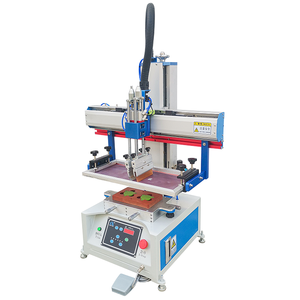
Engineered for precise serigraphic printing on curved and flat surfaces including battery casings, lighter shells, and compact electronics housings.
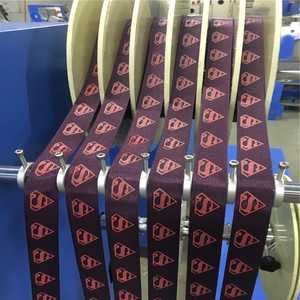
Continuous multi-color printing on narrow satin, nylon, and polyester webbing tapes with continuous optical sensor registration.
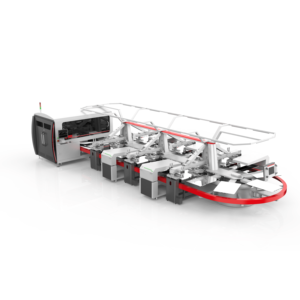
PLC-controlled high-speed oval screen press combining digital white ink under-base printing with multi-color traditional screen units.
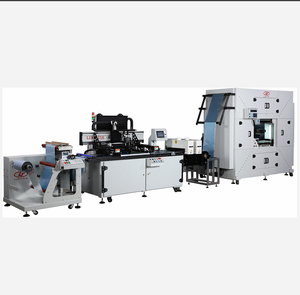
Micron-level alignment screen printing platform tailored for flexible printed circuit (FPC) solder masks, paper stock, and industrial labels.
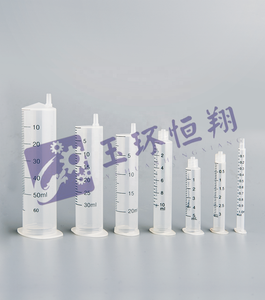
Heavy-duty kiosk printing assembly built for healthcare diagnostic reports, film imaging output, and continuous high-uptime compliance.
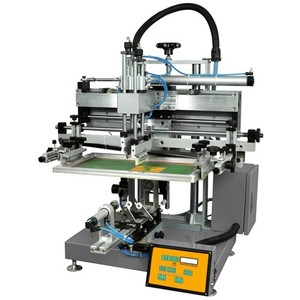
Compact precision printer designed for 360-degree graphics application on bottles, cups, tubes, and cylindrical industrial components.
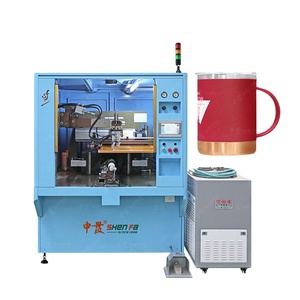
Specialized pneumatic indexed printer with dual flame-treating and UV curing stations for drinkware and container production.
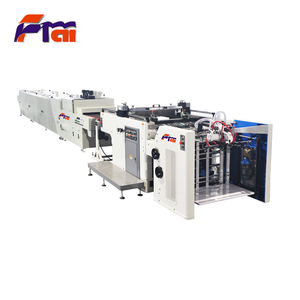
High-speed stop-cylinder graphic press offering rapid sheet feeding, continuous optical registration, and reversible cylinder rotation for premium finishing.
Evaluating top-tier laser engraver factories and equipment exporters requires looking beyond marketing claims to verify engineering longevity, installation bases, and optical alignment tolerances. Backed by over six decades of continuous mechanical and laser conversion design (originating in Rolling Meadows, Illinois, USA), our manufacturing partner networks maintain rigorous production benchmarks certified under ISO 9001 and CE directives.
Unlike trading firms that white-label basic machines, tier-1 laser cutter exporters design and assemble modular chassis built to withstand multi-shift industrial demands. Every laser engraver, galvo marker, and roll-to-roll finishing system undergoes full factory acceptance testing (FAT) using the buyer’s actual production media—including pressure-sensitive label stock, PET, PVC, polycarbonates, and thin metallic films—before international shipping authorization.
The laser processing industry has evolved beyond basic CO2 cutting plotters. Modern manufacturing ecosystems require multi-wavelength hybrid platforms capable of seamless laser engraving, kiss-cutting, micro-perforating, and optical inspection within a single pass.
Traditional mechanical gantry plotters are constrained by physical acceleration limits (1-2 Gs). Modern laser engravers and die cutters employ high-speed galvo scan heads driven by digital encoders, achieving marking speeds exceeding 12,000 mm/s. This architecture allows complex micro-engraving and vector cutting without mechanical wear.
Substrate stretch and web tension variations pose significant challenges during web conversion. Modern laser systems feature high-resolution CCD cameras that scan fiducial marks in real time. The software dynamically calculates stretch, tilt, and skew matrix distortions, shifting the laser path within ±0.05 mm real-time tolerance.
Single laser sources limit processing capability across diverse materials. Leading exporters integrate dual-source configurations combining CO2 (10.6 µm / 9.3 µm) lasers for organic polymers/papers with Fiber (1064 nm) or UV (355 nm) lasers for non-destructive glass marking, delicate foil processing, and high-contrast metal etching.
Rotary dies require expensive mechanical tooling ($500–$3,000 per shape) and long lead times. Laser engraving systems read vector CAD files (DXF, AI, PDF) directly. Job changeover takes seconds rather than hours, making zero-inventory, print-on-demand converting financially viable.
Global supply chain volatility and tightening environmental regulations are redefining equipment procurement criteria. Industrial buyers are shifting from evaluating initial machinery purchase costs to assessing Total Cost of Ownership (TCO), energy efficiency, and operational agility.
| Evaluation Axis | Traditional Mechanical Die Cutters | Modern Digital Laser Engraving Platforms | Procurement Advantage |
|---|---|---|---|
| Tooling & Storage Costs | High ($15,000–$80,000 annual die inventory overhead) | $0 (Pure digital CAD vector files) | 100% Elimination of physical die spend |
| Job Changeover Speed | 45 to 120 minutes per mechanical plate swap | Instantaneous (Recipe load via HMI) | Slashes setup downtime by over 95% |
| Micro-contour Capability | Limited by physical blade bending radius (>1.5mm) | Unlimited (Focal spot down to 0.1mm) | Enables intricate security features & micro-perfs |
| Substrate Thermal Distortion | None (Mechanical shear force applied) | Controlled via localized pulse modulation (Hz) | Advanced edge-sealing prevents polymer fraying |
| ESG & Scrap Waste Impact | 5–15 meters of setup media wasted per die test run | Near Zero setup scrap waste | Aligns with global net-zero manufacturing standards |
When procuring industrial laser engraving and conversion lines, smart factory procurement directors calculate the payback period based on five primary operational variables:
To aid B2B buyers, plant engineers, and import management teams during equipment evaluation, our senior technical team has compiled detailed answers to common operational and procurement questions.
Selecting the right laser engraving factory or printing equipment exporter is a critical strategic decision. Beyond technical specs, you need an engineering partner capable of custom material testing, optical alignment tuning, and reliable long-term support.
Send us your substrate samples, engineering drawings, or target production rates. Our engineering application specialists will provide a detailed technical evaluation, cut-sample validation, and a comprehensive ROI analysis tailored to your manufacturing requirements.
Speak directly with our system design engineers to request cut samples, discuss custom web configurations, or obtain detailed commercial quotations.