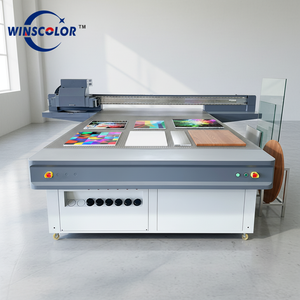
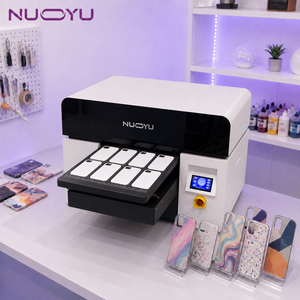
Explore our factory-tested UV flatbed, roll-to-roll, 3D inkjet, and UV DTF converting systems engineered for high-precision tactile, industrial, and promotional printing applications.
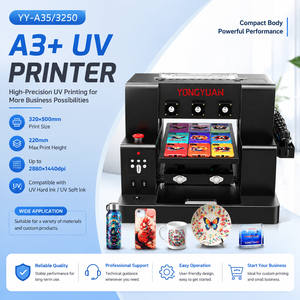
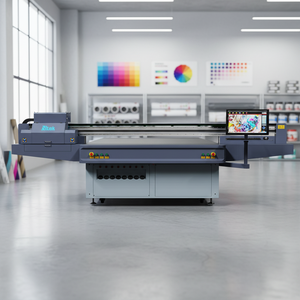
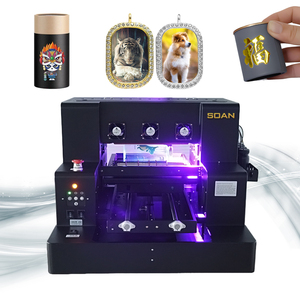
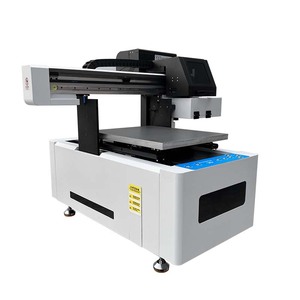
In the rapidly expanding landscape of digital converting, non-contact decoration, and specialized additive printing, Ultraviolet (UV) Inkjet Printing Technology has shifted from a niche customization alternative to an indispensable primary manufacturing platform. Unlike conventional solvent or water-based inkjet systems that rely on slow, energy-intensive thermal evaporation, UV LED inkjet machinery achieves instant photo-polymerization. Under controlled UV LED wavelengths (typically 365nm to 395nm), photoinitiators within the ink matrix trigger immediate cross-linking of liquid monomers and oligomers into a rigid, highly durable solid polymer film.
For enterprise procurement officers, industrial converters, and commercial printing OEMs, selecting the right UV printing partner requires evaluating far more than raw mechanical speeds. Superior output quality is determined by the harmonious integration of high-frequency piezoelectric printhead driver boards, ultra-stable sub-micron gantry motion, automated negative pressure ink circulation loops, and intelligent LED curing arrays. Factories that engineer their systems with heavy-duty structural chassis, precision linear guide rails, and vision-assisted optical registration consistently deliver higher operational uptime and lower total cost of ownership (TCO).
As global supply chains demand shorter production runs, zero plate-inventory overhead, and on-demand versioning, strategic buyers are focusing on five core hardware and material trends:
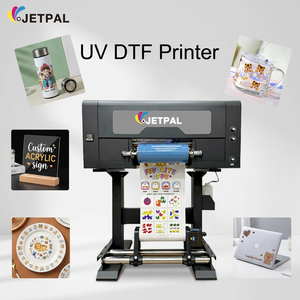
Direct-to-Film (UV DTF) technology eliminates the need for direct object positioning inside flatbed beds. By printing CMYK + White + Varnish onto a release "A" film and cold-laminating it to a transfer "B" film, operators can apply tactile, high-adhesion labels to irregular, curved, or oversized substrates (such as power banks, glass bottles, and helmet shells) with zero tooling spend.
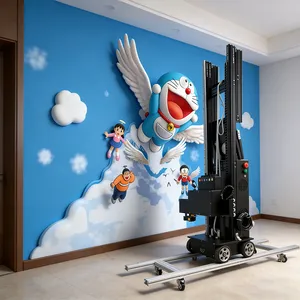
Large-format vertical wall and tube printing systems (ranging up to 2500x6000mm) are displacing traditional wall vinyl and manual murals. Utilizing high-drop DX7/XP600 nozzles and track-guided vertical gantries, these mobile UV machines print directly onto interior plaster, concrete, acrylic, and ceramic tiles with 3D embossed texture effects.
Modern factories are procuring modular printing systems equipped with quick-interchange rotary jigs. This allows seamless switching between flat rigid panels (acrylic, PVC, corrugated board, metal plates) and cylindrical objects (tumblers, bottles, tubes), expanding product versatility without investing in separate machinery.
Achieving photorealistic color reproduction and microscopic dot positioning accuracy requires tight synchronization between electrical driving pulse frequencies, ink fluid dynamics, and optical feedback systems. Below is a comparative breakdown of key industrial printhead architectures and mechanical configurations utilized across top-tier manufacturing facilities:
| Architecture Class | Primary Printhead Models | Native Drop Volume | Actuation Frequency | Ideal Application Domain |
|---|---|---|---|---|
| Micro-Piezo Desktop & Entry Industrial | Epson XP600 / TX800 | 3.5 pl – 12 pl (Variable) | 12 kHz – 15 kHz | Small-scale commercial UV DTF, phone cases, customized stationery, and promotional items. |
| High-Resolution Commercial Flatbed | Epson DX5 / DX7 | 1.5 pl – 21 pl (Multi-drop) | 18 kHz – 22 kHz | Fine art reproduction, membrane switch overlays, high-detail acrylic signage, and backlit panels. |
| Heavy-Duty Industrial Production Line | Ricoh Gen5 / Gen6 / Kyocera | 5 pl – 18 pl (High drop jetting) | 30 kHz – 50 kHz | Continuous 24/7 high-speed flatbed printing on wood, glass panels, metal sheets, and architectural boards. |
| Ultra-Large Format Vertical / 3D Wall | Customized DX7 / Multi-Pass Array | 7 pl – 28 pl (High Distance Drop) | 14 kHz – 20 kHz | Direct-to-wall murals, exterior facade decoration, large tube printing, and architectural wall art. |
Drawing upon over 60 years of heritage in precision industrial machinery manufacturing, cutting-edge converting platforms, and optical registration systems, our UV printer factory partners set the benchmark for structural reliability and print-to-cut alignment accuracy.
Every single UV flatbed, DTF system, and wall printer undergoes rigorous 72-hour continuous burn-in testing. Before any system ships, customer-specific substrates (PET, PVC, acrylic, wood, or metallic sheets) are processed in our factory demo facility to verify color density, curing hardness, dyne level adhesion, and mechanical tolerance.
Integrating advanced CCD optical registration sensors, our UV systems read pre-printed reference marks in real-time. The motion controller automatically calculates skew, web stretch, or alignment offsets, ensuring pinpoint registration down to 0.004 inches (0.1 mm) even on complex contour-cut objects.
With machinery deployed in over 60 countries, enterprise clients receive 24/7 remote diagnostics, localized spare parts inventory, and direct factory engineer support. Comprehensive maintenance protocols minimize ink sedimentation, printhead clogging, and vacuum bed drift.
To eliminate micro-bubbles and white ink titanium dioxide precipitation, our industrial fluid systems incorporate continuous negative pressure white ink agitation, thermal ink jacket heating, and automatic degasification channels for consistent drop formation during long production shifts.
Key insights for international buyers, production engineers, and factory managers prior to placing machinery orders.
A: Printhead longevity depends significantly on ink filtration quality, negative pressure maintenance, and daily cleaning routines. Under standard 8-hour daily production cycles, an Epson XP600 head typically offers a functional lifespan of 8 to 14 months. Epson DX5/DX7 printheads routinely achieve 18 to 24 months of operational stability. Industrial-grade Ricoh Gen5/Gen6 stainless-steel heads, featuring internal recirculation, can operate reliably for 3 to 5 years under continuous industrial workloads.
A: Standard UV flatbed printing applies ink directly onto the surface of a flat rigid object placed inside the printer bed. UV DTF prints the graphics (CMYK + White + Varnish) onto a special release film (Film A), which is then laminated with a protective transfer film (Film B). The resulting sticker can be peeled and manually transferred onto virtually any shape, size, or material—including glass, ceramic, curved metal, plastic, and leather—without requiring the physical object to fit inside the machine chassis.
A: Non-porous materials with low surface energy (such as untreated stainless steel, raw aluminum, hydrophobic glass, and polypropylene) require a thin wipe-on chemical primer or inline corona discharge treatment before printing. The primer creates chemical bonding sites that allow the UV-cured polymer film to pass cross-hatch tape test scratch resistance standards (ISO 2409 / ASTM D3359).
A: All machines are constructed on stress-relieved, heat-treated steel frames to prevent thermal distortion. Motion gantries are locked with custom travel braces, wrapped in vacuum-sealed anti-corrosion barrier foil, and packed inside reinforced, export-standard fumigated wooden crates. Upon delivery, factory calibration files and laser alignment parameters allow rapid commissioning.
A: Standard flatbed and roll-to-roll UV equipment operates on single-phase 220V (±10%) at 50/60Hz, drawing between 1.5 kW and 4.5 kW depending on the UV LED lamp intensity and vacuum pump capacity. The ideal working environment requires temperature control between 20°C and 28°C (68°F to 82°F) and relative humidity between 40% and 60% to prevent static build-up and ink viscosity fluctuations.
Consult with our application engineers to analyze your substrate samples, receive a customized ROI and ink consumption projection, or arrange a live video demonstration of our latest UV flatbed and DTF printing systems.