Designed for seamless integration into high-speed converting, web printing, credit card manufacturing, and flexible packaging lines. Each machine engineered by Spartanics brings high-throughput repeatability, micron-level optical registration, and error-free batch counting to the South American industrial sector.
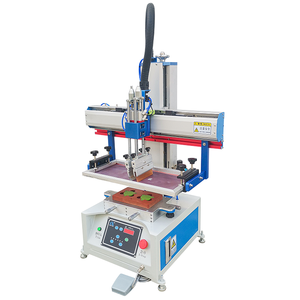
Heavy-duty pneumatic flatbed printer integrated with automated batch counter indexing for lighter and battery housing decoration lines.
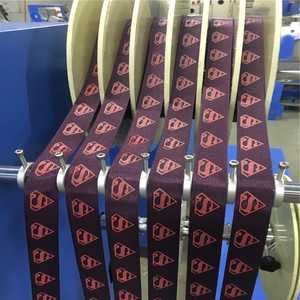
High-output multi-color continuous ribbon printer equipped with fiber-optic batching sensors and automatic web tension control.
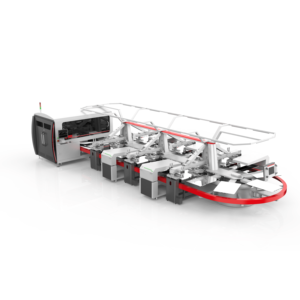
Multicolor oval screen press featuring central PLC logic control, automated garment batch logging, and quick job recall.
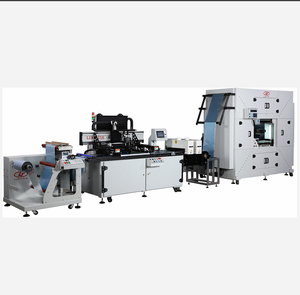
Precision printing and optical registration system optimized for flexible circuit boards, label stock, and electronic substrate batching.
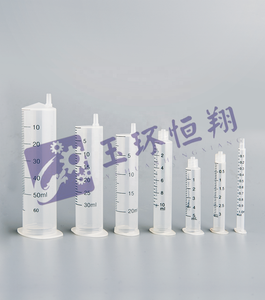
Specialized self-service terminal designed for medical film, diagnostic sheet printing, and ANVISA-compliant batch serial logging.
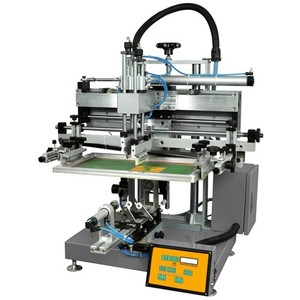
Compact semi-automatic cylindrical printer with digital stroke counter, suitable for short-run containers and industrial tubes.
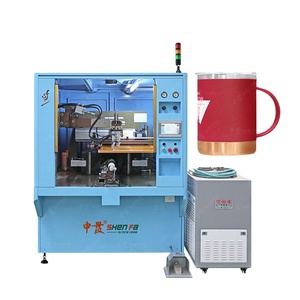
Versatile container printing machine configured with dual-pass registration and integrated item batch counting for beverage lines.
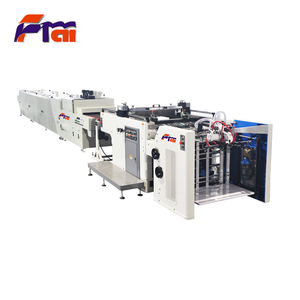
High-speed automatic reversible cylinder screen printing press designed for large-format sheet material and stack verification.
In modern manufacturing environments across Brazil—ranging from the dense industrial zones of Greater São Paulo (ABC Paulista, Campinas, Sorocaba) to the tax-exempt electronics hubs in the Polo Industrial de Manaus (PIM)—production throughput and inventory auditability depend on error-free item counting. A single miscount in a shipment of financial smartcards, pharmaceutical blister cards, or specialized industrial labels can lead to severe contract penalties, batch rejections by regulatory bodies like ANVISA (Agência Nacional de Vigilância Sanitária), or costly logistics rollbacks.
As a world-leading manufacturer and supplier of automated optical, laser, and mechanical batch counters, Spartanics engineers solutions specifically configured to solve the complex substrate handling challenges faced by Brazilian converters. Unlike generic proximity sensors or standard mechanical clickers, true industrial batch counting platforms incorporate multi-sensor fusion, optical edge-detection algorithms, and high-frequency pulse transducers capable of verifying up to 500 items in five seconds with 99.999% accuracy.
Determining the appropriate batch counter architecture requires evaluating substrate density, opacity, line velocity, and surface friction coefficients. Spartanics equipment categorizes batch counting into three primary technical methodologies:
Utilizes high-resolution area scan sensors to count stacked cards (PVC, PET, Polycarbonate) without unstacking. Essential for secure credit card and government ID manufacturing in compliance with BACEN standards.
Positioned along roll-to-roll conversion presses. Reads registration marks or substrate edges at linear velocities up to 100 m/min, triggering automated web knife cutters or batch marker flags.
Designed for thick corrugated, gasket, or rigid plastic sheets where physical contact actuation ensures zero false-positives caused by surface dust, static charge, or metallic foil reflection.
By eliminating double-feeds and static attraction between stacked sheets through integrated ionizing air knives and precision friction feeding rollers, Spartanics batch counters streamline production throughput while generating digital batch audit logs for enterprise resource planning (ERP) integration.
Brazil represents Latin America's largest industrial economy, driven by advanced consumer packaging, automotive electronics, pharmaceuticals, and agricultural technology. Spartanics batch counters and screen printing conversion lines are engineered to meet the stringent operational demands of these distinct sectors:
In the financial center of São Paulo, card production facilities producing Visa, Mastercard, and national banking cards (such as Elo) require 100% accurate stack counting prior to magnetic strip encoding, chip insertion, and secure vault dispatch. The Spartanics 680 Series Card Counter allows operators to place full trays of 500 cards onto an optical sensor platform, verifying quantity within ~5 seconds. This non-contact technique prevents scratch damage on sensitive metallic foils, holographic overlays, and contactless antenna layers.
Under ANVISA regulations, pharmaceutical packaging plants operating in the Campinas pharmaceutical corridor must maintain strict serialization and batch accounting for medical diagnostic cards, unit-dose foil packaging, and instructional inserts. Integrated Spartanics fiber-optic batch counters log every unit passing through high-speed silk screen and inspection lines, transmitting instant stop-signals to prevent over-pack or under-pack errors.
Factories operating in the Polo Industrial de Manaus manufacture complex electronic control panels, membrane switches, and flexible circuit boards (PCBs) for home appliances and automotive assemblies. Spartanics high-speed soft circuit board silk screen printing machines with optical registration and automated batch counters allow manufacturers in Manaus to run high-volume jobs with zero waste, compensating for web stretch and temperature-induced material shifts in real time.
Label converters in Santa Catarina and Rio Grande do Sul serving the wine, meat packaging, and agricultural chemical markets rely on continuous roll-to-roll batching systems. Coupled with Spartanics laser die cutting or screen printing heads, these batch counters enable rapid job changeover for versioned SKUs without stopping the main drive line—maximizing overall equipment effectiveness (OEE).
Importing and deploying industrial machinery in Brazil requires strict adherence to local regulatory standards, safety laws, and fiscal policies. Spartanics works hand-in-hand with Brazilian plant managers, system integrators, and procurement officers to deliver fully compliant machinery solutions.
Brazilian safety regulations under NR-12 mandate rigorous physical guarding, emergency stop circuits, redundancy relays, and ergonomic controls to protect machine operators. Spartanics designs all automated batch counters, roll-to-roll conversion systems, and flatbed screen presses with modular NR-12 compliance kits—including dual-channel safety PLCs, safety light curtains, interlocking physical barriers, and Portuguese-language HMI touchscreen interfaces.
Brazilian manufacturers are rapidly modernizing plant floors to embrace Industry 4.0 concepts. Spartanics batch counter systems feature native Ethernet/IP, Modbus/TCP, and OPC-UA communication protocols. This allows live production metrics—such as real-time batch counts, job throughput speeds, waste percentages, and maintenance diagnostic alerts—to be streamed directly to central Supervisory Control and Data Acquisition (SCADA) systems or cloud-based MES software.
Navigating Brazilian customs (Desembaraço Aduaneiro) and import tariffs (Tarifa Externa Comum - TEC) requires machinery suppliers to deliver durable, long-lifespan systems that minimize secondary spare parts taxation. Engineered and built in Rolling Meadows, Illinois, USA, Spartanics machines feature heavy-duty steel chassis, industrial-grade optics, and standard commercial electronics (Siemens, Schneider, Cognex) that are easily serviceable locally in Brazil, minimizing downtime and customs-related parts delays.
Founded in 1963, Spartanics has established a 60+ year track record of engineering innovation in high-speed material handling, optical registration shearing, digital laser converting, and automated batch counting. With thousands of machine installations in over 60 countries, our reputation is built on mechanical durability, optical precision, and absolute transparency.
Every batch counter and screen printing system is 100% assembled and factory run-tested with client materials before shipment to ensure immediate plug-and-play productivity upon arrival in Brazil.
Our internal mechanical, electrical, and software engineering departments customize feeder tracks, sensor heights, web widths, and signal outputs to match your exact factory workflow.
We coordinate directly with your freight forwarders and customs brokers in Santos, Paranaguá, or Manaus, providing comprehensive technical documentation for smooth customs clearance.