Direct from Export Suppliers: Industrial-Grade Flatbed, Roll-to-Roll, and Rotary Converting Machinery Configured for High-Throughput Seoul Production Lines.
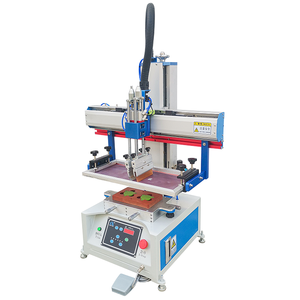
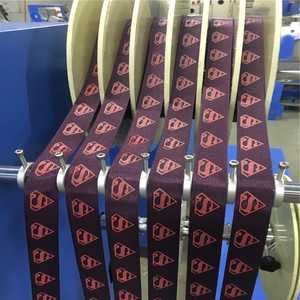
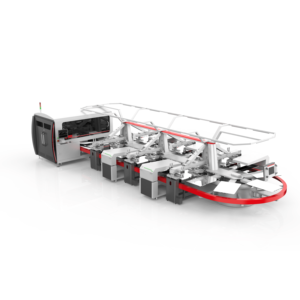
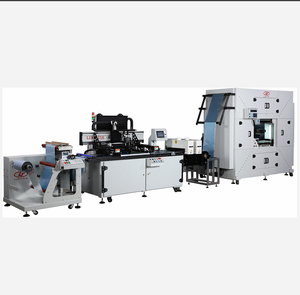
The Seoul Metropolitan Area—spanning key high-technology corridors such as Gasan Digital Complex, Pangyo Techno Valley, Seongsu Industrial Zone, and the semiconductor manufacturing ecosystems in Gyeonggi-do—demands uncompromising operational precision. Modern production lines across South Korea no longer tolerate manual sampling or legacy mechanical counting methods. In ultra-high-speed converting, smart card processing, pharmaceutical foil packaging, and flexible printed circuit board (FPCB) manufacturing, a single batching deviation can propagate massive financial penalties, brand damage, and regulatory compliance breaches.
As a premiere global exporter and technology leader rooted in over 60 years of US-built precision engineering (Spartanics heritage), our automated batch counting machinery, optical registration systems, and digital converting solutions are engineered specifically to integrate with Seoul's cutting-edge Smart Factory Initiatives (스마트공장 구축사업). Built to deliver sub-millisecond optical verification, high-speed card stack verification (e.g., verifying 500 plastic cards in under 5 seconds), and direct SECS/GEM interface capabilities, our systems bridge the gap between heavy-duty physical converting and real-time digital quality control.
In high-volume manufacturing environments throughout Seoul, batch counting is not merely a quantitative exercise; it is an integrated quality gate. Our exported batch counter equipment incorporates multi-tiered sensor arrays and servo-actuated gating systems designed for continuous operation at line speeds exceeding 300 meters per minute.
Utilizing laser spot sizes down to 0.004 in (0.1 mm), our optical batch counters scan individual sheet edges, micro-perforations, and registered print marks. Advanced edge-detection algorithms differentiate between actual product sheets and inter-leaf protective films, providing absolute accuracy even on ultra-thin 20-micron flexible printed circuits or high-end luxury packaging stock.
Once a target batch count (e.g., 50, 100, or 500 units) is registered by the optical processing unit, high-speed pneumatic tabs or servo-driven mechanical fingers insert index markers or trigger immediate line diverters. This prevents downstream bottlenecking and allows continuous downstream bundling, shrinking, or box loading without stopping the web or conveyor.
For financial institutions, government identity card issuers, and transit card producers (such as T-money card manufacturing facilities in the Greater Seoul area), inventory control requires secure, non-destructive batch verification. Our dedicated card counter machinery processes stacks of up to 500 PVC, polycarbonate, or ABS cards in approximately five seconds. Featuring a multilingual touchscreen UI tailored for Korean operators, the system logs batch history, flags double-cards or micro-scratches, and outputs encrypted batch manifest data directly to corporate ERPs via OPC-UA protocols.
Different manufacturing districts within the Capital Region present unique production challenges. Our batch counting and screen printing converting lines are engineered to solve specific operational pain points native to Korean industrial hubs:
In Seoul's high-tech digital complexes, high-security ISO 7810 smart cards, banking IC cards, and RFID tags are produced at scale. Our high-speed card counters and optical registration shears verify precise batch counts of laminated sheet layers before die-cutting, ensuring zero loss of embedded microchips and maintaining strict audit trails required by international card schemes.
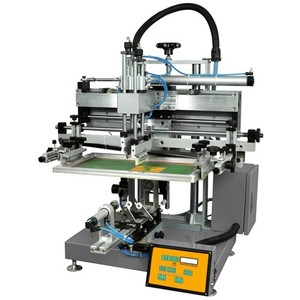
Facilities producing flexible printed circuit boards (FPCB) and optical films for smartphones and display panels require scratch-free handling. Our Automatic High-Speed Soft Circuit Board Screen Printers integrated with laser batch counters process delicate polyimide roll stock. The non-contact laser optical counters track pitch length and punch holes without touching sensitive silver paste or copper conductive layers.
The K-Beauty and pharmaceutical sectors rely heavily on anti-counterfeiting security labels, foil-stamped folding cartons, and serialized blister packs. Our roll-to-roll batch counters interface seamlessly with inline hot stamping and screen printing equipment, auto-rejecting defective print runs and counting verified batch units before final export shipment to North American and European markets.
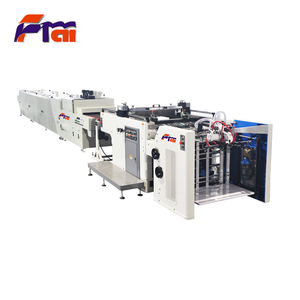
For large-scale printing houses running high-speed ribbon, satin tape, and pressure-sensitive label converting, our High Output Ribbon Screen Printing Machines with integrated electronic batching deliver rapid job changeovers. Operators save custom recipe settings, allowing batch count parameters to change automatically upon reading pre-printed barcodes on incoming rolls.
When evaluating batch counter equipment suppliers for Seoul industrial facilities, procurement engineers must evaluate precision, substrate compatibility, and digital integration. The matrix below illustrates how our advanced optical-laser batching platforms compare against traditional mechanical counters and entry-level sensor switches.
| Performance Metric | Spartanics Optical-Laser Batch Counter | Legacy Mechanical Contact Counters | Basic Infrared Sensor Switches |
|---|---|---|---|
| Verification Speed | Up to 500 items / 5 sec (Cards) | 350 m/min (Web) | Max 60-80 items / minute | Max 120-150 items / minute |
| Substrate Versatility | Transparent PET, PVC, Polycarbonate, FPCB, Foil, Paper | Opaque paper and rigid board only | Opaque stock only (Fails on clear/glossy materials) |
| Counting Error Rate | < 0.001% (Zero-Defect Edge Discrimination) | 1.5% - 3.0% (Mechanical wear & double feeding) | 0.5% - 1.2% (Web flutter & false reflection errors) |
| Surface Protection | 100% Non-Contact Laser Scanning | High Risk (Scratches optical films & metallic foils) | Non-Contact (Limited focus range) |
| Smart Factory Integration | OPC-UA, SECS/GEM, Modbus, Ethernet/IP, PLC Native | None (Manual mechanical reset) | Basic Pulse / Digital IO Output |
| Calibration & Setup | Automated recipe-driven thickness & edge auto-tune | Manual micrometer screw adjusting | Manual sensitivity potentiometer tuning |
As South Korea accelerates its transformation toward fully autonomous manufacturing (Industry 4.0), three major technology trends are shaping the adoption of batch counting and converting equipment across the Capital Region:
Korean electronics and packaging conglomerates require every piece of equipment on the floor to communicate telemetry data to central Manufacturing Execution Systems (MES). Our batch counters feature direct network logging, communicating part counts, line stoppage alerts, operational efficiency metrics (OEE), and sensor diagnostic status in real time to secure corporate networks.
With South Korea's heavy reliance on export trade, international buyers enforce strict quality standards. Delivering an under-counted batch of pharmaceutical labels or smart card blanks can trigger entire shipment rejections. Incorporating multi-sensor batch counters with integrated vision inspection ensures that 100% of exported products match exact bill-of-lading counts.
Consumer preferences in East Asia demand customized packaging, seasonal limited editions, and rapid product iterations. Modern print shops in Seongsu and Gasan can no longer afford 45-minute mechanical counter setup times between small production runs. Our recipe-driven digital interfaces allow machine operators to switch batch size configurations, laser registration marks, and stack heights in less than 30 seconds via touchscreen presets.
Selecting an equipment exporter for heavy industrial machinery requires confidence in long-term engineering reliability, spare parts support, and pre-shipment quality validation. Our manufacturing heritage is grounded in rigorous American engineering standards, backed by global field service capability.
We never ship equipment based on theoretical specs. Before your batch counter, screen printing press, or laser die-cutting line leaves our factory, we run your specific Korean-supplied substrate through our US demonstration facility. We record actual operational speed, cut edge quality, and counting accuracy—providing certified video logs and physical sample sheets for client approval prior to export dispatch.
Installed across more than 60 countries, our machinery is supported by factory-trained field engineers and direct remote diagnostic modules. In the rare event of a line anomaly, our engineers connect securely to your system in Seoul to adjust optical parameters, update firmware, or troubleshoot PLC logic—minimizing mean time to repair (MTTR).
Systems like our CS2100 digital converting lines and modular batch counters are designed to grow with your business. Start with a standalone optical batch counting conveyor today, and seamlessly integrate inline screen printing, hot foil stamping, roll slitting, or camera inspection modules as your order book expands in South Korea.
All exported batch counting equipment and screen printing systems can be configured to comply with international safety standards, including CE marks, UL control panel options, and KC (Korea Certification) compliance requirements, ensuring smooth installation and regulatory sign-off in Korean manufacturing facilities.
Connect directly with our senior application engineers. Submit your material specifications, targeted line speed, and batching requirements to receive a comprehensive technical proposal and pre-shipment testing plan.