The manufacturing landscape of Greater Boston and the broader New England region is experiencing a profound technological transformation. Known historically as a cradle of American precision machining and industrial innovation, today’s Boston enterprise zone—spanning the Route 128 tech corridor, Cambridge’s biotech hubs, and the manufacturing belts of Worcester and Southern New Hampshire—demands unprecedented print fidelity, material versatility, and web conversion speed.
Modern commercial printers, industrial converters, medical device fabricators, and high-tech electronics original equipment manufacturers (OEMs) in Boston are increasingly replacing traditional analog printing methodologies with hybrid digital inkjet printing equipment and advanced servo-driven screen printing systems. This shift is driven by five core economic and structural factors:
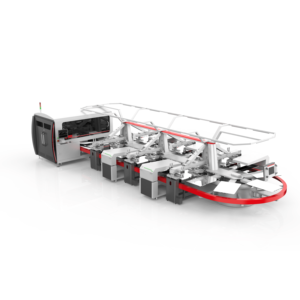
Unlike standardized commercial desktop printers or off-the-shelf import machinery, industrial digital inkjet printing systems deployed in Boston manufacturing facilities must combine piezoelectric drop-on-demand (DOD) printhead technology with high-precision web-handling tension controls. Achieving zero web distortion across thin films requires active closed-loop servo synchronization across all unwind, print, cure, and rewind zones.
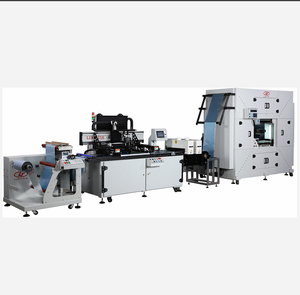
When searching for premier digital inkjet printing equipment manufacturers serving Boston, engineering managers must evaluate the core mechanics of the jetting engine and substrate transport mechanisms. Industrial inkjet units do not operate in isolation; they function as part of a integrated web-converting process that frequently incorporates screen printing, UV curing, optical shear inspection, and laser die-cutting modules.
Utilizes multi-level grayscale piezoelectric printheads capable of firing variable drop sizes from 2 to 12 picoliters. This enables sharp text, fine vector lines, and smooth tonal gradients on both porous paper stock and non-porous synthetic materials.
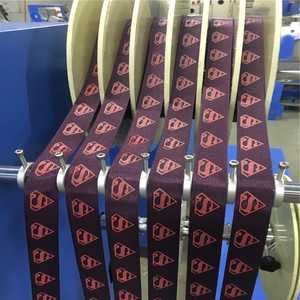
Combining industrial screen printing with digital inkjet engines allows for tactile varnish application, opaque white under-base layer deposition, and heavy conductive ink deposition for printed electronics and membrane switches.
Real-time CCD cameras read fiducial marks on pre-printed webs, dynamic auto-correcting print registration and downstream laser cutting paths to compensate for substrate thermal expansion or web stretch.
To assist Boston equipment buyers in making data-driven capital expenditure decisions, the following matrix outlines key operational parameters across primary printing and converting methods:
| Technology Platform | Primary Substrates | Min. Detail / Spot Size | Setup / Changeover Time | Best-Fit Economic Run Range |
|---|---|---|---|---|
| Industrial Digital Inkjet | PET, PVC, Paper, Polypropylene, Foil | 600 - 1200 DPI Native | < 3 Minutes (Digital File Upload) | Short to Medium (1 to 20,000 units) |
| Servo Screen Printing | Membrane Switches, Glass, Circuit Boards, Textiles | 0.08 mm Line Width | 15 - 30 Minutes (Screen Mesh Swap) | Medium to High (500 to 50,000 units) |
| Laser Die Cutting (CS2100) | Pressure-Sensitive Stock, Polycarbonate, Film | 0.004 in (0.1 mm) Laser Spot | Instant (Recipe Selection) | Zero-Tooling Variable Short/Medium Runs |
| Flexographic (Legacy) | Standard Paper & Film Roll Stock | 150 LPI Screen | 1 - 2 Hours (Plate & Ink Setup) | Ultra-High Run Volumes (> 100,000 units) |
The specialized industrial base in Boston and New England requires printing equipment capable of meeting rigorous localized operating environments. Below are real-world application workflows engineered for regional industry demand:
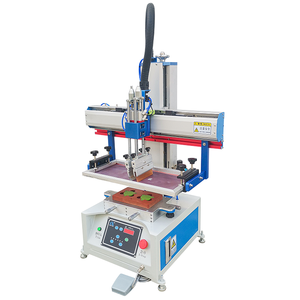
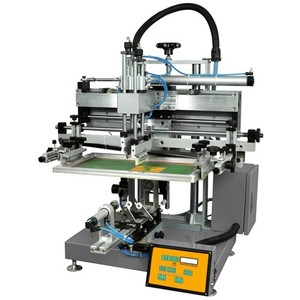
Boston’s world-renowned medical innovation corridor regularly utilizes specialized medical self-service printing machines and compact cylindrical screen printers. These machines apply solvent-resistant medical-grade inks to diagnostic cartridges, patient monitoring housings, and self-service hospital kiosk cards where legibility and chemical resistance are non-negotiable.
High-tech electronics OEMs along Route 128 utilize high-speed soft circuit board silk screen printing equipment to deposit silver and carbon conductive pastes onto flexible polyimide films. Paired with optical registration shears, these machines provide sub-micron accuracy necessary for advanced sensor manufacturing.
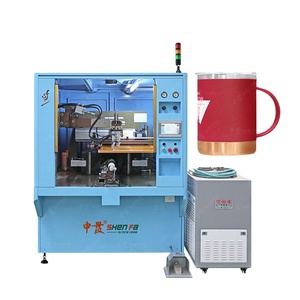
New England’s extensive regional craft brewery and artisanal beverage ecosystem relies on semi-automatic cylindrical screen printing machinery (such as the MSP-2030Q series) for direct-to-container 2-color bottle printing, eliminating single-use plastic pressure-sensitive labels in favor of durable screen-printed aesthetics.
For financial institutions and secure credential facilities in Greater Boston, high-speed card counters (like the Spartanics 680) count and verify stacks of up to 500 plastic cards in under 5 seconds, providing 100% audit accuracy for hot-stamped, laser-engraved, or digitally printed security cards.
When investing in capital equipment, Boston manufacturers require assurance of machine longevity, engineering support, and spare-parts availability. Building upon over six decades of American manufacturing excellence (headquartered in Rolling Meadows, Illinois), Spartanics engineering principles are embedded into every digital printing and converting platform we supply.
Every industrial digital inkjet printer, laser cutter, roll-to-roll converting line, and automated screen printing press undergoes rigorous factory acceptance testing (FAT). Client substrates are run-tested at full operational speeds in our US facility prior to final machine commissioning. This guarantees that registration tolerances, ink adhesion levels, and laser edge sealing meet exact customer engineering specifications before delivery to your Boston facility.
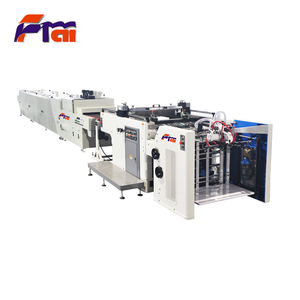
Our flagship platforms—including the XIPHOS Compact Laser System and the CS2100 Modular Digital Converting System—represent the pinnacle of integrated web finishing. Featuring seamless inline jetting, UV curing, optical registration shearing, and tool-free laser contouring, these platforms allow Boston converters to take jobs from digital artwork files to finished, slit, and counted products in a single automated pass.
Below are critical technical and operational questions frequently raised by Boston procurement managers, plant supervisors, and SEO growth engineers when evaluating digital inkjet and screen printing equipment:
Whether you are expanding medical device packaging production, implementing variable digital inkjet labeling, or automating flexible circuit screen printing, our senior applications engineers are ready to evaluate your material samples and supply a complete ROI assessment.
