
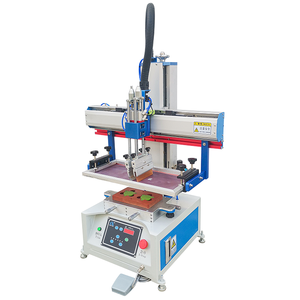
Pneumatic Servo Silk Screen Printing Flatbed Press
High-precision servo flatbed press designed for accurate layer deposition on battery casings, light switches, and electronic substrates.
Contact UsEngineered for micron-level edge registration, zero-tooling setup, and high-throughput production across Ho Chi Minh City, Bình Dương, and Đồng Nai industrial corridors.
High-precision servo flatbed press designed for accurate layer deposition on battery casings, light switches, and electronic substrates.
Contact Us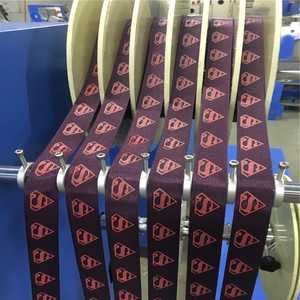
Continuous roll-to-roll multi-color printing platform with dynamic tension control for technical web and narrow-fabric graphics.
Contact Us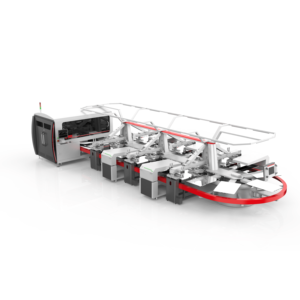
PLC-controlled heavy-duty oval printing machine engineered for high-speed continuous multi-color graphics production.
Contact Us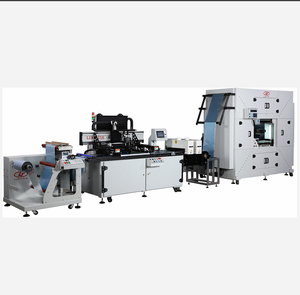
Ultra-precise optical mark alignment screen printer optimized for flexible printed circuit boards, labels, and fine-line conductive inks.
Contact Us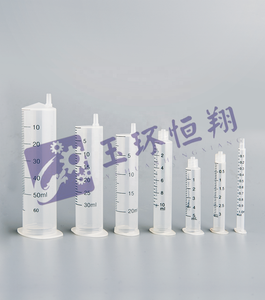
Automated precision printer designed for strict medical diagnostic test strip production and high-cleanroom compliance.
Contact Us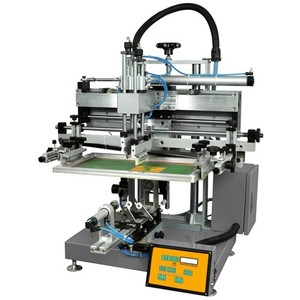
Compact precision printer tailored for 360-degree graphics application on cylindrical electronic housings, tubes, and containers.
Contact Us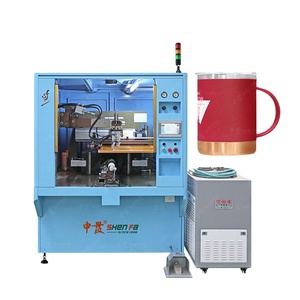
Dual-color registration printer equipped with optical indexers for accurate multi-pass printing on rigid substrates.
Contact Us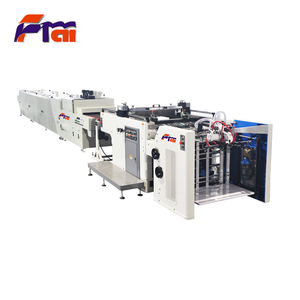
Industrial heavy-duty sheet-fed screen press featuring micro-registration controls for membrane overlays and technical graphic panels.
Contact UsAs Southern Vietnam establishes itself as a global semiconductor, consumer electronics, and automotive supply chain powerhouse, manufacturing plants operating in Ho Chi Minh City (HCMC), Saigon Hi-Tech Park (SHTP), Bình Dương (VSIP I, II, III), and Đồng Nai (Amata Industrial Park) face unprecedented demands for dimensional precision. Traditional mechanical stop-shears and conventional rotary dies are no longer sufficient when processing advanced substrates such as flexible printed circuit boards (FPC), membrane switches, optical diffusion films, micro-perforated labels, and Smart ID card stock.
High-precision optical registration shearing solves the fundamental challenge of substrate deformation. Polymer films, polycarbonates (PC), polyester (PET), and thin conductive laminates inevitably expand, contract, or warp during screen printing and thermal curing cycles. Static mechanical cutting dies fail to compensate for local pitch variations, resulting in edge misalignments, damaged conductive traces, and unacceptable scrap rates. Optical shearing systems integrate high-speed CCD sensor camera arrays and digital servo controls to detect fiducial target marks in real-time, executing dynamic angle and feed adjustments before every single cut cycle.
At the core of Spartanics optical registration shear technology—exemplified by legacy innovations like the M255 Optical Registration Shear—is an advanced closed-loop feedback mechanism. Rather than aligning material to a fixed mechanical edge guide, dual high-resolution optical sensors scan pre-printed crosshairs or artwork edge features. The motion control computer calculates X, Y, and angular (θ) drift in milliseconds, instructing twin-axis servo actuators to re-position the cutting blade relative to the actual printed image, rather than the physical web edge.
Automatically compensates for heat-induced sheet shrinkage occurring after screen printing curing cycles.
Specialized tool-steel shear blades cut clean edges on heavy polycarbonates up to 1.5mm without micro-cracking.
Eliminates expensive mechanical punch dies and eliminates lead-times associated with custom rotary tooling.
For plant engineering directors evaluating optical registration shearing equipment against alternative cutting technologies for Vietnam production lines:
| Performance Parameter | High Precision Optical Shear | Conventional Mechanical Shear | Rotary Die Cutter |
|---|---|---|---|
| Registration Accuracy | ±0.025 mm to ±0.05 mm | ±0.30 mm to ±0.50 mm | ±0.15 mm to ±0.25 mm |
| Setup Time per Job | 1 – 3 minutes (Digital File) | 15 – 30 minutes | 45 – 90 minutes (Die Change) |
| Material Shrinkage Handling | Active Sensor Compensation | None (Causes cumulative error) | Fixed pitch only |
| Tooling & Die Expenses | $0 USD (Resharpenable Blades) | $0 USD | $1,500 – $6,000 USD per die |
| Edge Quality on Hard Films | Polished, zero delamination | Rough edge / edge burr | Moderate crushing on PC |
The manufacturing sector in Ho Chi Minh City and its neighboring southern provinces is undergoing a rapid structural shift from labor-intensive assembly to high-value high-tech fabrication. Driven by strategic international investments from tier-1 electronics conglomerates in Tân Thuận Export Processing Zone, Củ Chi Industrial Park, and Kinh Bắc Industry City, local supplier ecosystems require equipment built to international precision metrics.
With Vietnam becoming a primary production node for wearable technology, mobile devices, and automotive sensor displays, local converting factories in HCMC handle ultra-thin copper-clad polyimide films (12.5µm to 50µm). High precision optical shears allow manufacturers to slice roll-printed flexible circuit sheets into individual strips with zero conductive burr and flawless target alignment.
National initiatives for chip-enabled ID cards, automated transit cards, and secure financial payment cards in Southeast Asia have triggered demand for precision card finishing equipment. Utilizing combined optical shearing and high-speed card counting technology (such as the Spartanics 680 Card Counter), HCMC facility managers achieve secure card counts of up to 500 cards per 5 seconds alongside scratch-free optical registration cutting.
Southern Vietnam’s tropical monsoon climate poses severe challenges for film stability. Relative humidity fluctuations between 60% and 90% lead to significant substrate expansion in un-conditioned plant environments. Optical registration shears automatically detect mark variations caused by humidity stretch, safeguarding print-to-cut alignment regardless of ambient weather shifts.
Backed by over 60 years of USA machine design excellence, our equipment platforms (including Spartanics laser die cutting systems, optical registration shears, roll-to-roll screen printers, and mechanical die presses) are built to endure continuous multi-shift operation in demanding factory settings.
Before any machine is dispatched to Vietnam, your exact substrates, inks, and registration parameters are tested at our facility to guarantee baseline throughput speed and accuracy.
Proprietary vision sensors detect contrast variations, metallic inks, transparent varnish marks, and faint laser-etched lines under difficult ambient lighting conditions.
Systems are designed for inline scalability—allowing easy integration of inline UV curing, rotary slitting, waste matrix removal, and automated sheet stacking modules.
Ultra-precise registration cutting of embossed tactile switch overlays used in control panels, medical devices, and industrial machinery.
Shearing multi-up printed PVC/PET card sheets down to exact strip widths prior to final card punching and optical verification.
Accurate trimming of printed thermoformed plastic films for seamless insertion into injection molding dies for automotive trim parts.
Cleanroom-ready micro-shearing of multi-layer reagent-coated lateral flow diagnostic test strips with zero particulate contamination.
Heavy-duty shearing of thick retro-reflective retro-sheeting and serialized identification labels with tough protective top-coats.
Our optical sensors read two or more fiducial marks on each sheet/panel before initiating the shearing blade stroke. The onboard motion controller calculates pitch shrinkage or stretch and dynamically corrects the sheet feed length and shear cut point, maintaining register accuracy down to ±0.025 mm.
We support operating units in over 60 countries. For clients in Ho Chi Minh City, Bình Dương, and Đồng Nai, we provide comprehensive remote diagnostics, full video commissioning, factory engineer visits, and rapid spare-parts dispatch from regional hubs to ensure minimal factory downtime.
Yes. The optical vision systems feature adjustable multi-spectral lighting modes (including polarized, infrared, and top/bottom illumination) allowing reliable mark detection on mirror-finish metallic foils, clear PET films, and dark carbon-ink traces.
Optical shearing requires zero custom die purchase costs ($0 die tooling overhead) and zero wait time for tooling fabrication. When job versioning changes, operators simply select a new cut recipe on the digital touchscreen interface, enabling instant job changeover within minutes.
Absolutely. We encourage prospective buyers from Vietnam to submit sample rolls or pre-printed sheets. Our application lab processes your material on actual production machinery, returning cut samples alongside HD video reports detailing cut quality and speed metrics.
Connect with our senior engineering team to request substrate sample testing, equipment spec sheets, or custom machine design quotes tailored to your plant footprint.
Contact Us