Explore our specialized industrial machinery engineered for label converters, textile processors, packaging manufacturers, and OEM application specialists throughout Portugal.
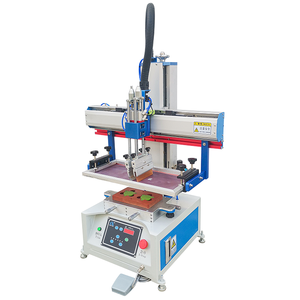
Engineered with high-precision servo drive registration and robust pneumatic squeegee controls. Ideal for industrial cylindrical, curved, and flat small-format substrate printing across automotive components, electrical lighter housings, and technical battery casings.
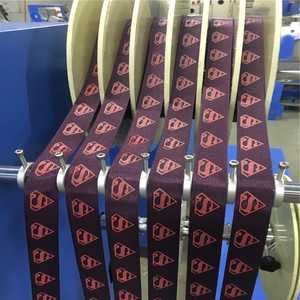
Designed specifically for Northern Portugal's apparel and textile clusters (Porto, Guimarães). Delivers continuous high-speed roll-to-roll multi-color screen printing onto satin, polyester, nylon, and care-label webbing with integrated IR/UV flash curing.
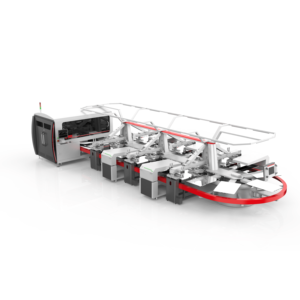
Heavy-duty industrial oval screen printing platform integrated with digital inkjet heads. Features modular stations, precision mechanical indexers, and advanced PLC control screens for high-volume garment decoration and cut-piece textile printing.
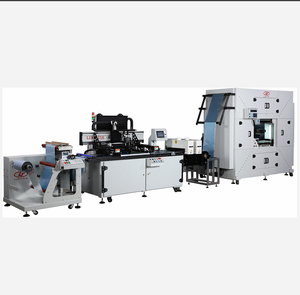
Ultra-precise roll-to-roll web screen printing press designed for high-density flexible printed circuits (FPC), membrane switches, and fine-line security labels. Features optical vision sensor alignment and constant tension roll control.
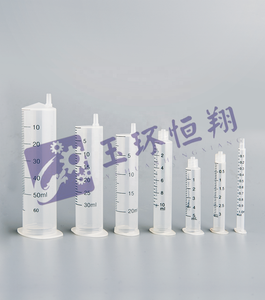
Automated, heavy-duty self-service document and specialized thermal label dispenser system for healthcare facilities, diagnostic centers, and hospital logistics. Built with industrial-grade mechanical components and touch-screen kiosks.
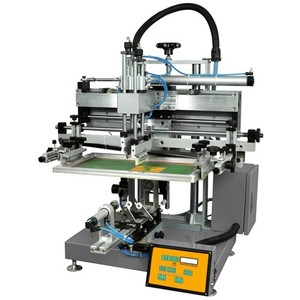
Compact benchtop serigraphic printer tailored for round containers, glass cosmetic bottles, artisanal olive oil containers, and small-batch cylindrical products. Quick mechanical setup with micro-adjustable frame positioning.
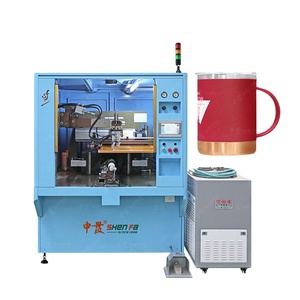
Two-color semi-automatic cylindrical printer with precise optical registration. Optimized for reusable drinkware, metal canisters, and beverage bottle decoration, maximizing throughput while minimizing manual loading cycles.
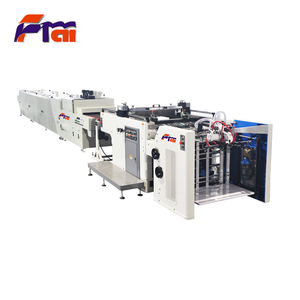
High-speed full-cylinder reversible automatic stop-cylinder screen printing press. Ideal for heavy varnish coatings, high-build tactile effects, metallic inks, and premium packaging labels requiring zero register drift.
The label converting and specialized printing market in Portugal has undergone a structural transformation over the past decade. Historically dominated by traditional flexographic and rotary offset presses designed for massive print runs, Portuguese converters are now navigating a fast-moving manufacturing landscape characterized by regional SKU proliferation, demands for anti-counterfeiting features, and stringent European Union environmental mandates. From the high-end wine packaging regions of the Douro Valley, Dão, and Alentejo to the intense industrial and textile manufacturing belts surrounding Porto, Guimarães, and Braga, converters require adaptive, high-precision converting machinery that minimizes material waste, eliminates tooling overheads, and delivers flawless surface finishing.
As a global pioneer in precision converting engineering—with an established lineage tracing back to Spartanics' founding in 1963 in Rolling Meadows, Illinois—our manufacturing operations engineer high-output digital label converting platforms, roll-to-roll laser die-cutting machinery, automatic serigraphic screen printers, and high-speed card counters. By directly exporting advanced machinery to the Portuguese market, we empower local factory operators to resolve key bottleneck challenges: reducing job setup times from hours to minutes, executing micro-perforations and kiss-cuts on multi-layer laminates, and applying tactile finishes that win consumer attention on competitive retail shelves.
Information Gain Metric: Transitioning from traditional rotary dies to tool-free digital laser die-cutting reduces job changeover scrap by up to 88% while saving average Portuguese converters €14,000 annually per line in physical die inventory and re-sharpening costs.
To maximize operational intent and provide tailored converting capabilities, our equipment portfolio addresses the specific mechanical and physical requirements of Portugal's key industrial sectors:
Portugal’s iconic wine exporters require premium, textured wine paper substrates, natural cork-laminated stocks, heavy foil stamping, and high-build tactile screen varnishes. Our FJ780 Automatic Stop-Cylinder Screen Printing Machine and modular digital finishing lines deliver pristine registration for spot-UV textures, anti-counterfeit micro-text, and brand-protection seals required by Vinho Verde and Douro DOC regulatory bodies.
Concentrated in Guimarães, Famalicão, and Porto, Portugal's world-class textile cluster demands high-speed, continuous multi-color roll-to-roll ribbon screen printing on polyester, satin, woven ribbon, and nylon care labels. Our specialized High Output Ribbon Screen Printing Machines feature exact pitch tracking, servo-driven squeegees, and inline infrared drying systems capable of handling stretchable ribbon materials without thermal distortion.
Biomedical manufacturers and healthcare logistics providers across Lisbon require uncompromised, sterile tracking label printing and automated document dispensing. Our Medical Self-Service Printing Systems and optical registration cut-off shears ensure zero-error serial identifier application, barcoding, and clinical trial sample labeling.
Supplying Europe's Tier-1 automotive integrators, electronics manufacturing plants in Portugal rely on our High-Speed Soft Circuit Board Screen Printers. These systems deposit conductive silver inks, dielectric overlays, and solder masks onto flexible printed circuits (FPC) and membrane switches with sub-micron repeatable precision.
As Portuguese converting facilities plan their capital equipment budgets for 2025 and beyond, four key technology macro-trends are driving decision-making across plant operations:
With upcoming European Union regulations mandating trace-to-source accountability for consumer products, labels are transforming from static graphics into interactive data carriers. Converters must print unique variable QR codes, 2D DataMatrix codes, and embedded RFID/NFC elements at high web speeds. Our digital inkjet conversion systems and roll-to-roll screen printers incorporate real-time vision verification systems that scan, validate, and index every unique code directly inline, preventing costly batch recalls.
The explosive growth of craft breweries, boutique olive oil estates in Alentejo, and regional cosmetic brands in Portugal has rendered traditional mechanical tooling cost-prohibitive for short-to-medium runs. Modern laser die-cutting technology utilizes focused CO2 or fiber laser beams with spot sizes down to 0.004 in (0.1 mm). This allows complex label contours, intricate lace cutouts, micro-perforations, and clean kiss-cuts to be executed directly from a vector graphics file without ordering expensive solid dies or waiting days for plate delivery.
Portuguese packaging converters face intense consumer pressure to migrate toward recyclable films, post-consumer recycled (PCR) papers, biodegradable polylactic acid (PLA), and linerless label structures. Thinner, eco-friendly films are notoriously sensitive to web tension variations and mechanical die strike depths. Servo-driven web handling combined with non-contact laser cutting completely eliminates mechanical substrate crushing, matrix snapping, and knife edge wear, allowing converters to process ultra-thin 12-micron PET liners effortlessly.
To assist plant management and procurement directors in selecting the optimal platform for their factory floor, the table below outlines the core operational performance indicators of available technology platforms:
| Feature / Capability | Digital Laser Die-Cutting | Rotary Mechanical Dies | Roll-to-Roll Screen Printing |
|---|---|---|---|
| Tooling Cost & NRE | €0 (100% Digital Vector File) | €300 – €2,500 per shape | Low (Mesh Screen Stencil) |
| Job Setup Time | Instant (File load in seconds) | 30 – 90 Minutes (Mechanical change) | 15 – 30 Minutes |
| Ideal Run Length | Short to Medium (1 – 50,000 meters) | Ultra-Long (100,000+ meters) | Medium to Long Repeat Runs |
| Special Application | Kiss-cut, variable shape, micro-perf | Standard geometrical shapes | Heavy ink deposits, tactile varnishes |
| Substrate Wear & Strike | Zero physical blade contact | Dulls over time; anvil wear | Squeegee blade wear over time |
Selecting an equipment exporter to partner with your Portuguese production unit requires evaluating long-term equipment reliability, spare parts responsiveness, and true technical competence. Building upon decades of industrial machine building experience, our enterprise offering provides distinct strategic advantages:
A: We regularly export heavy industrial machinery to major Portuguese maritime ports, including the Port of Leixões (serving Northern Portugal) and the Port of Sines / Port of Lisbon (serving Central and Southern regions). Machines are packed in export-grade, moisture-sealed, heavy-duty wooden crates designed for ocean freight. We provide complete shipping documentation, HS code classification, CE certificates of conformity, and works with your local freight forwarder to coordinate smooth door-to-door delivery directly to your factory floor.
A: Yes. Our flatbed roll-to-roll serigraphic presses and stop-cylinder printing machines feature micro-adjustable web tension systems and custom vacuum bed plates specifically designed to hold textured wine stocks, heavy cotton papers, and natural cork veneers flat during ink deposition. This prevents web buckling and guarantees pinpoint registration for heavy opaque white undercoats or tactile varnishes.
A: All equipment dispatched to Portugal and the broader European Union is standardly built with 400V 3-Phase power at 50Hz, with neutral and earth connections. Control circuits operate on safe 24V DC standards, utilizing premium international electrical components (such as Schneider Electric, Omron, and Siemens) that are readily available locally across Portuguese industrial electrical distributors for ease of routine maintenance.
A: With digital laser finishing, job changes take less than two minutes. The machine operator simply selects the next DXF or PDF die-line file on the intuitive touchscreen user interface, inputs the desired web speed and laser power recipe for the targeted substrate, and presses start. There are no physical magnetic cylinders to swap, no flexible die plates to mount, and zero manual mechanical adjustments required.
A: Yes. We offer comprehensive operator training packages. Upon machine arrival at your facility in Portugal, our field service engineers can provide on-site installation supervision, machine commissioning, and intensive operator training covering web setup, safety procedures, screen registration, maintenance schedules, and software navigation. Additionally, ongoing operator support is available via remote video assistance and multilingual documentation.
A: Absolutely. We strongly encourage pre-purchase substrate testing. You can supply your specific label stocks, ribbons, inks, or digital files to our laboratory. We will run your jobs, document the line speed (m/min), measure registration accuracy, and return the finished samples to your engineering team in Portugal along with a detailed technical feasibility report.
