High-precision roll-to-roll screen printing, toolless laser converting, and industrial flatbed press equipment engineered for optimum output.
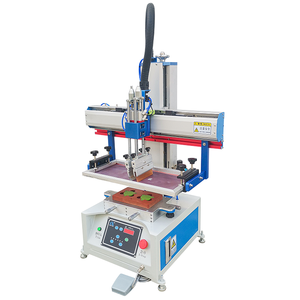
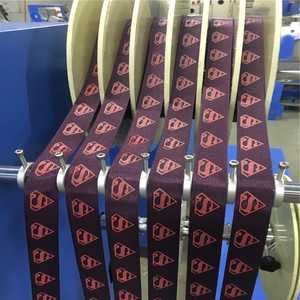
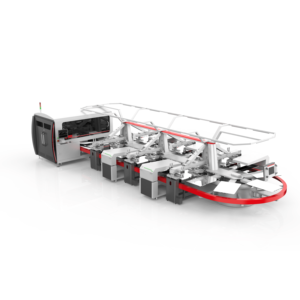
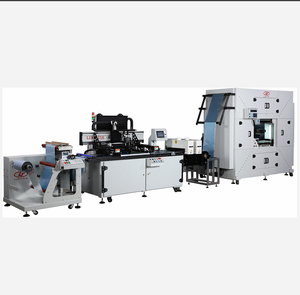
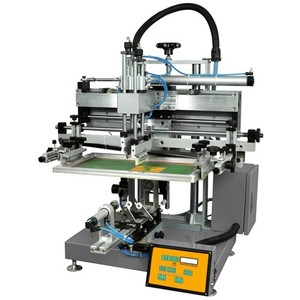
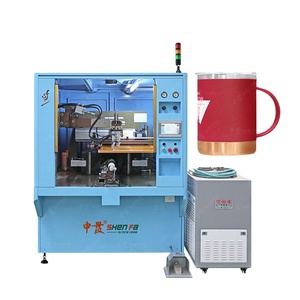
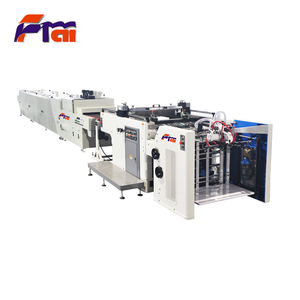
The label printing and flexible packaging sector in Bulgaria is experiencing a massive structural transition. Driven by the expansion of regional manufacturing hubs in Sofia, Plovdiv (Trakia Economic Zone), Varna, and Ruse, Bulgarian commercial printers and packaging converters face escalating demands for faster turnaround times, shorter run lengths, and hyper-customized labeling solutions. As Bulgaria solidifies its standing as an export power in Central and Eastern Europe (CEE)—especially in wine, cosmetics, pharmaceuticals, and industrial manufacturing—the need for advanced label finishing machinery has escalated from an operational luxury to a strategic necessity.
Historically, label conversion in Bulgaria relied on mechanical rotary die-cutting systems. While rotary tools excel at high-volume, static-design runs, they suffer from prohibitive tooling lead times, storage overhead, and setup waste. Today’s market dynamics demand direct integration with digital print workflows. Industrial label converters require toolless laser die-cutting systems, continuous roll-to-roll serigraphic (screen) printers, and multi-functional converting lines capable of handling complex substrates like PET, Polycarbonate, BOPP, self-adhesive papers, and micro-thin foils without thermal distortion or mechanical stress.
Information Gain Metric: Modern label converters in Bulgaria can reduce prepress setup time by up to 85% by transitioning short-to-medium runs from rotary flexible dies to digital laser die-cutting systems with software-driven optical camera registration.
Our company brings over six decades of U.S.-engineered precision machinery, supplying high-performance converting systems, high-output screen printers, optical shears, and digital label converting platforms (such as the CS2100 and XIPHOS architectures) engineered to operate seamlessly under European 400V 50Hz industrial standards and CE safety directives.
To assist Bulgarian print plant managers, purchasing directors, and operational engineers in making capital expenditure (CapEx) decisions, the table below provides a rigorous technical comparison between digital laser die-cutting and traditional mechanical rotary die-cutting.
| Performance Metric | Digital Laser Converting (e.g., CS2100 / XIPHOS) | Traditional Mechanical Rotary Dies |
|---|---|---|
| Tooling Cost & Lead Time | €0 tooling cost; Instant digital vector import (DXF/PDF) | €300 – €1,200 per SKU; 3 to 7 days courier lead time |
| Minimum Spot / Cut Radius | Down to 0.004 in (0.1 mm) focal spot size; ultra-intricate geometry | Limited by physical blade radius (> 0.5 mm) |
| Registration Accuracy | ± 0.05 mm using real-time vision optical camera tracking | ± 0.15 mm relying on mechanical web tension stability |
| Job Changeover Speed | Instantaneous recipe load via touchscreen PLC (< 2 minutes) | 15 to 45 minutes physical cylinder swap & manual calibration |
| Substrate Versatility | PET, PVC, PP, Paper, Polycarbonate, Abrasives, FPCs | Requires specific blade angles per material thickness/type |
| Edge Sealing Quality | Thermally sealed edges on synthetic polymers (prevents fraying) | Mechanical shearing action; potential edge fraying on film |
| Optimal Job Profile | Short-to-medium runs, variable data, multi-SKU versioning | Ultra-long continuous static runs (> 50,000 meters) |
As demonstrated above, while mechanical die-cutting maintains efficiency for ultra-high-volume static orders, digital laser cutting eliminates the financial friction of short-run SKU proliferation—a major trend across Bulgarian food, beverage, and personal care supply chains.
Bulgaria’s unique industrial mix presents specific label converting challenges. Our finishing machinery and screen printing systems are customized to serve four core domestic sectors:
Bulgaria’s historic winemaking regions export millions of bottles annually to Western Europe and North America. Premium wine labeling demands heavy tactile screen varnish, metallic foil stamping, and intricate contour kiss-cutting on textured paper stock. High-output flatbed screen printers integrated with precision laser cutters apply ultra-thick UV varnish for tactile relief effects without damaging delicate wine label facestocks.
As a global leader in Rose Oil and Lavender extract production, Bulgarian cosmetic packaging requires oil-resistant, synthetic film labels (BOPP/PET). Roll-to-roll screen printing equipment applies dense white undercoats and opaque glossy coatings, followed by precise laser perimeter kiss-cutting to guarantee 100% moisture and chemical resistance.
Pharmaceutical packaging compliance under EU Falsified Medicines Directive (FMD) mandates anti-tampering seals, variable serial numbers, and high-contrast Braille printing. Medical print systems and roll-to-roll screen printers deliver compliant tactile Braille dots alongside zero-defect micro-perforations for tamper-evident security labels.
Bulgaria’s booming automotive components supply chain manufactures membrane switches, flexible printed circuits (FPCs), and durable graphic overlays. Specialized soft circuit board screen printers apply conductive silver inks and dielectric layers with micro-registration tolerances, cut directly by industrial laser die-cutters.
Under the European Union’s Packaging and Packaging Waste Regulation (PPWR), Bulgarian manufacturers are under intense pressure to adopt fully recyclable packaging structures. This shift favors mono-material constructions (e.g., all-polyolefin laminates) and thin-gauge PET liners. Traditional mechanical die-cutting often struggles with ultra-thin liners due to blade strike risks. Laser converting platforms feature dynamic depth control, allowing continuous kiss-cutting through facestocks down to 12-micron film liners without scoring the backing matrix.
Print shops in Sofia, Plovdiv, and Varna face acute shortages of skilled press operators and die-set mechanics. Industrial label finishing platforms solve this bottleneck by storing job profiles digitally. With servo-driven registration, dynamic web tensioning, and auto-correcting camera vision, press startup times drop from hours to under two minutes, enabling single-operator management across multiple finishing lines.
Due to supply chain realignments, European brand owners are moving label procurement away from East Asia into Southeastern Europe. Bulgaria’s strategic location, competitive operational costs, and EU single-market access position local converters as prime regional suppliers. Utilizing high-speed digital finishing equipment enables Bulgarian packaging factories to fulfill regional orders within 48 to 72 hours.
Selecting an industrial label finishing supplier requires evaluated trust, robust build quality, and verified engineering execution. Our platforms are built on decades of manufacturing technology leadership:
Below are authoritative answers to key technical, logistical, and commercial queries raised by Bulgarian procurement teams and plant managers.
Eliminate die tooling delays, reduce material scrap, and capture high-margin short-to-medium packaging orders with our proven U.S.-engineered finishing machinery.
Contact Us