Explore our high-speed laser slitting, serigraphic screen printing, and automated flexible material handling systems built to maximize throughput and cut production costs.
Ethiopia is rapidly establishing itself as sub-Saharan Africa's premier industrial and manufacturing powerhouse. Driven by the government's Homegrown Economic Reform Agenda 2.0 and massive infrastructure investments in flagship developments—such as Bole Lemi, Hawassa, Kilinto, Adama, Kombolcha, and the Eastern Industrial Zone (Dukem)—local enterprise manufacturing capacity is shifting toward high-value domestic processing and export-grade production. However, traditional mechanical slitting and converted packaging methods face severe operational bottlenecks: expensive rotary die maintenance, lengthy setup lead times for small batch runs, high blade wear on abrasive synthetic films, and excessive material scrap rates.
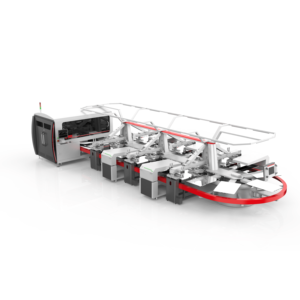
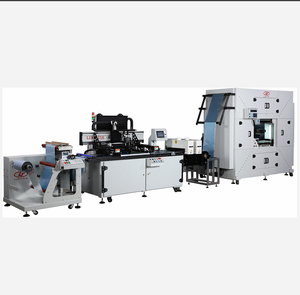
As a global pioneer in precision web converting, laser die-cutting, optical shearing, and industrial screen printing technology, our facility engineers state-of-the-art Roll-to-Roll (R2R) Laser Slitters specifically configured to solve the complex operational realities of East African manufacturers. By eliminating physical dies and mechanical shear blades entirely, our laser slitting systems enable local converters to process BOPP, PET, Polycarbonate, woven apparel labels, aluminum foils, and flexible medical barrier films with zero tool wear, sub-millimeter edge sealed quality, and digital recipe changeovers completed in seconds.
Mechanical rotary dies require ongoing sharpening, expensive overseas freight, and storage facilities. Laser slitting replaces physical tooling with high-speed galvanometer-driven CO2 or Fiber laser beams. Change cut shapes, perforations, and slit widths directly from digital Vector/CAD files without spending a single Birr on die procurement.
Industrial power grids in East Africa often experience line voltage fluctuations and thermal shifts. Our machinery incorporates heavy-duty Automatic Voltage Regulators (AVR), climate-controlled IP54 electrical enclosures, sealed optical galvo heads, and high-efficiency water chillers engineered to run 24/7 in ambient temperatures up to 45°C.
Understanding the fundamental economic and physics-based advantages of laser slitting technology is essential for factory directors and procurement boards across Ethiopian industrial sectors. Below is an engineering comparison matrix detailing how non-contact optical slitting compares with conventional razor and shear slitting methods:
| Performance Feature | Traditional Mechanical Slitter | Spartanics Laser Slitting System | Ethiopia Market Impact |
|---|---|---|---|
| Tooling & Blade Costs | High; physical blades degrade rapidly on tough films. | Zero physical wear; digital software control. | Eliminates foreign currency (Forex) expenditure on replacement blades. |
| Edge Finish Quality | Prone to burrs, micro-cracks, dust generation, and fraying. | Sealed edge finish; laser fuses thermal synthetics. | Prevents edge tearing on high-speed automatic packaging lines in Hawassa. |
| Setup / Changeover Time | 45 to 120 minutes manual mechanical positioning. | Instant digital load (< 60 seconds via PLC). | Allows Ethiopian converters to profitably handle short-run custom SKUs. |
| Minimum Slit Width | Limited to 10mm-15mm due to blade holder width. | Ultra-narrow micro-slitting down to 1.5mm. | Unlocks technical applications for garment tags, security tapes, and pharma ribbons. |
| Web Speed & Tension Control | Mechanical friction induces web stretch & breakage. | Closed-loop magnetic servo tension control. | Prevents distortion on delicate 12-micron BOPP and thin PE food films. |
Our machinery is designed to address the operational demands of key industrial sectors operating within Ethiopian Investment Commission (EIC) zones:
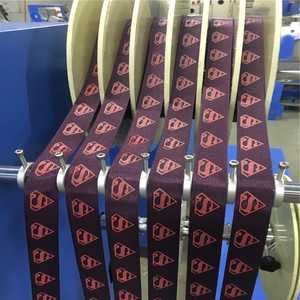
High-volume processing of woven satin ribbons, polyester care labels, and heat-transfer films. The laser slitting process automatically heat-seals synthetic edges, preventing thread fraying without chemical edge treatment.
Continuous roll-to-roll micro-perforation and high-speed slitting of flexible laminate films (BOPP/PE), shrink sleeves for bottled spring water, and soft drink label stock with zero edge distortion.
Non-contact, dust-free cleanroom-compatible slitting of medical-grade blister foil, Tyvek barrier wraps, and self-service medical print media, eliminating particulate contamination.
Micro-die cutting and precision slitting of flexible printed circuit boards (FPCB), membrane switch overlays, conductive copper tapes, and insulation films for assembly plants.
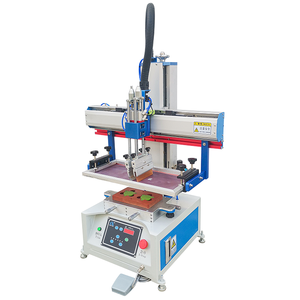
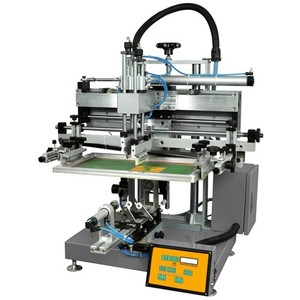
Pneumatic silk screen and cylindrical screen printing platforms engineered for direct printing onto battery casings, lighter bodies, and plastic containers with high ink adhesion.
Automated card punching, optical shearing, and high-speed counting machines capable of verifying up to 500 plastic SIM cards or ID cards in under 5 seconds for secure production environments.
With over six decades of engineering legacy rooted in precision converting, laser optics, and automated material handling, our facility provides more than just machinery—we deliver complete, turnkey manufacturing capability. Every system is designed, assembled, and rigorously tested at our main facility before dispatch. We perform strict pre-shipment substrate validation, processing your exact local material samples on our equipment to verify speed, cut quality, edge seal integrity, and tension control performance before shipping to Djibouti Port.
Ethiopian buyers can ship local film, foil, or paper stock directly to our application engineering laboratory. We generate complete video runs, optical microscope edge inspection reports, and cycle-time data before machine assembly finalization.
We are fully experienced in navigating Ethiopian Investment Commission (EIC) duty-free capital equipment import incentive documentation, as well as National Bank of Ethiopia (NBE) Letter of Credit (L/C) compliance requirements.