
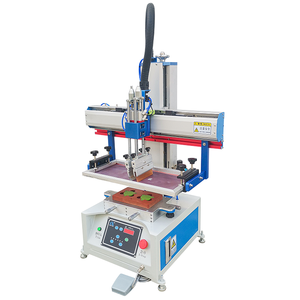
High-throughput OEM/ODM systems optimized for PVC, PETG, polycarbonate smart cards, flexible circuits, and industrial substrates in Melbourne.
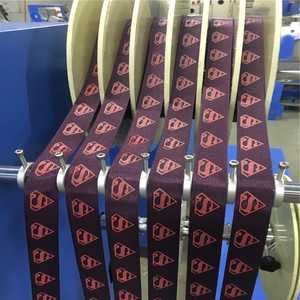
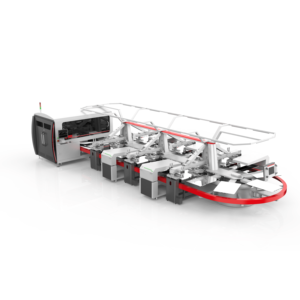
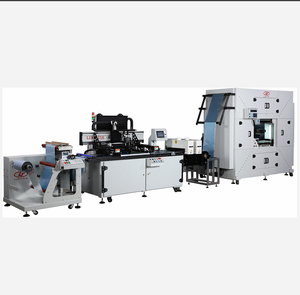
The Australian manufacturing landscape—specifically within Melbourne and the greater Victorian industrial hubs of Dandenong, Campbellfield, and Port Melbourne—is undergoing a profound transformation. As demand surges for smart transit cards (such as next-generation contactless ticketing), secure government access credentials, regional healthcare identification, and high-end commercial membership cards, local converters require manufacturing partners that deliver uncompromising precision, structural durability, and energy-efficient press automation.
As a globally established OEM/ODM card press manufacturer with over six decades of precision machine-building heritage, our systems combine heavy-duty mechanical rigidity with advanced servo-hydraulic controls, multi-zone thermal management, and camera-based optical registration systems. Whether your facility produces traditional multi-layer PVC financial cards, eco-friendly bio-PETG credentials, or embedded RFID/NFC smart cards, our customized card press machinery guarantees complete cross-layer bond integrity, perfect platen parallelism, and zero-defect edge finishing.
Information Gain Insight: Modern card lamination and press operations in Victoria must comply with stringent Australian Electrical Safety Regulations (RCM) and AS/NZS standards while achieving thermal dissipation management to prevent microchip degradation in dual-interface RFID smart cards.
Standard off-the-shelf presses often suffer from uneven pressure distribution, thermal hysteresis, and registration drift during continuous multi-shift production runs. Our OEM and ODM card press architectures are engineered specifically to eliminate these operational vulnerabilities through four core pillars:
Utilizes independent PID heating elements and proportional hydraulic valves, guaranteeing uniform pressure (up to 300 Bar) and temperature distribution (±1.5°C) across all platen surfaces to prevent warpage.
Integrated camera vision sensors continuously track printed fiducial marks on sheets prior to punching or lamination, automatically adjusting for web stretch and thermal movement down to ±0.015 mm.
Incorporate specialized Spartanics optical technology to count, verify, and batch up to 500 plastic cards in approximately five seconds without edge scuffing or surface contamination.
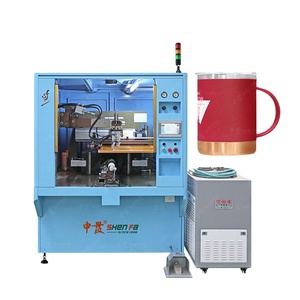
Melbourne’s manufacturing market presents unique requirements driven by local government standards, environmental directives, and strict commercial SLA agreements. Our card pressing and screen printing machines are deployed across diverse local application domains:
With public transit infrastructure expanding throughout Metropolitan Melbourne and regional Victoria, converters require laminated card structures that integrate ultra-thin copper wire antenna coils and RFID microchips. Our hot/cold multi-daylight hydraulic presses apply calibrated pressure profiles, ensuring thermal bonding without thermal stress damage to delicate silicon chips.
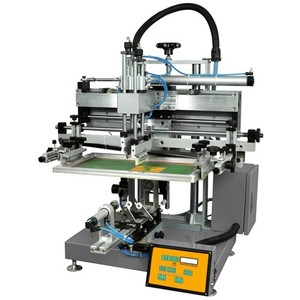
Victorian healthcare providers and medical device OEMs rely on self-service patient kiosks, diagnostic test strips, and secure medical identity cards. The featured Medical Self-service Printing Machine and precision flatbed serigraphic presses enable high-density conductive ink deposition and sterile laminate sealing on polycarbonate substrates.
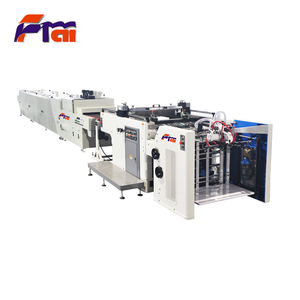
Melbourne's commercial hospitality and financial technology sectors demand anti-counterfeiting features including tactile micro-embossing, optical variable ink (OVI) screen printing, and localized hologram hot stamping. Our modular press lines integrate screen printing, UV curing, and registration shearing into unified inline workflows.
For industrial operations in the Dandenong manufacturing precinct, our high-speed soft circuit screen printing presses deliver high-precision layer registration for flexible printed circuits, membrane switch panels, and heavy-duty automotive graphics exposed to harsh environmental conditions.
Choosing the right card press technology directly impacts your operational yield, scrap rate, and ROI. Below is an engineering comparison of press configurations serving the Melbourne industrial sector:
| Performance Parameter | Spartanics OEM Custom Press | Standard ODM Press Unit | Legacy Hydraulic Press |
|---|---|---|---|
| Platen Parallelism Tolerance | ±0.010 mm across 800x600mm | ±0.035 mm | ±0.080 mm |
| Thermal Distribution Control | Multi-zone PID (±1.0°C precision) | Dual-zone (±3.5°C) | Single-zone thermal drift |
| Registration System | Optical Camera Vision (±0.015mm) | Mechanical Pin Alignment | Manual Edge Stops |
| Card Counting & Sorting | Integrated (500 cards / 5 sec) | Separate Manual Table | Manual Hand Counting |
| Energy Efficiency (Eco-Mode) | Servo-Hydraulic (Up to 45% saving) | Standard Induction Motor | Continuous Run Pump |
| Compliance & Remote Support | AS/NZS, RCM, 24/7 Remote Diagnostics | Standard CE | No Remote Connectivity |
Victoria's commitment to circular economy principles and reduced carbon emissions has initiated a major shift away from traditional virgin PVC toward sustainable substrates including Recycled PETG (rPETG), Bio-sourced PLA, and composite wood-paper fibers. Pressing these eco-substrates requires fundamentally different temperature curves and pressure gradients to avoid delamination and brittleness.
Our OEM/ODM press engineering teams have developed proprietary recipe management software integrated into PLC touchscreen HMIs. Operators can instantly select pre-validated thermal cycles optimized for rPETG or Polycarbonate, eliminating trial-and-error scrap during job setup. Furthermore, full telemetry logging allows Melbourne plant managers to audit energy consumption per card batch, supporting corporate ESG compliance targets.
For more than 60 years, Spartanics has engineered cutting, counting, printing, and converting systems installed across 60+ countries. Our commitment to build quality and practical technical validation sets us apart from commodity suppliers:
Before any press or screen printing machine leaves our factory floor, your specific Victorian client substrate is processed under real production speeds to prove bond strength, registration tolerances, and cycle times.
We do not force rigid machine designs onto flexible operational workflows. Modules for magnetic stripe encoding, hot foil stamping, micro-laser cutouts, or inline vision inspection can be seamlessly integrated.
Melbourne clients receive direct assistance from factory-trained engineers, rapid-dispatch spare parts logistics, and real-time remote telemetry diagnostics for zero extended downtime.
Technical and logistical insights for plant managers, print directors, and procurement leads in Victoria.
All machinery supplied to the Melbourne market is built to satisfy Australian Electrical Safety Regulations and RCM (Regulatory Compliance Mark) guidelines, incorporating AS/NZS 3000 wiring compliance, dual-channel emergency stop safety circuits, and interlocked guarding systems.
Our engineering team works directly from your CAD drawings or material specifications. We design custom platen layouts, specialized vacuum feeding trays, and tailored hydraulic pressure curves whether you are pressing standard CR80 cards, oversize municipal badges, flexible electronics, or ultra-thin medical test strips.
Yes. Our modular platform architecture allows roll-to-roll or sheet-fed screen printing units (such as the FJ780 or roll-to-roll ribbon printers) to connect directly with optical registration shears, hot stamping presses, or high-precision laser converting modules in one unified servo-driven line.
Standard press builds typically require 6 to 10 weeks including full material validation run-testing at our factory. Equipment is sea-freighted via sea-container directly to Port Melbourne or air-freighted to Melbourne Airport (Tullamarine) with complete export crating, insurance, and local customs documentation support.
Servo-hydraulic drives provide programmable dwell times and proportional pressure profiles essential for multi-layer lamination of smart cards with microchips. Purely mechanical toggle presses deliver impact force at full speed, which can crack fragile silicon dies or disrupt internal antenna positioning.
Contact our senior engineering team today to review your substrate specifications, calculate throughput metrics, or request full technical machinery catalogs for your plant.
Get Catalog