Engineered for OEM/ODM Integration in German Polycarbonate ID & Driver's License Lines
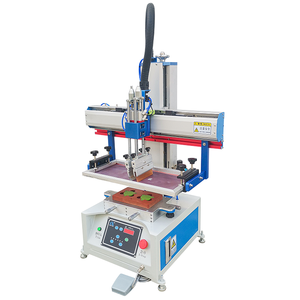
High-repeatability serigraphic printer designed for applying Optically Variable Ink (OVI) and UV security varnish onto card sheets prior to lamination.
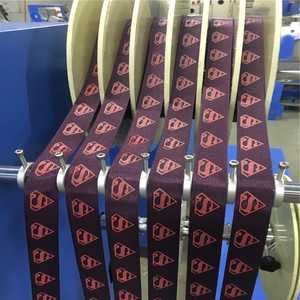
Automatic multi-color reel printing system engineered for continuous security web substrates, holographic foils, and synthetic ribbon overlays.
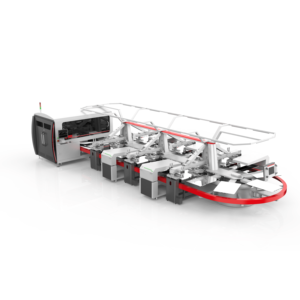
PLC-controlled multi-station printing module supporting high-density tactile micro-text layers and security coating depositions.
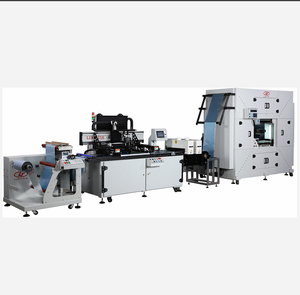
Sub-micron registration screen printer designed for printed electronics, RFID antenna printing, and flexible circuit layer deposition in smart ID-1 cards.
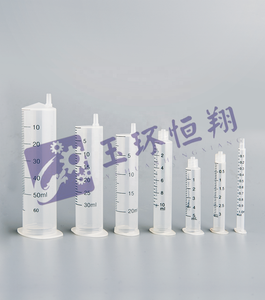
OEM integrated printing and verification hardware module tailored for biometric registration, local government authority desks, and secure ID issuance.
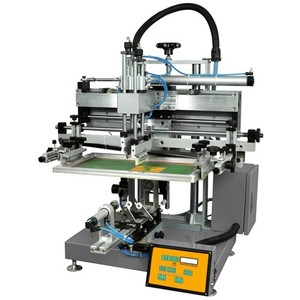
Compact high-precision serigraphic press ideal for security ink testing, OEM proofing, and low-volume specialized driver license card features.
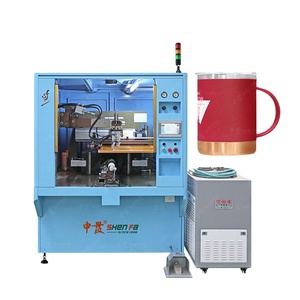
High-rigidity flatbed press featuring dual-pass register control for applying multi-layer micro-patterns onto clear polycarbonate sheets.
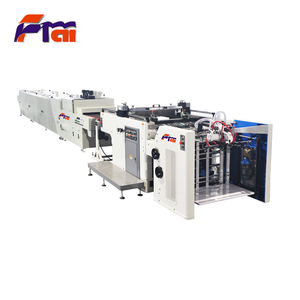
Heavy-duty cylinder screen press integrated with high-precision optical registration for automated driver's license substrate converting.
Why German Identity & Transport Authorities Demand Sub-Millisecond Thru-Beam Verification
Manufacturing official identity documents—specifically the European Union standardized driver’s license (Führerschein) in compliance with ISO/IEC 7810 ID-1 standard (85.60 × 53.98 mm) and ISO/IEC 18013—requires non-negotiable precision. High-security polycarbonate (PC) card stacks feature laser-engraved variable data, tactile relief structures, embedded RFID transponders, and delicate optically variable elements (OVI, MLI/CLI lenses). Conventional mechanical friction counters present a severe vulnerability: physical friction rollers risk micro-scratching security clear-coat layers or distorting surface lens arrays, resulting in costly batch rejections during federal audit compliance.
Our flagship Spartanics 680-Series Optical Card Counter and customized OEM counting engines bypass physical contact entirely. Utilizing advanced optical thru-beam sensor arrays coupled with high-frequency line-scan vision software, the system scans stack profiles at up to 100 Hz line resolution. Whether handling transparent polycarbonate layers, glossy PVC, ABS, or coated paper test stocks, the machine verifies 500 cards in under five seconds with zero surface friction.
| Performance Parameter | Spartanics Optical Thru-Beam Technology | Traditional Mechanical Friction Counters | German Federal Standard Alignment |
|---|---|---|---|
| Counting Velocity | 500 cards / 4.8 to 5.2 seconds | 500 cards / 18.0 to 25.0 seconds | High-throughput batch verification ready |
| Surface Contact Friction | Zero Contact (Optical Profile Analysis) | High Friction (Rubber Feed Belts/Rollers) | Mandatory for pristine Polycarbonate (PC) layers |
| Substrate Compatibility | Polycarbonate, PVC, PETG, ABS, Transparent PC | Opaque PVC / Paper cards only | Supports ISO/IEC 18013 multi-layer smart cards |
| Tactile Surface Handling | Adaptive Edge Detection (Disregards Relief) | Prone to jam on embossed/laser engraved text | Compatible with German tactile laser signatures |
| Thickness Variance Margin | 0.20 mm to 1.50 mm (Auto-calibrating) | Fixed tolerance (±0.05 mm required) | Handles Variable PC layer combinations seamlessly |
| Audit Trail Integration | Real-time OPC UA / Ethernet XML Output | Standalone mechanical LED display | Fully compliant with DSGVO / Industry 4.0 standards |
Seamless Deployment in High-Security Print Facilities from North Rhine-Westphalia to Bavaria
Integration directly into high-security production halls supplying components for municipal authorities (Bürgerämter). Our OEM counting modules verify card blanks post-lamination with complete inventory tracking, preventing unauthorized card retention or loss during audit shifts.
Application of micro-optics, UV-fluorescent ghost images, and Optically Variable Inks (OVI) onto raw Polycarbonate (PC) sheets. Spartanics flatbed screen printing machinery ensures precise deposition required for German driver's license safety features.
High-volume processing of commercial driver tachograph cards and driver qualification cards (Fahrerqualifizierungsnachweis - FQN) in compliance with Kraftfahrt-Bundesamt (KBA) guidelines, requiring 100% chip-to-surface optical count alignment.
Seamless operational placement in industrial regions like Stuttgart, Munich, and Dresden where contract manufacturers demand reliable, high-speed card count verification before automated packaging and dispatch to logistics partners.
Preparing German Card Manufacturers for Next-Generation Security Requirements
German secure document guidelines have largely phased out composite PVC/PET constructions in favor of full 100% Polycarbonate monolithic layers. PC sheets fuse seamlessly under heat and pressure, making manual layer separation impossible. However, unlaminated raw PC layers carry strong static charges and variable clear margins. Spartanics optical counting sensors incorporate static-neutralizing ion bars and multi-wavelength optical sensors to accurately count ultra-clear PC overlays without miscounting static-clustered sheets.
Even as the EU rolls out digital driver's licenses via smartphone wallets under eIDAS 2.0, the physical card remains the primary fallback credential across federal border checks and traffic stops. German security converters are incorporating hybrid physical features—such as microscopic CLI (Changeable Laser Image) windows and tactile laser engraving—demanding card counters that automatically adjust focus parameters dynamically based on batch ID profiles.
Data protection regulations in Germany extend beyond software to physical security printing plants. Any discrepancy between produced card blanks and destroyed scrap triggers an immediate security lockdown. Spartanics counting units feature built-in ethernet interfaces, continuous CSV audit trail logging, operator RFID login locks, and direct database handshake protocols to maintain total chain-of-custody compliance.
German industrial plants lead in factory automation. Our OEM card counters and registration screen printers are supplied with PLC-driven communication suites (OPC UA, Modbus TCP) allowing German plant directors to remotely monitor machine health, feed rates, yield figures, and maintenance cycles straight from centralized MES dashboards.
Originally established in Rolling Meadows, Illinois, USA, Spartanics has accumulated over six decades of pioneering expertise in laser die-cutting, optical registration shearing, high-speed card counting, and precision serigraphic press manufacturing. Installed in over 60 countries worldwide, our equipment represents the global benchmark for secure document finishing.
When serving OEM/ODM clients in Germany, we understand that standard off-the-shelf equipment rarely satisfies specialized production lines. We partner directly with system integrators, secure print works, and automation vendors to customize mechanical footprints, sensor spectral ranges, pneumatic stack feed hoppers, and software control logic.
Technical Clarifications for Card Production Line Engineers & Quality Directors
Traditional optical counters fail when reading clear substrates because light passes through adjacent transparent edges without reflection. Spartanics optical counting engines utilize specialized narrow-band infrared thru-beam sensors coupled with high-contrast edge-refraction lens geometry. This setup isolates the refractive index boundary at the edge of each individual sheet, allowing accurate verification of 100% transparent PC card sheets, frosted overlays, and clear smart card windows down to 0.10 mm layer thickness.
Yes. German ISO/IEC 18013 driver's licenses feature raised tactile signature fields, birthdates, and micro-embossed features that alter stack physical height profile. Our software employs an adaptive dynamic envelope filtering algorithm. Rather than relying on rigid height increments, the vision system analyzes the macro pitch pattern of the stack array, effectively ignoring localized micro-relief spikes caused by tactile laser engraving or embedded chip bumps.
We supply modular card counting engines both as standalone desktop units (e.g., Spartanics Model 680) and as drop-in OEM counting sub-assemblies for larger automated lamination and punching lines. OEM integration services include customized mounting brackets, custom PLC protocol bridges (Profinet, EtherNet/IP), automated pneumatic drop-bottom stack hoppers, integrated barcode/QR reading cameras for sequential serial matching, and high-speed bad-card reject gates.
Spartanics equipment is equipped with industrial PC controllers running standardized Windows/Linux-based IPC architectures. Count data, job timestamp IDs, machine operator logins, batch pass/fail metrics, and stack vision images are automatically serialized and pushed via Ethernet TCP/IP, OPC UA, or automated CSV/XML file transfer to your central database (SAP, Siemens MindSphere, or proprietary MES solutions).
Because Spartanics card counters rely on non-contact optical sensing rather than high-wear mechanical belts, routine mechanical wear is minimized. In 24/7 production settings, routine maintenance consists of cleaning optical glass lenses with isopropyl alcohol once per shift to eliminate ambient polycarbonate dust, alongside a comprehensive quarterly inspection of pneumatic guide bearings and alignment calibration checks. Spare parts kits are stocked regionally in Europe for rapid next-day dispatch.
Partner with a worldwide leader in high-precision card counting, laser converting, and security screen printing machinery. Request our detailed engineering specs or arrange a material testing trial today.
Get Catalog