Explore our flagship series of heavy-duty, optical-registration, pneumatic, and servo-driven screen printing systems optimized for US industrial converters.
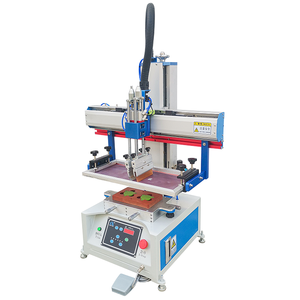
Designed for precise flatbed printing on cylindrical and flat battery casings, lighters, and compact hardware, featuring pneumatic micro-adjustments.
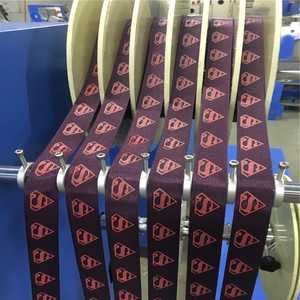
Continuous multi-color roll-to-roll printing line engineered for satin, nylon, polyester webbings, elastic bands, and industrial textile tapes.
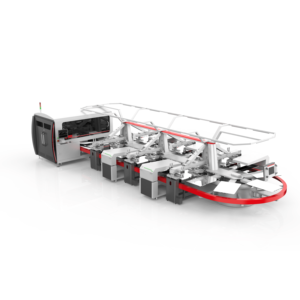
High-speed modular oval printing press integrating digital hybrid units, PLC central controls, and dynamic flash curing stations for garments.
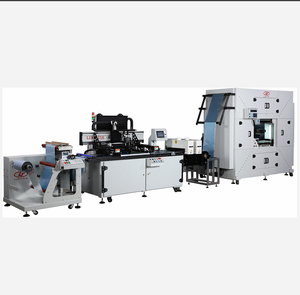
Micro-registration printing press tailored for flexible printed circuit boards (FPC), membrane switches, RFID tags, and high-end label film stock.
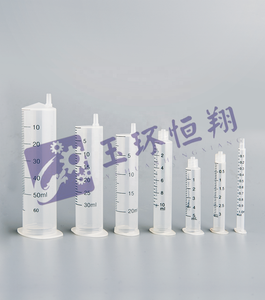
Precision-engineered screen printing system designed for healthcare diagnostics, medical sensor strip coating, and specialized kiosk components.
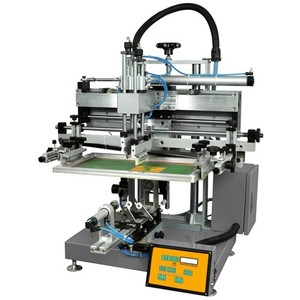
Compact benchtop serigraphic printer built for short-run curved surfaces, mugs, tumblers, tubes, and cylindrical industrial components.
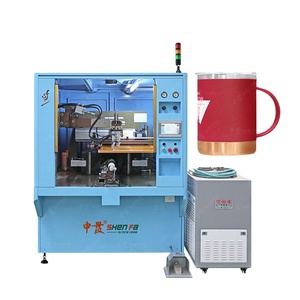
Dual-color indexer screen printing machine optimized for drinkware, sports bottles, cosmetic containers, and rigid plastic packaging.
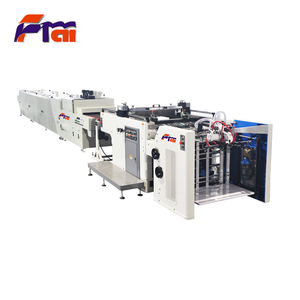
Industrial-grade automatic cylinder screen printing press featuring reversible pass technology for high-volume transfer paper, packaging, and decals.
The manufacturing landscape across the United States is undergoing a profound structural pivot toward high-precision, low-waste, and automated industrial converting technologies. As American manufacturers in sectors such as medical diagnostic devices, automotive instrumentation, flexible printed electronics (FPE), and premium packaging adapt to stringent labor constraints and skyrocketing material costs, the demand for high-performance screen printing machinery has evolved from basic graphic deposition to ultra-precise, servo-controlled coating and printing. According to recent North American industrial automation benchmarks, converting facilities utilizing camera-aligned registration and closed-loop ink viscosity management have experienced up to a 34% reduction in scrap rates and a 42% increase in overall equipment effectiveness (OEE).
Navigating the United States market as an OEM/ODM screen printer exporter requires far more than providing standard off-the-shelf equipment. It demands a rigorous commitment to E-E-A-T (Experience, Expertise, Authoritativeness, and Trustworthiness) principles, where machine engineering aligns directly with local regulatory standards (such as OSHA electrical safety compliance, UL/CSA panel certifications, and NFPA 79 guidelines). Original Equipment Manufacturers (OEM) and Original Design Manufacturers (ODM) must supply scalable architectures capable of seamlessly interfacing with existing factory automation protocols, including EtherNet/IP, PROFINET, and IoT edge-diagnostic software.
In high-volume US converting facilities, web stretch, thermal expansion, and substrate hysteresis present severe obstacles to print-to-print registration. Legacy mechanical pin indexing suffers from cumulative tolerances of up to ±0.15 mm. In contrast, modern Spartanics-engineered screen printing lines utilize high-resolution CCD cameras coupled with dynamic servo micro-stages. By capturing target fiducials in real time at web speeds exceeding 60 meters per minute, these platforms automatically adjust print stroke axis and squeegee angles dynamically, maintaining registration within tight limits of ±0.01 mm (0.0004 in) across temperature-sensitive PET, polycarbonate, and soft circuit substrates.
Our engineering ecosystem, rooted in over 60 years of US-built precision machine innovation from Rolling Meadows, Illinois, bridges the gap between Asian manufacturing scalability and American rigorous quality assurance standards. When domestic US buyers engage with an overseas exporter, the core purchasing criteria center on customization flexibility, long-term component availability, and robust remote technical telemetry.
Our OEM/ODM manufacturing framework is structured across four foundational pillars:
Full CAD modularity enabling custom frame dimensions, specialized vacuum bed pore geometry for ultra-thin films, and custom cylinder stroke lengths tailored to non-standard sheet layouts.
Replacement of traditional mechanical linkages with multi-axis absolute servo motors (Yaskawa/Panasonic), offering programmable squeegee speed curves, equalized pressure feedback, and instant job recipe recall.
Inline integration of high-intensity UV-LED curing lamps, convection hot-air tunnels, and infrared drying bridges engineered for rapid solvent evaporation without substrate heat distortion.
| Printer Architecture | Primary Target Substrates | Max Print Speed | Registration Accuracy | US Industry Compliance |
|---|---|---|---|---|
| Servo Flatbed Press | Polycarbonate, Acrylic, Batteries, Hardware | 1,200 impressions/hr | ±0.02 mm | OSHA 1910, CE, UL Panel Ready |
| Roll-to-Roll Webbing Printer | Satin, Nylon, Polyester, Lanyard Tapes | 3,500 meters/hr | ±0.05 mm | ANSI B11.19, ISO 9001 |
| PLC Automatic Oval Press | Garments, Cut-Pieces, Textile Decals | 950 pieces/hr | ±0.03 mm | NFPA 79, UL 508A |
| FPC & Soft Circuit Printer | Polyimide (PI), PET, RFID, Bio-Sensors | 2,200 sheets/hr | ±0.008 mm (CCD Camera) | IPC-A-610 Cleanroom ISO Class 7 |
| Automatic Stop Cylinder (FJ780) | Transfer Paper, Credit Cards, In-Mould Film | 4,000 sheets/hr | ±0.015 mm | OSHA 1910.212 Compliant |
How top-tier American manufacturing sectors deploy our customized OEM/ODM screen printing platforms to achieve technical superiority.
In technological hubs across California, Texas, and Massachusetts, high-speed soft circuit screen printers deposit conductive silver inks, carbon tracks, and dielectric insulating layers onto ultra-thin polyimide substrates with sub-micron ink layer thickness uniformity.
Midwestern automotive suppliers in Michigan and Ohio utilize servo flatbed presses for dead-front printing, textured selective lacquering, and multi-layer optical ink deposition on polycarbonate instrument clusters and control panels.
Biotech converters require pristine ISO Class 7 cleanroom-compatible screen printers capable of depositing enzymatic reagents and micro-electrode arrays with zero cross-contamination and micro-liter volume accuracy.
Apparel decorators and military gear manufacturers in North Carolina and Georgia leverage multi-color roll-to-roll web printers to apply high-density silicone inks onto heavy nylon webbings, tactical straps, and stretch fabrics.
Contract packaging facilities throughout New Jersey and Illinois deploy semi-automatic and fully automatic cylindrical bottle printers equipped with inline flame pretreatment and instant UV-LED curing for high-durability 360° bottle decoration.
Government ID and financial card producers use high-speed cylinder screen presses to deposit metallic security foils, pearlescent inks, and tactile signature panels onto stacked PVC and PC card sheets prior to optical registration shearing.
Understanding the modern purchasing vector of American procurement directors requires examining key macroeconomic and technological trends driving machine selection across the 50 states:
Environmental regulations enforced by the EPA and state-level air quality boards (such as SCAQMD in California) have accelerated the shift away from traditional solvent-based inks. Exporters must provide screen printers constructed with anti-corrosive stainless steel vacuum plates, specialized squeegee rubber formulations resistant to monomer attack, and high-efficiency hot-air drying tunnels capable of rapid water evaporation.
With qualified press operators in short supply across US manufacturing corridors, buyers heavily prioritize machines equipped with robotic auto-feeders, automatic screen frame clamping, pneumatic squeegee quick-locks, and digitized job memory systems. A single operator can oversee up to three automated screen printing lines when integrated with stackers and inline inspection cameras.
The fastest-growing market segment combines digital inkjet engines with traditional serigraphic printing stations. Digital engines handle variable data, fine photographic details, and short personalized runs, while inline screen printing units apply high-opacity tactile whites, specialty foils, conductive silver, or scratch-resistant topcoats in a single uninterrupted pass.
Addressing key technical, compliance, and export logistics inquiries common among North American procurement teams.
Rooted in our heritage of US precision engineering in Rolling Meadows, Illinois since 1963, Spartanics has remained at the forefront of high-precision cutting, counting, and printing technologies. With over 3,000 systems deployed across 60+ countries worldwide, our reputation is built on delivering verified performance—not unfulfilled promises.
Every screen printing platform, mechanical die press, and optical registration system leaving our assembly lines is subject to a 100% factory run-test using real customer substrates. Whether you require roll-to-roll web handling, sheet-fed stop cylinder printing, or compact desktop cylinder printing, our OEM/ODM exporter programs guarantee equipment that exceeds production expectations from Day One.
Consult with our senior machine design engineers to evaluate your substrate samples, receive custom CAD layout drawings, and obtain factory-direct OEM/ODM pricing for the North American market.
