High-efficiency rotary cutters, screen printing units, and digital converting modules engineered for short to continuous production runs.
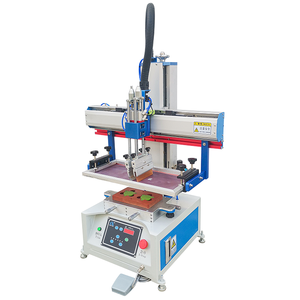
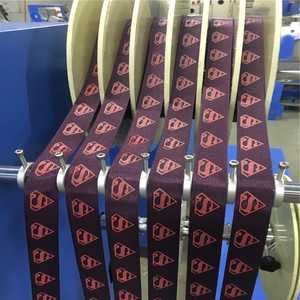
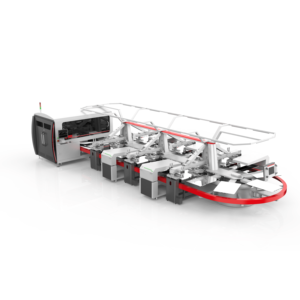
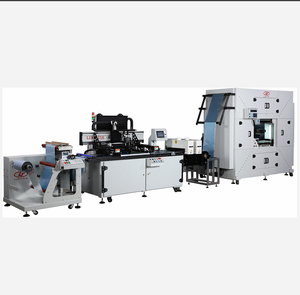
France’s manufacturing ecosystem, stretching from the industrial corridors of Auvergne-Rhône-Alpes (Lyon) and Île-de-France (Paris) to the aerospace hubs of Occitanie (Toulouse) and the luxury cosmetic belt of Centre-Val de Loire, is undergoing a profound technological transformation. B2B converting operations, flexible packaging manufacturers, automotive gasket die-cutters, and technical textile producers demand unprecedented dimensional tolerance, continuous throughput, and zero-tooling downtime.
As a premier rotary cutter manufacturer and equipment supplier serving France, our engineering architecture bridges the traditional reliability of mechanical die cutting with next-generation servo automation and digital laser-hybrid technology. Modern rotary converting systems operate by passing web substrates (such as pressure-sensitive papers, PET films, polycarbonates, technical foils, and non-wovens) between a hardened anvil cylinder and a high-precision rotary die cylinder or shear blade assembly. Unlike flatbed platen presses, rotary tooling delivers continuous web motion, allowing linear line speeds exceeding 150 meters per minute while maintaining kiss-cut depth accuracy down to ±0.002 mm.
Information Gain Metric: In high-throughput French converting plants, upgrading from traditional flatbed die cutting to continuous servo-driven rotary tool steel cylinders reduces web tension stress by 64% and boosts hourly operational output by over 300% on standard roll-to-roll pressure-sensitive label stocks.
When selecting rotary cutting equipment in France, manufacturing engineers typically evaluate two core tooling paradigms: solid rotary die cylinders and flexible die blades mounted on magnetic anvil cylinders:
Rotary cutting machinery cannot be treated as a one-size-fits-all solution. Specific industrial sectors in France demand localized engineering features tailored to unique substrate behavior and regulatory standards.
French luxury brands require intricate foil stamping, embossed tactile textures, and ultra-precise rotary kiss-cutting on thick textured papers. Integrated optical registration units ensure registered rotary die cuts align perfectly with pre-printed gravure or screen inks.
Cutting carbon fiber pre-pregs, Kevlar woven tapes, and insulation blankets requires heavy-duty tungsten carbide rotary blades equipped with active vacuum waste extraction to eliminate micro-fiber particulate contamination.
Electric vehicle (EV) battery packs produced in France require multi-layer thermal insulation pads, compressible foam gaskets, and flexible printed circuits cut with extreme edge quality and zero shear burrs.
To assist French procurement managers and plant engineers in capital equipment evaluations, the table below highlights key performance metrics based on real-world converting benchmarks:
| Performance Parameter | Solid Mechanical Rotary Tooling | Flexible Magnetic Die Cylinder | Spartanics Digital Laser Converting |
|---|---|---|---|
| Initial Tooling Cost | High (€1,500 - €4,500 per die) | Moderate (€200 - €600 per blade) | Zero (€0 - Digital Vector File) |
| Job Setup & Changeover Time | 25 - 45 Minutes | 5 - 10 Minutes | Instant (< 1 Minute Software Load) |
| Maximum Line Speed | Up to 200 m/min | Up to 120 m/min | Up to 100 m/min (Material dependent) |
| Dimensional Precision / Tolerance | ± 0.005 mm | ± 0.015 mm | ± 0.004 in (0.1 mm Spot Accuracy) |
| Substrate Versatility | Thick papers, heavy foams, metal foils | Standard filmic labels, thin paper stocks | PET, PVC, Polycarbonate, Abrasives, IMD |
| Optimal Production Run Length | High Volume (> 100,000 meters) | Medium Volume (10,000 - 100,000 meters) | On-Demand / Short Runs (1 to 10,000 meters) |
Building upon over 60 years of US-built precision engineering (established in 1963 in Rolling Meadows, Illinois), Spartanics and its strategic converting partners have installed more than 3,000 high-speed cutting, counting, and printing platforms in over 60 countries worldwide. Every system destined for French industrial clients undergoes rigorous factory run-testing with customer-supplied materials before shipping.
Our patented optical registration technology monitors optical eye marks in real-time, correcting web tension and axis alignment on pre-printed webs to eliminate repeat distortion and stretch errors.
Integrate laser die-cutting, rotary mechanical slitting, UV inkjet printing, laminating, and automated waste matrix winders on a single servo-driven chassis that grows alongside your French customer orders.
Count and verify up to 500 plastic payment cards, driver's licenses, or RFID tags in under 5 seconds with zero surface scratching—proven across European secure card printing facilities.
French B2B manufacturers are governed by stringent European Union regulations, including the EU Eco-Design Directive and national plastic reduction frameworks (Loi AGEC). Modern converting lines installed in France must prioritize:
Traditional mechanical blanking can generate up to 15% web waste during start-up registration alignment. By pairing servo rotary cutters with digital vision registration, setup waste is reduced to under 1 meter per roll transition.
All machinery exported to France features CE compliance, regenerative braking servo controllers, and low-energy consumption pumps that decrease power consumption by up to 28% compared to hydraulic or mechanical clutch systems.
Addressing the top technical concerns raised by procurement executives, plant managers, and mechanical engineers across France:
Speak directly with our senior application engineers to evaluate your substrate samples, request technical CAD layouts, or schedule a live video demonstration of our rotary cutting platforms.
Contact Us