Engineered for high-yield ISO smart card punching, roll-to-roll screen printing, and optical registered converting lines across Norwegian manufacturing hubs.
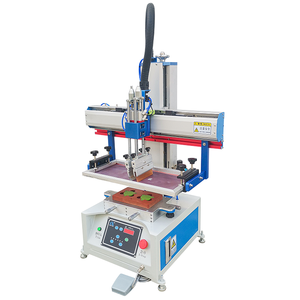
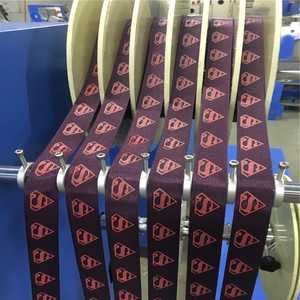
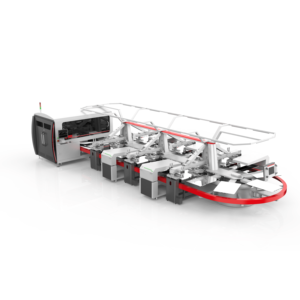
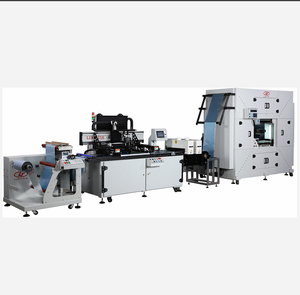
In the high-precision domain of industrial card production—spanning ISO standard CR-80 financial credit cards, dual-interface biometric IDs, and ultra-durable subsea RFID access tokens—the accuracy of the card punching and shear converting stage directly dictates operational yield. Manufacturers operating within the Norwegian market face stringent Quality Management Standards (ISO 9001:2015), strict environmental regulations, and demanding substrate criteria such as zero-burr edge finishing on laminated Polycarbonate (PC) and bio-based Polyethylene Terephthalate Glycol (PETG).
Card punching machinery represents far more than simple mechanical stamping. Modern industrial converting lines integrate optical registration vision systems, servo-driven hydraulic press rams, anti-static climate handling modules, and micro-gap punch tool assemblies. When evaluating top card puncher manufacturers supplying the Nordic zone, key technical benchmarks include sheet-to-card registration repeatability, dynamic web-tension compensation, and punch die longevity under high-frequency production.
Standard card formats, such as ID-1 dimensions (85.60 × 53.98 mm with a corner radius of 3.18 mm), require specialized punch-and-die sets manufactured from tungsten carbide or high-chrome D2 tool steel. When processing printed sheet layups consisting of transparent overlay, printed core, and inlay layers, conventional mechanical gang-punches frequently suffer from cross-web registration drift.
To eliminate scrap caused by substrate distortion during thermal lamination, premier card punching systems employ high-resolution CCD camera registration. These sensors capture registration crosshairs printed adjacent to individual card positions, sending real-time offsets to X-Y-Theta servo alignment tables before the punch stroke fires. This ensures every punched card maintains absolute symmetry with printed graphics and embedded RFID antenna chips.
| Performance Metric | Spartanics Precision Optical Punching | Conventional Mechanical Press | Standard Rotary Die Cutter |
|---|---|---|---|
| Registration Accuracy | ± 0.025 mm (CCD Vision Guided) | ± 0.150 mm (Mechanical Edge Pins) | ± 0.100 mm (Web Eye Sensor) |
| Substrate Compatibility | PC, PETG, PVC, Wood, Metal, ABS | Standard PVC, Thin Paperboard | Flexible Films, Pressure Sensitive |
| Edge Burr Clearance | < 0.008 mm (Zero-Stress Shear) | 0.030 - 0.050 mm (Rapid Die Wear) | 0.020 - 0.040 mm (Beaded Edge) |
| Tooling Changeover Time | < 10 Minutes (Quick-Lock Cassette) | 45 - 90 Minutes (Manual Alignment) | 20 - 30 Minutes (Cylinder Swap) |
| Inline Quality Inspection | 100% Surface, Edge & Chip Verification | Manual Batch Sampling | Visual Web Monitoring |
From maritime logistics along the North Sea coast to green mobility infrastructure in Oslo, automated card punching and screen printing equipment power Norway’s essential technology ecosystems.
Norway is one of the world's most cashless societies. Local security print operations require high-precision card punching for BankID security tokens and dual-interface EMV contact/contactless financial payment cards with zero micro-cracking around embedded chips.
Personnel operating on North Sea oil platforms, offshore wind farms, and maritime vessels require heavy-duty RFID access badges. Punching thick polycarbonate sheets with embedded low-frequency antenna coils requires custom die clearances to prevent internal coil fracture.
With Norway leading global electric vehicle adoption, card punching systems are deployed to produce durable RFID cards and keyfobs for charging networks (e.g., Recharge, Mer) and regional transit networks such as Oslo’s Ruter transit system.
Government identity initiatives in Norway demand tamper-evident biometric ID cards and digital health cards. Card punching lines integrated with optical registration shears deliver exact edge profiles required for laser engraving and tactile feature application.
The industrial card manufacturing landscape in Norway and the broader Nordic region is undergoing rapid evolution. Converters and smart card producers are modernizing equipment to maintain competitiveness against global imports while strictly aligning with European Union and national environmental directives.
Norwegian commercial entities and public sector bodies are phasing out virgin PVC cards in favor of recycled PVC (rPVC), Bio-PVC, PLA (Polylactic Acid derived from cornstarch), and sustainably sourced birch wood card stocks. These alternative substrates present distinct physical properties during shearing and punching: PLA exhibits higher brittleness under ambient temperatures, whereas wood cards require specific knife-edge bevel angles to prevent fiber splintering. Spartanics optical registration punches feature adjustable shear speed parameters to process eco-substrates without material fracture.
High labor overheads in Norwegian industrial hubs (such as Oslo, Bergen, Stavanger, and Trondheim) make complete automation essential. Modern card punchers operating in Norway are equipped with automatic stack feeders, inline ultrasonic sheet thickness verification, optical scratch inspection, and robotic scrap ejection. Automated card counting—such as the Spartanics 680 system capable of verifying 500 cards in 5 seconds—is integrated directly downstream of the punching stage to ensure instant batch auditability.
Identification cards and smart access tokens deployed in Northern Norway (e.g., Tromsø or Svalbard) experience thermal shifts ranging from sub-zero outdoor weather to heated indoor quarters. Internal stresses created during poor card punching can expand under extreme cold, causing sheet delamination or antenna trace breaks. Precision hydraulic shearing eliminates micro-cracks along card borders, preserving structural integrity in harsh polar environments.
Leveraging over six decades of American machinery design and installed systems across more than 60 nations, Spartanics delivers unmatched conversion reliability to Norwegian manufacturers.
We do not estimate cut quality—we prove it. Before any card punching line or screen printing machine leaves our facility, your exact Norwegian substrate is run on our test beds to record cut edge tolerance, throughput speeds, and registration accuracy.
Featuring camera registration technologies adapted from our M255 optical registration shear and XIPHOS laser systems, Spartanics punchers compensate dynamically for material deformation, ensuring perfect print-to-cut alignment.
Every system exported to Europe includes secure remote diagnostics software, quick-dispatch spare parts programs, and comprehensive engineering support to guarantee continuous operation in Norwegian plants.
Addressing key technical, logistical, and compliance inquiries for card puncher and converting equipment deployment in Norway.
Lamination heating cycles cause non-linear plastic shrinkage across printed sheets. Spartanics card punchers utilize multi-camera vision arrays that locate crosshair targets or artwork edges for individual card layouts, adjusting the X-Y-Theta servo stage before each punch cycle to achieve ±0.025 mm accuracy.
Polycarbonate is tough and abrasive. We recommend micro-grain tungsten carbide or high-vanadium powder metallurgy steels (such as CPM-10V) with titanium nitride (TiN) or DLC coatings. This combination extends die life beyond 5 million punch cycles before requiring regrinding.
Yes. Punched cards can feed directly onto automated conveyor channels with built-in contactless chip reading, surface vision inspection, and rapid card counting (such as the Spartanics 680, which counts and verifies 500 cards in approximately 5 seconds).
All machinery exported to Norway complies fully with European Machinery Directive 2006/42/EC, carrying the CE mark, integrated safety light curtains, emergency stop circuits, dual-channel safety relays, and low-voltage control electronics compliant with EN 60204-1.
Cold Nordic winters reduce indoor humidity, causing synthetic sheets (like PVC/PC) to build up static charges up to 20kV, leading to sheet sticking. Our machines feature active AC ionization bars at sheet input and output zones to neutralize static charges completely.
Standard lead times range from 10 to 14 weeks depending on tool customization. Equipment is air- or ocean-freighted directly to Norwegian ports (such as Oslo or Brevik), followed by on-site commissioning and operator training by factory-trained field engineers.
Submit your substrate specifications, sheet dimensions, and throughput requirements. Our engineering team in Rolling Meadows, USA will provide a complete technical proposal and sample test cut analysis tailored for your facility in Norway.
