Engineered for maximum operational throughput, sub-millimeter optical registration, and heavy-duty reliability across Chicago and Midwest industrial production environments.
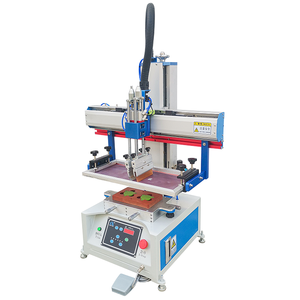
Engineered for precise flatbed deposition on micro-batteries, cylindrical lighters, and rigid industrial components. Features full servo drive integration and micro-metric adjustment.
Inquire Now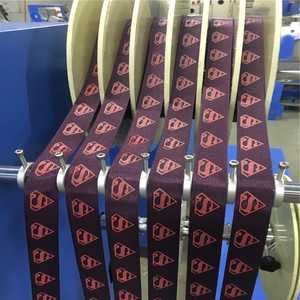
Automated multi-color web handling system optimized for satin, nylon, polyester webbing, and narrow-fabric label decoration with inline IR curing integration.
Inquire Now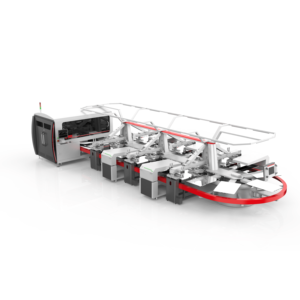
Heavy-duty oval screen printer with PLC touchscreen controls. Perfect for high-speed apparel labeling, textile transfers, and high-density specialty ink applications.
Inquire Now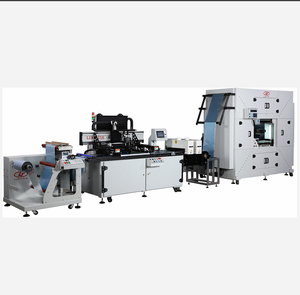
Designed for sensitive electronic membrane switches, flexible circuit boards (FPC), and technical film label converting with CCD vision alignment sensors.
Inquire Now
Self-service thermal and digital printing kiosk system built for cleanroom compliant medical film output, healthcare wristbands, and track-and-trace label dispatching.
Inquire Now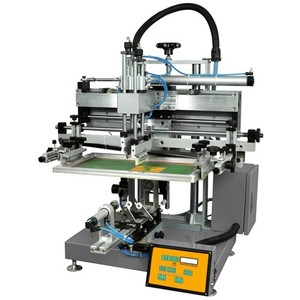
Compact precision printer specialized for curved substrate decoration including vials, bottles, industrial cartridges, and small-diameter cylindrical containers.
Inquire Now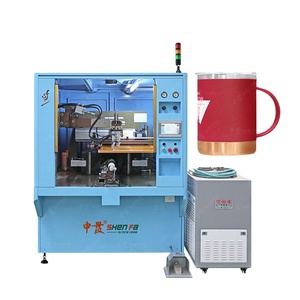
High-efficiency 2-color screen printing press equipped with precision indexing gear for water bottles, promotional drinkware, and cosmetic packaging containers.
Inquire Now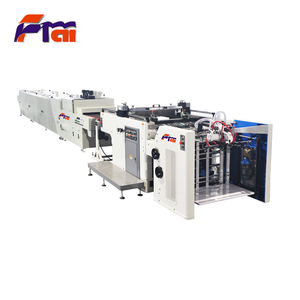
Large-format industrial swing-cylinder screen press designed for spot UV coating, security heat-transfers, decal sheets, and high-volume packaging applications.
Inquire NowAn Authoritative Technical Report on Supply Chain Localization, Zero-Tooling Economics, and Sub-Millimeter Registration Systems for Midwest Converters.
The industrial landscape of the Greater Chicago metropolitan area—spanning major manufacturing hubs from Rolling Meadows, Elk Grove Village, and Schaumburg to the O'Hare logistics hub and Lake County biomedical corridors—represents one of the most densified packaging and label converting markets in North America. Regional print buyers, contract packaging suppliers, and OEM label manufacturers face unprecedented demands: shrinking production turnarounds, a dramatic surge in versioned SKUs, and tight tolerance constraints for functional packaging. To maintain competitive advantage, Chicago-area packaging factories are systematically auditing their finishing assets, moving away from capital-intensive, slow-turnaround rotary mechanical dies toward high-speed, dynamic digital laser finishing and automated screen printing platforms.
Core Technical Takeaway: Transitioning from conventional rotary tooling to laser converting systems eliminates physical plate wear, reduces job setup time from hours to under 3 minutes, and saves mid-sized Chicago converters an average of $45,000 to $120,000 annually in mechanical die inventory and re-tooling costs.
Traditional rotary die-cutting relies on rigid physical cylinders, custom flexible magnetic plates, and fixed gear ratios. For long single-SKU runs exceeding 500,000 units, mechanical shearing remains cost-effective. However, the shift toward localized supply chains and target-market product variations has caused average job lengths in Chicagoland print operations to drop by 42% over the last decade. Operating conventional presses for short runs creates major operational bottlenecks:
Advanced digital converting platforms, such as the Spartanics CS2100 and XIPHOS Compact Laser System, address these inefficiencies through software-driven galvo-beam positioning. Utilizing sealed CO2 or fiber laser sources focused down to a 0.004 in (0.1 mm) spot diameter, digital laser die cutters process complex contour kiss-cuts, micro-perforations, inline slitting, and full-depth cut-throughs directly from vector artwork files (DXF/PDF). Changeovers require zero mechanical adjustments—operators simply load digital job recipes via an intuitive GUI interface.
| Operational Metric | Traditional Rotary Tooling | Spartanics Digital Laser Systems | Midwest Operational Advantage |
|---|---|---|---|
| Tooling Cost per SKU | $350 – $1,800 per die set | $0.00 (Software Vector File) | 100% Elimination of tooling budgets |
| Job Changeover Time | 30 – 60 Minutes (Mechanical setup) | < 2 Minutes (Software recipe load) | Allows 10+ SKU switches per shift |
| Registration Tolerance | ±0.35 mm (Subject to gear wear) | ±0.08 mm (Camera Vision Tracking) | Zero reject rate on pre-printed webs |
| Substrate Versatility | Requires physical blade sharpening | Multi-layer PET, PVC, PC, Paper, Adhesives | No blade dulling on abrasive substrates |
| Substrate Setup Waste | 100 – 300 Meters per alignment | < 5 Meters (Optical Mark Search) | Saves thousands in expensive material |
Deploying specialized label finishing equipment requires matching machine capabilities with local industrial demands. In the Upper Midwest, four dominant manufacturing ecosystems dictate equipment specs:
Medical OEMs demand pristine cleanroom-compatible labels, tamper-evident security seals, and variable-data clinical trial indicators. Systems like the Medical Self-Service Printing Machine and laser converters prevent micro-particulate shedding caused by physical blade crushing, producing clean, sealed edges on multi-layer film laminates and diagnostic test strips.
Heavy machinery and automotive manufacturing call for thick polycarbonate overlays, durable vinyl bumper decals, and membrane switches resistant to UV and chemical exposure. FJ780 Reversible Screen Printers and Soft Circuit Screen Presses lay down thick ink deposits (up to 40 microns) for heavy opaque whites, conductive silver pastes, and protective scratch-proof coatings.
Chicago's thriving craft brewery, specialty food, and consumer packaged goods (CPG) markets rely heavily on short-run tactile prime labels, textured foil accents, and dynamic shapes. Dual-color bottle printers (such as the MSP-2030Q and Semi-Auto Bottle Screen Printer) allow direct-to-container glass and plastic printing, bypassing traditional pressure-sensitive label application entirely.
With major financial printing and secure ID facilities in the Midwest, card counting speed and verification accuracy are paramount. The high-speed Spartanics 680 Card Counter counts and optically verifies up to 500 plastic cards in under 5 seconds, preventing inventory miscounts and securing credit card, driver’s license, and gift card packaging operations.
Navigating the next decade of industrial printing and label finishing requires understanding macro trends influencing Midwest manufacturing hubs:
Midwest enterprise buyers are moving critical printing operations back to regional facilities in Illinois, Wisconsin, and Indiana. To compete with low-cost overseas manual labor, domestic plants are adopting automated roll-to-roll inline finishing systems that combine digital printing, laser die-cutting, matrix removal, slitting, and turret rewinding on a single chassis with a single operator interface.
Flexible films and paper webs stretch and warp under humidity, tension, and heat variation during printing. Modern finishing lines utilize camera-based optical registration systems (such as the M255 Optical Registration Shear and Spartanics galvo-vision cameras) to continuously read registration marks, adjusting laser cut coordinates dynamically frame-by-frame to achieve perfect print-to-cut registration across kilometers of substrate.
Environmental standards in Illinois mandate stringent VOC reduction and landfill waste mitigation. Zero-tooling laser converting eliminates waste associated with steel die manufacturing, while high-efficiency LED-UV curing systems integrated into modern screen printers dramatically lower kWh power consumption compared to traditional thermal drying tunnels.
Rooted in Rolling Meadows, Illinois since 1963, Spartanics has spearheaded industrial cutting, card counting, and digital finishing technologies for over six decades. Operating from a state-of-the-art facility, Spartanics builds heavy-duty equipment deployed across more than 60 countries globally.
The Spartanics Quality Guarantee: Every machine built in our Illinois factory undergoes 100% pre-shipment validation using your actual production substrates. Cut speeds, edge quality, and optical registration tolerances are empirically validated and documented before shipment.
By pairing Spartanics' high-precision laser die-cutting systems with robust roll-to-roll screen printing presses and automatic registration equipment, label converters gain an unassailable operational edge: faster turnarounds, zero tooling debt, and bulletproof E-E-A-T reliability backed by US-based field support and 24/7 remote diagnostic monitoring.
Trusted By Leading Converts Across Greater Chicago & Worldwide
Expert technical insights regarding machine integration, substrate validation, service warranties, and localized logistics in the Upper Midwest.
Chicago label converters face shorter run lengths and frequent SKU customization. Laser die cutting completely eliminates physical die fabrication costs ($350–$1,800 per SKU), reduces setup times from 45 minutes to under 2 minutes, and eliminates lead times required to manufacture physical tooling plates, providing ultimate short-run agility.
Our equipment incorporates high-speed CCD camera vision systems and optical registration marks. The software reads registration fiducials in real-time frame-by-frame, dynamically adjusting the laser path or screen position to compensate for material stretch, distortion, or web tracking variations to within ±0.08 mm.
Spartanics laser converting systems feature tuned pulse-width modulation and assist gas nozzles. Substrates including pressure-sensitive papers, polypropylene (PP), polyethylene (PET), polycarbonate (PC), vinyl, and high-performance adhesives can be kiss-cut or through-cut with zero edge discoloration or melt beads.
With factory headquarters located in Rolling Meadows, Illinois, local customers receive direct access to factory-trained service engineers, rapid on-site technician dispatch within the Greater Chicago region, immediate replacement spare parts shipments, and 24/7 remote network diagnostics.
Yes. Modular converting platforms like the CS2100 can operate completely inline with digital inkjet presses (HP Indigo, Xeikon, Domino, etc.) or run as high-speed offline roll-to-roll finishing units depending on plant layout and workflow preferences.
Most mid-sized packaging factories achieve full capital ROI within 8 to 14 months. Savings are driven by the complete elimination of die plate purchasing, reduced scrap web waste during setups, and the ability to capture high-margin, short-run digital label jobs previously turned away.
Send us your substrate samples, artwork drawings, or target throughput specifications. Our Rolling Meadows application engineers will provide a comprehensive engineering assessment and run live cut tests on your material.