From heavy-duty flatbed servo printers to continuous roll-to-roll silk screen systems, explore our factory-direct machinery built for extreme tolerance, local climate stability, and high operational yield.
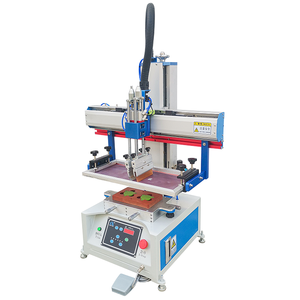
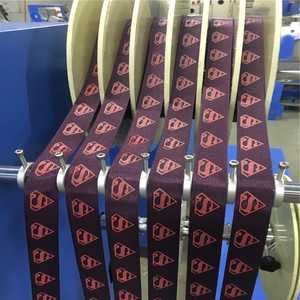
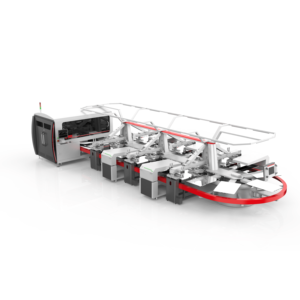
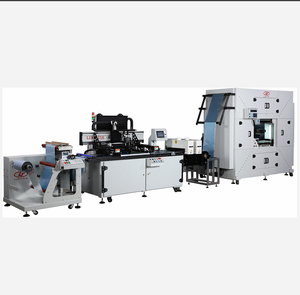
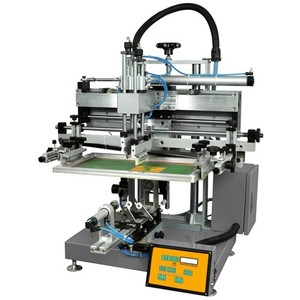
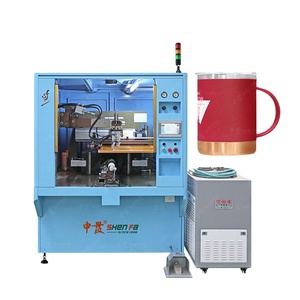
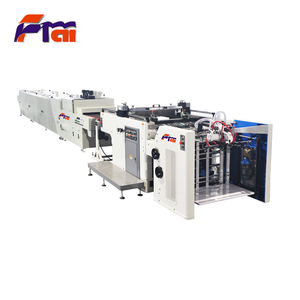
Egypt’s industrial sector is undergoing a monumental transformation driven by national development strategies such as Egypt Vision 2030 and the expansion of major industrial hubs including 10th of Ramadan City, 6th of October City, El-Mahalla El-Kubra, Borg El Arab, and Sadat City. As the largest manufacturing base in North Africa, Egyptian enterprises across textiles, flexible packaging, automotive decals, pharmaceuticals, and household appliances demand screen printing equipment that combines robust build quality, sub-micron repeat accuracy, and high operational resilience under demanding climatic conditions.
The procurement landscape for screen printing equipment in Egypt is shaped by distinct industry verticals, each requiring specialized machinery configurations:
Operating industrial screen printing equipment in North Africa introduces specific physical challenges that inferior OEM machinery fails to address. Trusted screen printer factories engineering equipment for Egypt implement targeted design modifications:
Enclosed positive-pressure PLC cabinets prevent ambient airborne dust and sand particulates from contaminating micro-circuitry and pneumatic valves.
Chilled squeegee stroke beds and precision flash curing units mitigate solvent evaporation caused by high summer temperatures (exceeding 40°C in Cairo).
Industrial 380V/50Hz power supplies with built-in surge protection safeguards servo drives against regional grid voltage variations.
Furthermore, equipment downtime in Egyptian industrial cities can cause significant supply chain bottlenecks. Working with established factories that maintain regional spare parts inventories, standardized global component architectures (e.g., Schneider Electric, Omron PLC, Yaskawa Servo), and 24/7 remote optical diagnostic systems ensures uninterrupted production lines.
Selecting the precise screen printing machinery configuration requires matching screen mesh counts, squeegee hardness, curing technology, and stroke velocity to your target substrate. The table below outlines optimized technical parameters for key applications serving Egyptian manufacturing facilities:
| Application Sector | Target Substrate | Recommended Machine Type | Mesh Count (T/cm) | Ink System | Registration Accuracy |
|---|---|---|---|---|---|
| Garment & Webbing | Polyester / Cotton Tape | Automatic Roll-to-Roll Ribbon Printer | Plastisol / Water-Based | ±0.08 mm | |
| Apparel Graphics | Cut Pieces / T-Shirts | Multicolor Oval Digital Screen Press | Hybrid Discharge & UV | ±0.05 mm | |
| Flexible Circuits | PET / Polyimide Film | High-Speed Soft Circuit Screen Printer | Conductive Silver / Carbon | ±0.015 mm | |
| Pharma Packaging | Glass & HDPE Bottles | Desktop Cylindrical Printer MSP-2030Q | UV Cured Solvent Ink | ±0.03 mm | |
| Beverage Containers | PP / PET Water Bottles | Semi-Auto 2-Color Bottle Printer | Flame-Treated UV Ink | ±0.04 mm | |
| Spot UV Varnishing | 350gsm Coated Board | FJ780 Automatic Reversible Press | High-Gloss UV Varnish | ±0.02 mm | |
| Medical Strips | Diagnostic Membrane | Medical Self-Service Coating Unit | Bio-Functional Reagent Ink | ±0.01 mm |
Building high-precision screen printing machinery requires rigorous mechanical engineering, proprietary optical registration control, and decades of practical converting experience. Drawing from over 60 years of US-engineered precision machinery excellence (pioneered by industry leaders like Spartanics), our manufacturing facilities incorporate state-of-the-art technological advancements into every production unit delivered to Egypt and global markets.
Our machinery designs build upon decades of industrial converting heritage, utilizing ultra-rigid stress-relieved steel chassis, precision linear motion guides, and heavy-duty servo drives built for round-the-clock industrial duty cycles.
Integrated high-resolution camera vision systems automatically read registration marks in real-time, dynamically adjusting the screen frame or print bed position to achieve registration tolerances as tight as 0.004 in (0.1 mm).
Before any machine is packed and shipped to Alexandria or Port Said ports, your exact production substrates and inks are tested in our factory. We record and supply full Factory Acceptance Test (FAT) validation metrics.
Our printing systems are designed to expand as your business grows. Modular stations—such as UV drying units, hot stamping modules, corona treaters, and automated stackers—can be seamlessly integrated post-installation.
We facilitate streamlined customs clearing under Egypt’s Nafeza / ACI (Advanced Cargo Information) system, providing complete ACID documentation, factory certificates of origin, and compliance paperwork.
Factory-certified field engineers conduct on-site commissioning, pneumatic calibration, and intensive operator training at your plant in Cairo, Giza, Alexandria, or El-Mahalla to maximize production efficiency from Day One.
Navigating machinery import, installation, and operation in Egypt requires clear technical guidance. Here are authoritative answers to common inquiries from Egyptian factory directors and procurement professionals:
Our export department is fully registered and compliant with Egypt's mandatory Nafeza platform and Advanced Cargo Information (ACI) system. Upon order confirmation, we upload all commercial invoices, packing lists, bill of lading data, and Certificate of Origin (COO) documentation directly to the Nafeza portal to generate your 19-digit ACID number prior to shipment loading. This ensures smooth clearance at Sokhna, Alexandria, or Port Said ports without demurrage delays.
All machines shipped to Egypt are engineered natively for 380V, 50Hz, 3-Phase power standard across industrial zones like 10th of Ramadan and 6th of October City. We incorporate heavy-duty industrial transformers, Schneider/Omron breakers, and surge protective devices to defend sensitive PLC controllers and servo amplifiers against local grid fluctuations.
Pneumatic and manual presses are economical for short-run promotional items with low color overlay counts. However, for industrial products—such as membrane switches, flexible circuit boards, multi-color water bottles, and precision labels—servo-driven flatbed printers are essential. Servo drives eliminate squeegee chatter, provide digital stroke length control down to 0.1 mm, lower ink consumption by up to 25%, and guarantee color-to-color registration within ±0.02 mm, significantly reducing material scrap costs.
High ambient temperatures can cause solvent inks to dry prematurely on the screen mesh while liquid plastisol inks may prematurely gel. We configure our machinery with targeted environmental controls: water-cooled print tables for flatbed presses, high-efficiency UV-LED curing modules with variable power density, and enclosed flash-cure units that isolate heat from the main printing stations.
We supply a comprehensive 2-year operational spare parts kit (including squeegee blades, flood bars, pneumatic seals, proximity sensors, and drive belts) with every machine export. For technical support, all automated PLC systems feature integrated remote IoT modules, allowing our engineers to diagnose software parameters, update firmware, and assist your plant engineers in real time via secure internet connections.
Yes, absolutely. Under our Pre-Purchase Material Validation Program, Egyptian clients can send sample rolls or sheets of their specific substrates (e.g., local cotton ribbon, PP bottles, PET films) to our factory testing lab. We perform test runs on the selected equipment model, evaluate registration repeatabilities, measure ink cure adhesion, and send complete video reports along with processed physical samples back to your office in Egypt before order execution.